Published Date: 2026-01-01
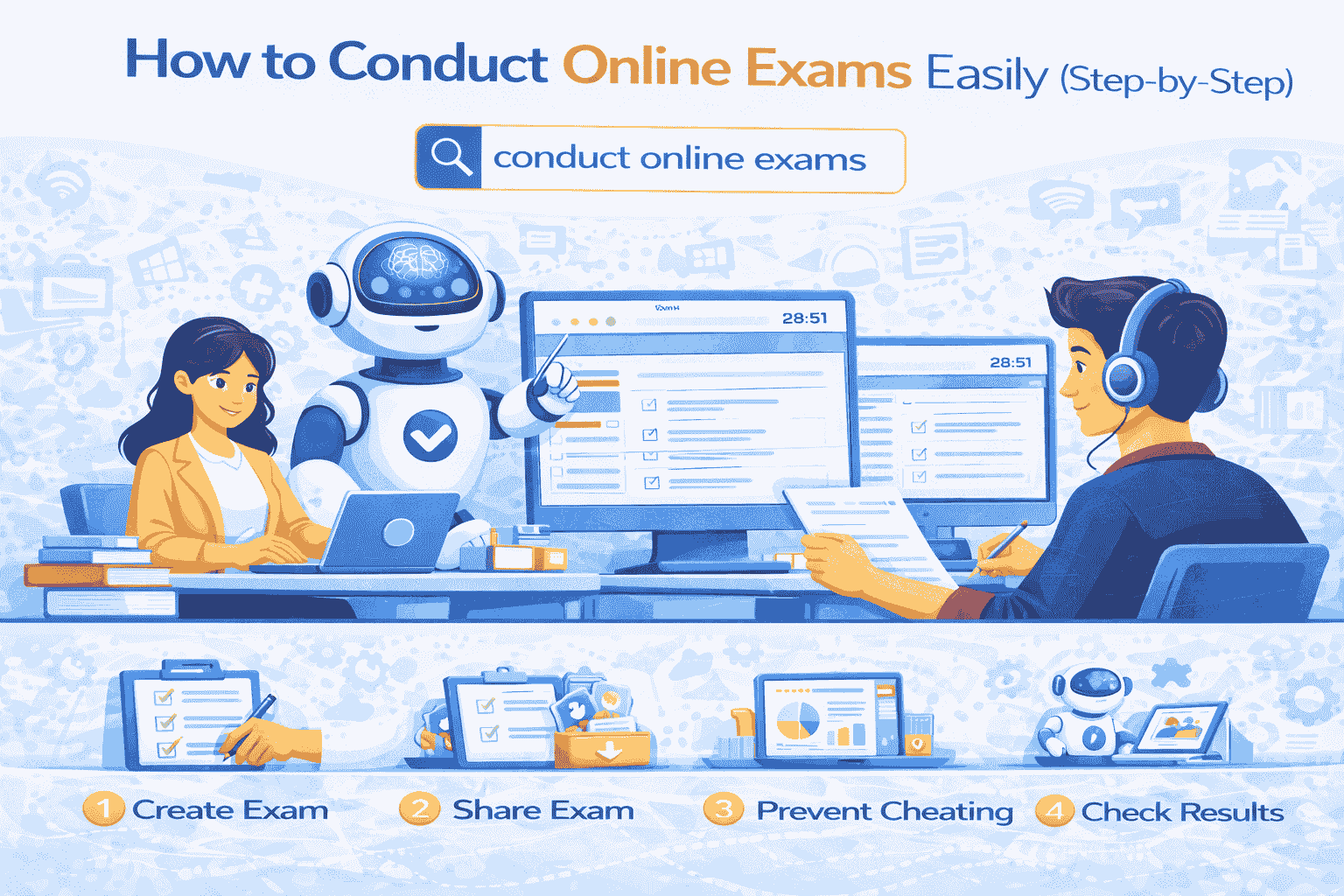
How to Conduct Online Exams Easily (Step-by-Step)
A complete step-by-step guide to conducting online exams efficiently using the right tools, strategies, and best practices for schools.
With the rapid shift towards digital education, schools and institutions are increasingly moving from traditional exams to online assessments.
Whether for internal tests, unit exams, or full-scale board preparation, learning how to conduct online exams efficiently has become essential. Online exams save time, reduce manual effort, and provide instant evaluation.
Online exams are digital assessments conducted using software platforms where students access question papers online, submit answers digitally, and receive instant or automated results.
Select a platform with question paper creation, online test conduction, auto evaluation, and analytics.
Add questions categorized by subject, chapter, type, and difficulty level.
Define marks distribution, sections, and question types.
Select questions, set duration, and add instructions.
Set date, time, and share exam link with students.
Students attempt the exam online while teachers monitor participation.
Auto-grade objective questions, review subjective answers, and generate reports.
| Feature | Offline | Online |
|---|---|---|
| Time Required | High | Low |
| Evaluation | Manual | Automated |
| Accessibility | Limited | High |
| Analytics | Limited | Advanced |
| Scalability | Low | High |
Learning how to conduct online exams is essential for modern schools. By following a structured approach and using the right tools, schools can conduct exams efficiently, reduce workload, and improve student outcomes.
 Blog
Blog