10th Standard Syllabus & Materials
10th Standard
TN 10th English Prose - 4 - The Attic Important Questions And Answers Study Material - QB365 Set A
NEW10th Standard
TN 10th English Supplementary - 3 - The Story of Mulan Important Questions And Answers Study Material - QB365 Set A
NEW10th Standard
TN 10th English Poem - 3 - I am Every Woman Important Questions And Answers Study Material - QB365 Set A
NEW10th Standard
TN 10th English Prose - 3 - Empowered Women Navigating The World Important Questions And Answers Study Material - QB365 Set A
NEW10th Standard
TN 10th English Supplementary - 2 - Zigzag Important Questions And Answers Study Material - QB365 Set A
NEW10th Standard
TN 10th English Poem - 2 - The Grumble Family Important Questions And Answers Study Material - QB365 Set A
Published on: 22/10/2025
Download Tamil Nadu 10th Standard Social Science question papers, model tests, one-mark questions, important questions, and public exam papers in PDF format. Free study materials and answer keys for TN State Board students.
Questions + Answers key
Take MCQ Social Science Test
1.
The state which has highest population in India:
Gujarat
Sikkim
Uttar Pradesh
Tamil Nadu
2.
India and Bangladesh share the longest land boundary of___________ kilometres.
3069
3106
4096.7
3097.6
3.
British brought systematic changes in
land revenue administration
army, police
judicial system
all the above
4.
Tiruppur is known for
Leather tanning
Lock making
Knitwear
Agro-processing
5.
How many Indian states have their boundary with Nepal?
Five
Four
Three
Two
6.
7.
On 8 January 1933 which day was observed?
Temple Entry Day
Day of Deliverance
Direct Action Day
Independence Day
8.
Who drew the attention of the British to the suffering of Indigo cultivation through his play Nil darpan ?
Dina Bandhu Mitra
Romesh Chunder Dutt
Dadabhai Naoroji
Birsa Munda
9.
Who declared that “Land belongs to God” and collecting rent or tax on it was against divine law ?
Titu Mir
Sidhu
Dudu Mian
Shariatullah
10.
The National Remote sensing Centre(NRSC) is located at___________.
Bengaluru
Chennai
Delhi
Hyderabad
11.
Write a note on TIIC.
12.
Mention any three industrial development agencies in Tamil Nadu.
13.
How do you assess the importance of Chabahar agreement?
14.
What is Poorna Swaraj?
15.
What do you mean by drain of wealth?
16.
Define “International trade”.
17.
Waterways and Airways.
18.
Print Media and Electronic Media.
19.
Mark the following places on the outline map of India
1. Ambala
2. Delhi
3. Lucknow
4. Gwalior
5. Kolkata
20.
Mention OPEC missions and how does it help other countries?
21.
22.
Classify and explain the roadways in India.
23.
Bhutan, a small Himalayan kingdom , popularly known as a
24.
_________is famous for clustering of a large number of firms producing cotton knitwear.
25.
________a Buddhist saint who went to Bhutan from India.
26.
____________ is known as the Land of thunderbolt.
27.
Ramsay Macdonald announced __________ which provided separate electorates to the minorities and the depressed classes.
28.
The major tribal revolt which took place in Chotanagpur region was ____________.
29.
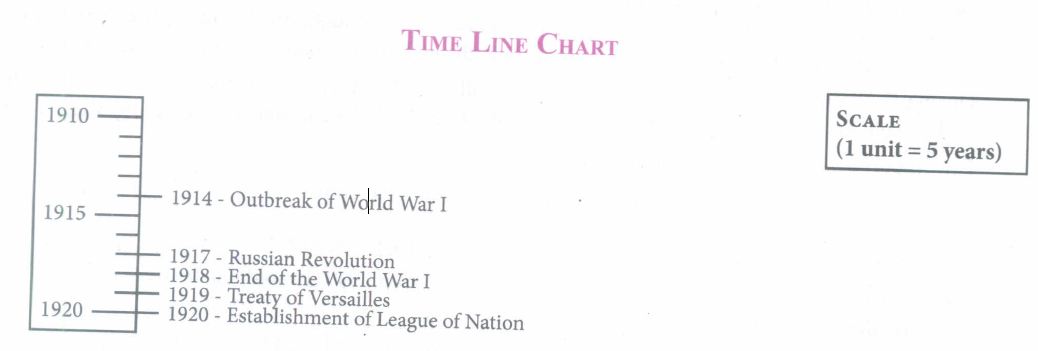
Draw Time Line Chart between 1900-1910.
30.
Write about the plantation forming of Tamilnadu.
1.
(a)
Gujarat
2.
(c)
4096.7
3.
(d)
all the above
4.
(c)
Knitwear
5.
(a)
Five
6.
(c)
7.
(a)
Temple Entry Day
8.
(a)
Dina Bandhu Mitra
9.
(c)
Dudu Mian
10.
(d)
Hyderabad
11.
The Tamil Nadu Industrial Investment Corporation Ltd, popularly known as TIIC is intended to provide low-cost financial support for both setting up new units and also for expansion of existing units.
12.
SIPCOT (State Industries Promotion Corporation of Tamil Nadu) 1971
TANSIDCO (Tamil Nadu Small Industries Development Corporation) 1970
TIDCO (Tamil Nadu Industrial Development Corporation ) 1965
13.
a) The trilateral agreement was signed between India, Afghanistan and Iran.
b) It has led to the establishment of transit and transport corridor among three countries using Chabahar port.
c) This port is seen as golden gateway for India to access landlocked markets of Afghanistan and Central Asia bypassing Pakistan.
14.
i) Some congressmen were not satisfied with dominion status and wanted to demand complete independence.
ii) In the congress session held in Lahore in December 1929 with Jawaharlal Nehru as the President Poorna Swaraj was declared as the goal. Poorna Swaraj means complete independence.
15.
i) India was economically subjugated and transformed into a supplier of raw material to the British industries.
ii) It became a market to dump English manufactures and for the investment of British capital.
iii) The colonial economy was a continuous transfer of resources from India to Britain without any favourable returns back to India.
iv) This is called "the drain of wealth".
16.
Trade carried on between two or more countries is called international trade. It is also called as external trade or foreign trade.
17.
| S.No |
Waterways |
Airways |
|---|---|---|
| 1. | Waterway is the oldest and cheapest means of transport. | Airways are the quickest, costliest, most modern and comfortable means of transport. |
| 2. | It is most suitable for carrying heavy and bulky materials from one country to another. | They carry passengers, freight and mail. |
| 3. | It is a fuel efficient and eco-friendly mode of transport | It is not fuel efficient. |
| 4. | The two types of waterways are inland waterways and ocean waterways. | Domestic Airways and International Airways are the two types of airways. |
18.
| S.No |
Print Media |
Electronic Media |
|---|---|---|
| 1. | We get information through printed materials. | We get information through electronic gadgets. |
| 2. | It includes newspapers, journals, books, flyers and magazines | It includes radio, television and internet, |
| 3. | Newspapers carry information on local, national and international events to the people. | It broadcasts programmes related to education, information and entertainment. |
19.
20.
OPEC:
i) It is a group of oil producing nations (i.e. Iraq, Iran, Kuwait, Saudi Arabia).
ii) Its membership is open to any country that exports crude oil.
OPEC'S mission:
i) To co-ordinate oil policies in its member countries.
ii) Help stabilise oil markets.
iii) To secure fair and stable income to petroleum producers.
iv) An efficient, economic and regular supply of oil to consuming nations.
v) A fair return on capital to those investing in the petroleum industry.
Helps other countries:
i) It helps finance projects with low interests loans.
ii) It provides grants to social and humanitarian projects.
iii) It has an Information centre with over 20,000 volumes including books, reports map and conference proceedings related to petroleum, energy and the oil market.
iv) It is open to the public and for the rescarchers and students.
21.
22.
Classification of Roads:
i) National Highways (NH): National Highways form the most important system of road transportation in India.
ii) These highways are connect capitals of states, major Ports, rail junctions, industrial and tourist centres.
iii) The longest National highway is NH - 44, which runs from Srinagar in Jammu Kashmir to Kanniyakumari in Tamil Nadu.
iv)The shortest national highway is NH-47A, which runs, from Ernakulum to Kochi port (Willington Island) covering a distance of 6 km.
State Highways:
The state highways are usually roads that link important cities, towns and district headquarters within the state and connect them with national highways or highways of neighboring states. These roads are administered and financed by state governments.
District Roads:
i) District Roads provide connectivity between the district and taluk headquarters with the state highways and national highways.
ii) District Roads are constructed and maintained by the Public Works Department of the states.
Rural Roads:
i) Rural roads connectivity is a key component of rural development. These roads are vital for providing links in the rural areas. It links the different villages with their neighboring towns.
ii) They are maintained by Village Panchayats.
Border Roads:
i) These are the roads of strategic importance in border areas.
ii) They are constructed and maintained by Border Roads Organization. It was established in 1960 for the development of the roads in the northern and northeastern border areas.
iii) Border Roads Organization has constructed world's highest road joining Chandigarh and Leh in Ladakh.
Golden Quadrilateral Roads:
Golden Quadrilateral 5,846 km long road of 4/6. lanes connects, India's the four metropolitan
cities Delhi, Kolkata, Chennai and Mumbai.
Expressways:
i) These roads are multilane good quality road for high speed traffic.
Eg: Mumbai - Pune road.
International Highways:
These roads link India with neighboring countries for promoting harmonious relationship with them.
23.
()
land of thunderbolt
24.
()
Tirupur
25.
()
Gur Padmasambhava
26.
()
Bhutan
27.
()
Communal Award
28.
()
Kol Revolt
29.
30.
10th Standard Syllabus & Materials
10th Standard
TN 10th English Prose - 2 - The Night the Ghost Got in Important Questions And Answers Study Material - QB365 Set A
NEW10th Standard
TN 10th English Supplementary - 1 - The Tempest Important Questions And Answers Study Material - QB365 Set A
NEW10th Standard
TN 10th English Poem - 1 - Life Important Questions And Answers Study Material - QB365 Set A
NEW10th Standard
TN 10th English Prose - 1 - His First Flight Important Questions And Answers Study Material - QB365 Set A


Tamilnadu Stateboard 10th Standard Subjects
Tamilnadu Stateboard Standards