100% FREE ACCESS
11th Standard CBSE Syllabus & Materials
11th Standard CBSE
CBSE 11th Economics PART-A - Presentation of Data - New Sample Question Papers Study Material - QB365 Set A
NEW11th Standard CBSE
CBSE 11th Economics PART-A - Organisation of Data - New Sample Question Papers Study Material - QB365 Set A
NEW11th Standard CBSE
CBSE 11th Economics PART-A - Collection of Data - New Sample Question Papers Study Material - QB365 Set A
NEW11th Standard CBSE
CBSE 11th Economics PART-A - Introduction to Economics and Statistics - New Sample Question Papers Study Material - QB365 Set A
NEW11th Standard CBSE
CBSE 11th Business Studies International Trade Sample Question Papers Study Material - QB365 Set A
NEW11th Standard CBSE
CBSE 11th Business Studies Evolution and Fundamentals of Business Sample Question Papers Study Material - QB365 Set A

Published on: 21/10/2025
Download CBSE Class 11th Standard CBSE Biology question papers, sample papers, important questions, and previous year solved papers in PDF format. Get free study materials, NCERT solutions, and exam preparation resources for Class 11th Standard CBSE Biology
Questions + Answers key
Take MCQ Biology Test
1.
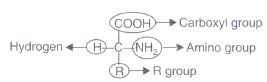
Explain the basic structure of an Amino acid.
2.
Explain the pelvic girdle of human skeleton.
3.
How do fight or flight hormones prepare our body to fight emergency?
4.
What are the causes of kwashiorkar?
5.
What is photorespiration?
6.
Stomach is the right place where hydrochlotic acid is required to be secreted in the gastric juice. Describe any three points to justify this statement.
7.
Would a defoliated plant respond to photoperiodic cycle? Why?
8.
Photosynthetic organisms occur at different depths in the ocean. Do they receive the light?How do they adapt to carry out photosynthesis under these conditions?
9.
Well-watered plants transpire more during sunny and windy days than in cool and calm mornings. Comment.
10.
Succinic dehydrogenase is an enzyme that causes the substrate, succinate, to break down into fumarate
Malonate is a substance that resembles succinate and inhibits the activity of succinic dehydrogenase
Explain how this type of inhibition affects the activity of the enzyme
11.
Name the main excretory organs of cockroach. Write the structure of these organs.
12.
Write an account on modes of respiration in animals with examples.
13.
Define the term mycorrhiza. How are these associations affect a plant? Explain with examples
14.
Why is death considered as regulatory process on the earth?
15.
Write any three advantages of scientific names.
1.
Amino acid is an organic compound, which has an amino group and an acidic group, present as substituents on the same carbon; i.e., the a-carbon. Because of this amino acids are also called a-amino acids. On four valency positions, there are four substituent groups. They are hydrogen, carboxyl group, amino group and a variable group. The variable group is called the 'R' group. The nature of R group decides the type of an amino acid.
2.
Pelvic Girdle. Pelvic girdle consists of two coxal bones. Each coxal bone is formed by the fusion of three bones - ilium, ischium and pubis. At the point of fusion of the above bones is a cavity called acetabulum to which the thigh bone articulates. The two halves of the pelvic girdle meet ventrally to form the pubic symphysis containing fibrous cartilage.
3.
Adrenaline and noradrenaline are rapidly secreted in response to stress of any kind and during emergency situations and are called emergency hormones or hormones of Fight or Flight. These hormones increase alertness, pupilary dilation, piloerection (raising of hairs), sweating etc. Both the hormones increase the heart beat, the strength of heart contraction and the rate of respiration. Finally the body is ready to counter the emergency situations.
4.
Causes of Kwashiorkar:
Protein deficiency unaccompanied by calorie deficiency can lead to kwashiorkor.It results from the replacement of mother's milk by a hhigh-calorie low protein diet in child more than one year in age.
5.
In C3 plants some O2 does bind to RuBisCO, and hence CO2 fixation is decreased. Here the RuBP instead of being converted to 2 molecules of PGA binds with O2 to form one molecule and phosphoglycolate in a pathway called photorespiration. In the photo respiratory pathway, there is neither synthesis of sugars, nor of ATP. Rather it results in the release of CO2 with the utilisation of ATP. In the photorespiratory pathway there is no synthesis of ATP or NADPH. Therefore, photorespiration is a wasteful process.
6.
Stomach, serves as a right place due to the following reasons
(i) HCl inactivates the salivary amylase and prevents further breakdown of disaccharide carbohydrate.
(ii) It kills microorganisms and lower the pH of stomach between 1.2.5 (very acidic).
(iii) Pepsinogen (inactive precursor of pepsin) in the presence of HCl is converted into pepsin (principal protease of stomach).
7.
No, a defoliated plant would not respond to photoperiodic cycle because the site of perception of light, dark duration are the leaves.
There is a hormonal substance present in leaves which is responsible for flowering. This hormonal substance migrates from leaves to shoot apices for inducing flowering only when the plants are exposed to the necessary photoperiod.
8.
Photosynthetic organisms at different depths in the ocean do not receive the same light qualitatively and quantitatively. The plants growing thee banks of water bodies get goof quality o light. Algae which can tolerate more dilutions of light penetrate deeper inside water. Green algae remain in the shore line, brown algae descend to intermediate depths, while red algae form the limit below where no other autotrophic plants can grow.
9.
The leaf of the plants are heated by the temperature of the environment and also by the heat released during photosynthesis. Thus, transpiration provides a cooling mechanism for the plant to release excess heat in the leaves in order to maintain internal temperature necessary for biological and chemical processes. Transpiration tends to occur more quickly at higher temperature, i.e in suny ays due to increased evaporation. And on windy days the moisture present in the air is swept away from the leaf causing it to transpire more. Whereas on cool and calm days, the humidity rate can rise which in turn cause a decrease in transpiration.
10.
The inhibitor competes with the substract for the active sites of enzyme molecules as it has a structure similar to the substract that allows it to combine with the active site, preventing any substract molecule from occupying that site.This reduces the rate of the reaction since, the subtract can only use the enzyme molecules that are not occupied by the inhibitor, resulting in the same quantity of product being formed at a slower rate
11.
Malphighian tubules are the amin excretory organs of cockroach.
12.
Different modes of respiration in animals are given in the table below.
| Respiratory Organ | Mode of Respiration | Examples |
| Body surface | body surface respiration | Sponges and coelenterate |
| Gills | Branchial respiration | Fishes |
| Book gills | Book gill respiration | Limulus(king crab) |
| Skin | Cuteneous respiration | Annelids and amphibians |
| Trachea | Tracheal respiration | Insects |
| Lungs | Pulmonary respiration | Most of the tetrapods |
| Book Lungs | Book lungs respiration | Arachids (spiders and scorpion) |
13.
Mycorrhiza is a mutually beneficial or symbiotic association of fungi with roots of higher plants. Orchids grow as an epiphyte on plants, have their roots associated with fungi right from the seedling stage.
Many orchids cannot survive without mycorrhizae associations. Many forest trees such as pines appear stunned if mycorrhizal associations are absent. In the presence of these associations, these plants absorb 2 - 3 times more nitrogen, potassium, and phosphorus compared to without them.
14.
Every organism which is born on this earth, has some role with respect to other organism, ecosystem and biospheres existing on earth. After performing its functional part in its life cycle it contributes to the cycle of nature and dies. This way natural control on all natural process are maintain. This is why death of organism is inevitable.
15.
Advantages of scientific names are
(i) These are acceptable in every part of the world.
(ii) These are assigned on agreed principles by scientists.
(iii) These are very specific. It means no two organisms can have the same name.

11th Standard CBSE Syllabus & Materials
11th Standard CBSE
CBSE 11th Business Studies Forms of Business Organisation Sample Question Papers Study Material - QB365 Set A
NEW11th Standard CBSE
CBSE 11th Business Studies Business, Trade and Commerce Sample Question Papers Study Material - QB365 Set A
NEW11th Standard CBSE
CBSE 11th Physics Waves Sample Question Papers Study Material - QB365 Set A
NEW11th Standard CBSE
CBSE 11th Physics Kinetic Theory Sample Question Papers Study Material - QB365 Set A



NCERT Books

Syllabus

Exam Pattern

Sample Question Papers

Previous year Question Papers

Important Notes

MCQ Practice test

NCERT Exemplers

Case study Questions

Image Based Questions

Passage based Questions

HOT Questions

Value Based Questions

Model Questions Papers
NCERT ( Book Back ) Questions

Assertion and Reason
Important Questions And Answers

CBSE 11th Standard CBSE Subjects
CBSE Standards