
 100% FREE ACCESS
11th Standard CBSE Syllabus & Materials
11th Standard CBSE
CBSE 11th Economics PART-A - Presentation of Data - New Sample Question Papers Study Material - QB365 Set A
NEW11th Standard CBSE
CBSE 11th Economics PART-A - Organisation of Data - New Sample Question Papers Study Material - QB365 Set A
NEW11th Standard CBSE
CBSE 11th Economics PART-A - Collection of Data - New Sample Question Papers Study Material - QB365 Set A
NEW11th Standard CBSE
CBSE 11th Economics PART-A - Introduction to Economics and Statistics - New Sample Question Papers Study Material - QB365 Set A
NEW11th Standard CBSE
CBSE 11th Business Studies International Trade Sample Question Papers Study Material - QB365 Set A
NEW11th Standard CBSE
CBSE 11th Business Studies Evolution and Fundamentals of Business Sample Question Papers Study Material - QB365 Set A

Published on: 21/10/2025
Download CBSE Class 11th Standard CBSE Chemistry question papers, sample papers, important questions, and previous year solved papers in PDF format. Get free study materials, NCERT solutions, and exam preparation resources for Class 11th Standard CBSE Chemistry
Questions + Answers key
Take MCQ Chemistry Test
1.
Considering the elements B, Al, Mg, and K, the correct order of their metallic character is :
B > Al > Mg > K
Al > Mg > B > K
Mg > Al > K > B
K > Mg > Al > B
2.
The size of isoelectronic species — F– , Ne and Na+ is affected by______.
nuclear charge (Z)
valence principal quantum number (n)
electron-electron interaction in the outer orbitals
none of the factors because their size is the same
3.
Anything that influences the valence electrons will affect the chemistry of the element. Which one of the following factors does not affect the valence shell?
Valence principal quantum number (n)
Nuclear charge (Z)
Nuclear mass
Number of core electrons
4.
In the modern periodic table, the period indicates the value of :
atomic number
atomic mass
principal quantum number
azimuthal quantum number
5.
Which of the following terms are unitless?
Molality
Molarity
Mole fraction
Mass percent
6.
16 g of oxygen has same number of molecules as in _______.
16 g of CO
28 g of N2
14 g of N2
1.0 g of H2
7.
Which of the following pairs have the same number of atoms?
16 g of O2(g) and 4 g of H2(g)
16 g of O2 and 44 g of CO2
28 g of N2 and 32 g of O2
12 g of C(s) and 23 g of Na(s)
8.
Which of the following organic materials damage DNA of our body?
Tobacco
Coal
Petroleum
All of these
9.
Which of the following set of functional groups is meta-directing group?
-NO2, -NH2, -COOH, - COOR
-NO2, -CHO, -SO3H, - COR
CN, -CHO, -NHCOCH3, -COOR
- CN, -NH2, -NHR, -OCH3
10.
 \(+\text { Conc. } \mathrm{HNO}_{3}+\text { Conc. } \mathrm{H}_{2} \mathrm{SO}_{4} \stackrel{(323-333) \mathrm{K}}{\longrightarrow}\) Here, A refers to ______.
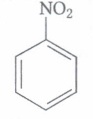
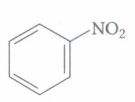
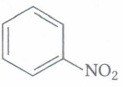
All of these
11.
The aromatic compound among the following is ______.


All of these
12.
Acidic potassium permanganate/potassium dichromate oxidises alkenes to produce ______.
ketones/acids
ketones/aldehyde
ketones/alcohols
ketones/ether
13.
When CH3 - C \(\equiv\) CH reacts with one mole of HBr then product obtained is ______.
bromoethene
dibromopropane
2-bromopropene
1-brornopropane
14.
The correct IUPAC name of the given structure
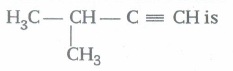
2-methylbut-1-yne
I-methylbut-3-yne
2-methylbut-3-yne
3-methylbut-1-yne
15.
The major product formed when 3,3-dimethyl butan-2-ol is heated with concentrated sulphuric acid is ______.
2,3-dimethylbut-l-ene
2,3-dimethylbut-2-ene
3,3-dimethylbut-l-ene
cis and trans-isomers of 2,3-dimethylbut-1-ene
16.
Number of σ-bonds and π-bonds present in
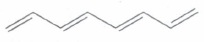 is ______.
σ-bond = 17
π-bond = 4
σ-bond = 14
π-bond = 3
σ-bond = 18
π-bond = 4
σ-bond = 15
π-bond = 3
17.
The IUPAC name of
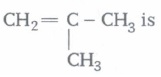
2-methylbutene
1-methylpropene
2-methylbut-2-ene
2-methylprop-1-ene
18.
Arrange the halogens F2, CI2, Br2, I2 in order of their increasing reactivity with alkanes.
I2 < Br2 < CI2 < F2
Br2 < CI2 < F2 < I2
F2 < CI2 < Br2 < I2
Br2 < I2 < CI2 < F2
19.
Soda lime is a mixture of ______.
NaOH + Ca(OH)2
NaOH + Mg(OH)2
NaOH + CaO
NaOH + MgO
20.
Among the following, which hydrocarbon is not produced by Wurtz reaction?
methane
ethane
propane
All given options can be prepared
21.
3d-transition series of elements starts with scandium which has the electronic configuration _____.
3d1 4s2
3d1 4s1
3d2 4s2
3d3 4s2
22.
General outer electronic configuration of d-block elements is _____.
\((n-1) d^{1-10} n s^{3}\)
\((n+1) d^{1-10} n s^{0-2}\)
\((n-1) d^{1-10} n s^{0-2}\)
\((n-1) d^{0} n s^{0-2}\)
23.
The symbol and name according to the IUPAC system for the element with atomic number = 120,respectively are _____.
Ubn and unbinilium
Ubn and unbiunium
Ubn and unnilbium
Ubn and unnilium
24.
Periodic classification of elements can be done on the basis of electronic configuration and is used to examine the _____.
periodic trends in physical properties of elements
periodic trends in chemical properties of elements
Both (a) and (b)
None of the above
25.
Who developed the long form of the periodic table?
Niels Bohr
Moseley
Mendeleef
Lothar Meyer
26.
Elements having similar outer shell electronic configuration in their atoms are arranged in _____.
groups
vertical columns
families
All of these
27.
Mendeleev's left the gap under aluminium and a gap under silicon having atomic weights 68 and 72 respectively. These elements respectively are _____.
Eka-aluminium and Eka-silicon
aluminium and silicon
Eka-germanium and Eka-silicon
Eka-aluminium and Eka-germanium
28.
How many number of molecules and atoms respectively are present in 2.8 L of a diatomic gas at STP?
6.023 x 10²³, 7.5 x 10²³
6.023 x 1023,15 x 1022
7.5 x 1022,15 x 1022
15 x 1022,7.5 x 1023
29.
Which of the following statements is/ are incorrect?
The weight of a substance can be determined very accurately by using an analytical balance
Volume is denoted in dm3 units
Density of a substance is its amount present per unit volume
Candela is the luminous intensity, that emits monochromatic radiation of frequency, 540 x 1012Hz
30.
What will be the molality of the solution containing 18.25g of HCl gas in 500 g of water?
0.1 m
1 M
0.5 m
1 m
31.
One mole of any substance contains 6.022 x 10²³ atoms/molecules. Number of molecules of H2SO4 present in 100 mL of 0.02M H2SO4 solution is .........
12.044 x 10²⁰ molecules
6.022 x 10²³ molecules
1 x 10²³ molecules
12.044 x 10²³ molecules
32.
An organic compound on analysis was found to contain 10.06% carbon, 0.84% hydrogen and 89.10% chlorine. What will be the empirical formula of the substance?
CH2Cl2
CHCl3
CCl4
CH3CI
33.
The empirical formula of a compound is CH2. One mole of this compound has a mass of 42 g. Its molecular formula is _______.
C3H6
C3H8
CH2
C2H2
34.
A compound contains 69.5% oxygen, 30.5% nitrogen and its molecular weight is 92. The formula of compound is _______.
N2O
NO2
N2O4
N2O5
35.
The number of atoms present in one mole of an element is equal to Avogadro number. Which of the following element contains the greatest number of atoms?
4 g He
46 g Na
0.40 g Ca
12 g He
36.
Which of the following reactions is not correct according to the law of conservation of mass?
2Mg(s) +O2(g) \(\Rightarrow\) 2MgO(s)
C3H8(g)+ O2(g) \(\Rightarrow\) CO2(g)+ H2O(g)
P4(s) + 5O2(g) \(\Rightarrow\) P4O10(S)
CH4(g)+ 2O2(g) \(\Rightarrow\) CO2(g)+ 2H2O(g)
37.
Which set of figures will be obtained after rounding upto three significant figures 1.386, 4.334, 2.808?
1.39,4.34, 2.809
1.39,4.33, 2.81
1.38,4.34, 2.800
1.39,4.34, 2.80
38.
Baeyer's reagent is ______.
aqueous KMnO4
neutral KMnO4
alkaline KMnO4
aqueous bromine water
39.
The catalyst required for the given reaction is ______.
\(HC\equiv CH+dil{ \quad H }_{ 2 }{ SO }_{ 4 }\overset { Catalyst }{ \longrightarrow } { CH }_{ 3 }CHO\)
HgSO4
Pt
A1CI3
Pd
40.
A liquid hydrocarbon is converted to a mixture of gaseous hydrocarbon by ______.
hydrolysis
oxidation
distillation
cracking
41.
Which element has smallest size?
B
N
Al
P
42.
Which one of the following is isoelectronic with Ne?
N3-
Mg2+
AI3+
all of the above
43.
Which of the following species are not known?
AgOH
PbI4
PI5
SH6
44.
Diagonal relationships are shown by _____.
Be and Al
Mg and Al
Li and Mg
Band P
45.
Among the following elements, which has the least electron affinity?
Phosphorous
Oxygen
Sulphur
Nitrogen
46.
What is the electronic configuration of the elements of group 14?
ns2 np4
ns2 np6
ns2 np2
ns2
47.
Which of the following is arranged in order of increasing radius?
K+ (aq) < Na + (aq) < Li+ (aq)
K+ (aq) > Na + (aq) > Zn2+ (aq)
K+ (aq) > Li+ (aq) > Na + (aq)
Li+ (aq) < Na + (aq) < K+ (aq)
48.
The highest ionization energy is exhibited by _____.
halogens
alkaline earth metals
transition metals
noble gases
49.
The empirical formula of sucrose is _______.
CH2O
CHO
C12H22 O11
C(H2 O)2
50.
12 g of Mg will react completely with an acid to give: _______.
1 mole of O2
\(\frac { 1 }{ 2 } \)mole of H2
1 mole of H2
2 mole of H2
1.
In a period, metallic character decreases as we move from left to right. Therefore, metallic character of K, Mg and Al decreases in the order: K > Mg > AI. However, within a group, the metallic character, increases from top to bottom. Thus, Al is more metallic than B. Therefore, the correct sequence of decreasing metallic character is: K> Mg > Al > B, i.e., option (d) is correct.
2.
(a)
nuclear charge (Z)
3.
(c)
Nuclear mass
4.
In the modern periodic table, each period begins with the filling of a new shell. Therefore, the period indicates the value of principal quantum number. Thus, option (c) is correct.
5.
(c)
Mole fraction
6.
(c)
14 g of N2
7.
(c)
28 g of N2 and 32 g of O2
8.
(d)
All of these
9.
(b)
-NO2, -CHO, -SO3H, - COR
10.
(d)
All of these
11.
(d)
All of these
12.
(a)
ketones/acids
13.
(c)
2-bromopropene
14.
(d)
3-methylbut-1-yne
15.
(b)
2,3-dimethylbut-2-ene
16.
(a)
σ-bond = 17
π-bond = 4
17.
(d)
2-methylprop-1-ene
18.
(a)
I2 < Br2 < CI2 < F2
19.
(c)
NaOH + CaO
20.
(a)
methane
21.
(a)
3d1 4s2
22.
(c)
\((n-1) d^{1-10} n s^{0-2}\)
23.
(a)
Ubn and unbinilium
24.
(c)
Both (a) and (b)
25.
(a)
Niels Bohr
26.
(d)
All of these
27.
(a)
Eka-aluminium and Eka-silicon
28.
(c)
7.5 x 1022,15 x 1022
29.
(a)
The weight of a substance can be determined very accurately by using an analytical balance
30.
(d)
1 m
31.
(a)
12.044 x 10²⁰ molecules
32.
(b)
CHCl3
33.
(a)
C3H6
34.
(c)
N2O4
35.
(d)
12 g He
36.
(b)
C3H8(g)+ O2(g) \(\Rightarrow\) CO2(g)+ H2O(g)
37.
(b)
1.39,4.33, 2.81
38.
(c)
alkaline KMnO4
39.
(a)
HgSO4
40.
(d)
cracking
41.
(b)
N
42.
(d)
all of the above
43.
(c)
PI5
44.
(c)
Li and Mg
45.
(d)
Nitrogen
46.
(c)
ns2 np2
47.
(c)
K+ (aq) > Li+ (aq) > Na + (aq)
48.
(b)
alkaline earth metals
49.
(c)
C12H22 O11
50.
(b)
\(\frac { 1 }{ 2 } \)mole of H2

11th Standard CBSE Syllabus & Materials
11th Standard CBSE
CBSE 11th Business Studies Forms of Business Organisation Sample Question Papers Study Material - QB365 Set A
NEW11th Standard CBSE
CBSE 11th Business Studies Business, Trade and Commerce Sample Question Papers Study Material - QB365 Set A
NEW11th Standard CBSE
CBSE 11th Physics Waves Sample Question Papers Study Material - QB365 Set A
NEW11th Standard CBSE
CBSE 11th Physics Kinetic Theory Sample Question Papers Study Material - QB365 Set A



NCERT Books

Syllabus

Exam Pattern

Sample Question Papers

Previous year Question Papers

Important Notes

MCQ Practice test

NCERT Exemplers

Case study Questions

Image Based Questions

Passage based Questions

HOT Questions

Value Based Questions

Model Questions Papers
NCERT ( Book Back ) Questions

Assertion and Reason
Important Questions And Answers

CBSE 11th Standard CBSE Subjects
CBSE Standards