
 100% FREE ACCESS
11th Standard CBSE Syllabus & Materials
11th Standard CBSE
CBSE 11th Economics PART-A - Presentation of Data - New Sample Question Papers Study Material - QB365 Set A
NEW11th Standard CBSE
CBSE 11th Economics PART-A - Organisation of Data - New Sample Question Papers Study Material - QB365 Set A
NEW11th Standard CBSE
CBSE 11th Economics PART-A - Collection of Data - New Sample Question Papers Study Material - QB365 Set A
NEW11th Standard CBSE
CBSE 11th Economics PART-A - Introduction to Economics and Statistics - New Sample Question Papers Study Material - QB365 Set A
NEW11th Standard CBSE
CBSE 11th Business Studies International Trade Sample Question Papers Study Material - QB365 Set A
NEW11th Standard CBSE
CBSE 11th Business Studies Evolution and Fundamentals of Business Sample Question Papers Study Material - QB365 Set A

Published on: 21/10/2025
Download CBSE Class 11th Standard CBSE Chemistry question papers, sample papers, important questions, and previous year solved papers in PDF format. Get free study materials, NCERT solutions, and exam preparation resources for Class 11th Standard CBSE Chemistry
Questions + Answers key
Take MCQ Chemistry Test
1.
Sulphuric acid reacts with sodium hydroxide as follows:
\(\mathrm{H}_{2} \mathrm{SO}_{4}+2 \mathrm{NaOH} \longrightarrow \mathrm{Na}_{2} \mathrm{SO}_{4}+2 \mathrm{H} 2 \mathrm{O}\)
When 1L of 0.1M sulphuric acid solution is allowed to react with 1L of 0.1M sodium hydroxide solution, the amount of sodium sulphate formed and its molarity in the solution obtained is _______.
0.1 mol L-1
7.10 g
0.025 mol L-1
3.55 g
2.
Which of the following solutions have the same concentration?
20 g of NaOH in 200 mL of solution
0.5 mol of KCl in 200 mL of solution
40 g of NaOH in 100 mL of solution
20 g of KOH in 200 mL of solution
3.
If 3.01 x 10²⁰ molecules are removed from 98 mg of H2SO4, then number of moles of H2SO4 left are _______.
0.5 x 10⁻³ mol
0.1 x 10⁻³ mol
9.95 x 10⁻³ mol
1.66 x 10⁻³ mol
4.
A hydrocarbon was found to contain 85.7% by mass of carbon and 14.3% by mass of hydrogen. Molar mass of hydrocarbon is 56 g mol-1. The formula for hydrocarbon is _______.
CH4
C2H4
C4H8
C5H10
5.
Which of the following represents largest number of particles _______.
Atoms in mole of CH4
Atoms in 0.5 mol of SO3
Atoms in 0.5 mole of CO2
Atoms in 1 mol of CO
6.
The mass of one mole a chloride formed by metal 'X' is 111.0 g. Which one could be formula of chloride?
XCI
XCI2
XCI3
XCI4
7.
Which of the following is not in accordance to IUPAC system?
Br-CH2-CH = CH2
1-bromoprop- 2-ene
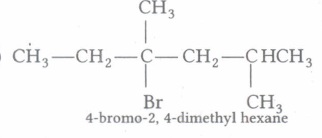
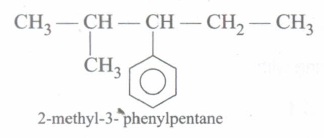
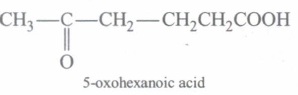
8.
Which of the following should be added in the compound for the detection of carbon and hydrogen?
Cu(I) oxide
Cu(II) oxide
Zn dust
Activated charcoal
9.
In Kjeldahl's method for estimation of nitrogen, CuSO4 acts as ______.
oxidising agent
reducing agent
catalytic agent
hydrolysis agent
10.
For the purification, isolation and separation of organic compounds, the latest technique is ______.
chromatography
steam distillation
fractional crystallisation
sublimation
11.
Name the two types of chromatography techniques based on the principle of differential adsorption.
Column chromatography and thick layer chromatography
Non-column chromatography and thin layer chromatography
Column chromatography and thin layer chromatography
Paper chromatography and thick layer chromatography
12.
In paper chromatography, chromatography paper contains water trapped in it, which acts as the ______.
mobile phase
stationary phase
stationary medium
None of these
13.
Glycerol can be separated from spent-lye in soap industry by ______.
chromatography
sublimation
fractional distillation
distillaltion under reduced pressure
14.
Consider the following compounds,
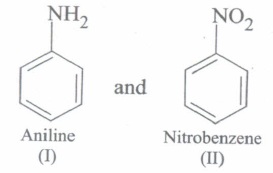
Which of the following statements is/are true regarding I and II?
I shows + R -effect, whereas II shows -R -effect
I shows -R -effect, whereas II shows + R -effect
Both I and II show +R -effect
Both I and II show -R -effect
15.
The difference in energy between the actual structure and lowest energy canonical form is called ______.
resonance energy
localisation energy
Both (a) and (b)
All of these
16.
Choose the correct order of stability of carbocation using the concept of hyperconjugation
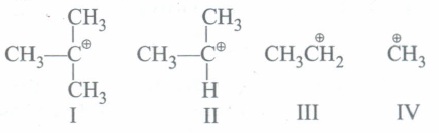
I < II < Ill < IV
IV < IIl < II < I
Ill < IV < II < I
None of these
17.
Ionic species are stabilised by the dispersal of charge. Which of the following carboxylate ion is the most stable?
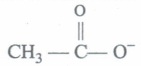
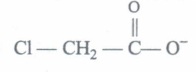
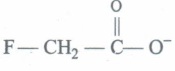
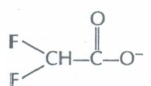
18.
Covalent bond can undergo fission in two different ways. The correct representation involving a heterolytic fission of CH3-Br is ______.

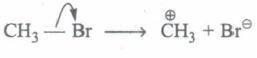
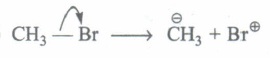
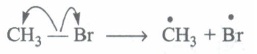
19.
What is the correct order of decreasing stability of the following cations?
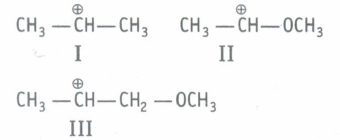
II > I > III
II > III > I
Ill > I > II
I > II > III
20.
Which of the following compounds will exhibit geometrical isomerism?
1-phenyl-2-butene
3-phenyl-1-butene
2-phenyl-1-butene
1, 1-diphenyl-1-propane
21.
Study the structures given below carefully and choose the type of isomerism they represent
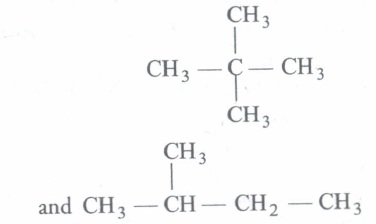
chain isomerism
position isomerism
functional isomerism
metamerism
22.
In which of the following, functional group isomerism is not possible?
Alcohols
Aldehydes
Alkyl halides
Cyanides
23.
The IUPAC name for ______.

t-hydroxypentane-t,4-dione
1,4-dioxopentanol
1-carboxybutan-S-one
4-oxopentanoic acid
24.
Which of the following is a homo cyclic alicyclic compound?


25.
Which of the following is a correct representation of condensed formula for HOCH2CH2CH2CH(CH3)CH(CH3 )CH3?
HO(CH2)2 CHCH3CH(CH3)2
HO(CH2)3 CH(CH3 )CH(CH3)2
HOCH2CHCH3CH(CH3)2
None of the above
26.
The correct order of electronegativity of carbon in ethane, ethene and ethyne is ______.
ethane < ethene < ethyne
ethyne < ethene < ethane
ethene < ethyne < ethane
ethene < ethane < ethyne
27.
Which type of bond is formed between carbon atom and nitrogen atom?
Covalent bond
Ionic bond
Dative bond
None of these
28.
If 1mL of water contains 20 drops then number of molecules in a drop of water is _______.
6.023 x 10²³ molecules
1.376 x 1026 molecules
1.62 x 10²¹ molecules
4.346 x 10²⁰ molecules
29.
Zinc sulphate contains 22.65% zinc and 43.9% water of crystallisation. If the law of constant proportions is true then the weight of zinc required to produce 20 g of the zinc sulphate crystals will be _______.
45.3 g
4.53 g
0.453 g
453 g
30.
A solution is prepared by adding 2 g of a substance A to 18 g of water. Calculate the mass per cent of the solute.
8%
9%
10%
11%
31.
In the following reaction, \(\mathrm{MnO}_{2}+4 \mathrm{HCl} \longrightarrow \mathrm{MnCl}_{2}+2 \mathrm{H}_{2} \mathrm{O}+\mathrm{Cl}_{2}\) 2 moles of Mn02 react with 4 moles of HCl to form 11.2 LCl2 at STP. Thus, percent yield of Cl2 is _______.
25%
50%
100%
75%
32.
If 500 mL of a 5M solution is diluted to 1500 mL, what will be the molarity of the solution obtained?
1.5 M
1.66 M
0.017 M
1.59 M
33.
Air contains 20% O2 by volume. How much volume of air will be required for combustion of 100 cc of acetylene?
500 cc
1064 cc
212.8 cc
1250 cc
34.
1.020 g of metallic oxide contains 0.540 g of the metal. If the specific heat of the metal, Mis 0.216 cal deg-1g-1. The molecular formula of its oxide is _______.
MO
M2O3
M2O4
M2O
35.
How many number of aluminium ions are present in 0.051 g of aluminium oxide?
6.023 x 10²³ ions
3 ions
6.023 x 10²⁰ ions
9 ions
36.
Given that, the abundances of isotopes 54Fe, 56Fe and 57Fe are 5%, 90% and 5% respectively, the atomic mass of Fe is _______.
55.85
55.95
55.75
56.05
37.
0.2429 g sample of potassium is heated in oxygen, 0.440 g of a crystalline compound is obtained. What is the formula of this compound?
KO
K2O
KO2
KO3
38.
Arrange the following in the order of increasing mass (Atomic mass of 0 = 16, Cu = 63 and N = 14).
I. One atom of oxygen
II. One atom of nitrogen
III. 1x 10⁻¹⁰ mole of oxygen
IV. 1 x 10⁻¹⁰ mole of copper
II< 1< III< IV
1< II< III< IV
III< II< IV< I
IV< II< III< I
39.
Agas is found to have the formula (CO)x. Its vapour density is 70. The value of x will be _______.
7
4
5
6
40.
An alkaloid contains 17.28% of nitrogen and its molecular mass is 162. The number of nitrogen atoms present in one molecule of alkaloid is _______.
5
4
3
2
41.
If the density of a solution is 3.12 g ml-1, the mass of 1.5 mL solution in significant figures is _____.
4.7 g
4680 x 10-3 g
4.680 g
46.80 g
42.
The result reported in the following multiplication of significant figures, 2.5 x 1.25 = 3.125 should be _______.
3.125
3.1
3.12
3.10
43.
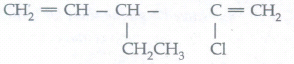
The IUPAC name of this compound is
3-ethyl-4-chloro-1, 4-pentadiene
2-chloro-3-ethyl-1, 4-pentadiene
4-chloro ethyl-1-pentene
3-ethyl-4-chloro-4-pentene
44.
Which of the following compounds will exhibit cis-trans isomerism?
2-Butene
2-Butyne
1-Butene
2-Butanol
45.
The reaction

carbocation formation
free-radical mechanism
carbanion formation
none of these
46.
The IUPAC name of ______.
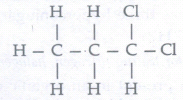
1, 2-dichloropropane
3, 3-dichloropropane
1, 1-dichloropropane
dichloropropane
47.
The large number of organic compounds is due to _______.
the valency of carbon
a small size of carbon
a special property of carbon known as catenation
48.
The mass of an atom of nitrogen is _______.
\(\frac { 14 }{ { { 6.023\times 10 }^{ 23 } } } \)
\(\frac { 28 }{ { { 6.023\times 10 }^{ 23 } } } \)g
\(\frac { 1 }{ { { 6.023\times 10 }^{ 23 } } } \)g
14 amu
49.
How many grams are contained in 1 gram atom of Na?
13 g
1 g
23 g
\(\frac { 1 }{ 23 } \) g
50.
5.6 litres of oxygen at NTP is equivalent to _______.
1 mole
\(\frac { 1 }{ 4 } \)mole
\(\frac { 1 }{ 8 } \)mole
\(\frac { 1 }{ 2 } \)mole
1.
(b)
7.10 g
2.
(a)
20 g of NaOH in 200 mL of solution
3.
(a)
0.5 x 10⁻³ mol
4.
(c)
C4H8
5.
(a)
Atoms in mole of CH4
6.
(b)
XCI2
7.
(a)
Br-CH2-CH = CH2
1-bromoprop- 2-ene
8.
(b)
Cu(II) oxide
9.
(c)
catalytic agent
10.
(a)
chromatography
11.
(c)
Column chromatography and thin layer chromatography
12.
(b)
stationary phase
13.
(d)
distillaltion under reduced pressure
14.
(a)
I shows + R -effect, whereas II shows -R -effect
15.
(a)
resonance energy
16.
(b)
IV < IIl < II < I
17.
(d)
18.
(b)
19.
(a)
II > I > III
20.
(a)
1-phenyl-2-butene
21.
(a)
chain isomerism
22.
(c)
Alkyl halides
23.
(d)
4-oxopentanoic acid
24.
(b)
25.
(b)
HO(CH2)3 CH(CH3 )CH(CH3)2
26.
(a)
ethane < ethene < ethyne
27.
(a)
Covalent bond
28.
(c)
1.62 x 10²¹ molecules
29.
(b)
4.53 g
30.
(c)
10%
31.
(b)
50%
32.
(b)
1.66 M
33.
(d)
1250 cc
34.
(b)
M2O3
35.
(c)
6.023 x 10²⁰ ions
36.
(b)
55.95
37.
(c)
KO2
38.
(a)
II< 1< III< IV
39.
(c)
5
40.
(d)
2
41.
(a)
4.7 g
42.
(b)
3.1
43.
(b)
2-chloro-3-ethyl-1, 4-pentadiene
44.
(a)
2-Butene
45.
(b)
free-radical mechanism
46.
(c)
1, 1-dichloropropane
47.
(c)
a special property of carbon known as catenation
48.
(b)
\(\frac { 28 }{ { { 6.023\times 10 }^{ 23 } } } \)g
49.
(c)
23 g
50.
(b)
\(\frac { 1 }{ 4 } \)mole

11th Standard CBSE Syllabus & Materials
11th Standard CBSE
CBSE 11th Business Studies Forms of Business Organisation Sample Question Papers Study Material - QB365 Set A
NEW11th Standard CBSE
CBSE 11th Business Studies Business, Trade and Commerce Sample Question Papers Study Material - QB365 Set A
NEW11th Standard CBSE
CBSE 11th Physics Waves Sample Question Papers Study Material - QB365 Set A
NEW11th Standard CBSE
CBSE 11th Physics Kinetic Theory Sample Question Papers Study Material - QB365 Set A



NCERT Books

Syllabus

Exam Pattern

Sample Question Papers

Previous year Question Papers

Important Notes

MCQ Practice test

NCERT Exemplers

Case study Questions

Image Based Questions

Passage based Questions

HOT Questions

Value Based Questions

Model Questions Papers
NCERT ( Book Back ) Questions

Assertion and Reason
Important Questions And Answers

CBSE 11th Standard CBSE Subjects
CBSE Standards