 100% FREE ACCESS
11th Standard CBSE Syllabus & Materials
11th Standard CBSE
CBSE 11th Economics PART-A - Presentation of Data - New Sample Question Papers Study Material - QB365 Set A
NEW11th Standard CBSE
CBSE 11th Economics PART-A - Organisation of Data - New Sample Question Papers Study Material - QB365 Set A
NEW11th Standard CBSE
CBSE 11th Economics PART-A - Collection of Data - New Sample Question Papers Study Material - QB365 Set A
NEW11th Standard CBSE
CBSE 11th Economics PART-A - Introduction to Economics and Statistics - New Sample Question Papers Study Material - QB365 Set A
NEW11th Standard CBSE
CBSE 11th Business Studies International Trade Sample Question Papers Study Material - QB365 Set A
NEW11th Standard CBSE
CBSE 11th Business Studies Evolution and Fundamentals of Business Sample Question Papers Study Material - QB365 Set A

Published on: 21/10/2025
Download CBSE Class 11th Standard CBSE Chemistry question papers, sample papers, important questions, and previous year solved papers in PDF format. Get free study materials, NCERT solutions, and exam preparation resources for Class 11th Standard CBSE Chemistry
Questions + Answers key
Take MCQ Chemistry Test
1.
Anything that influences the valence electrons will affect the chemistry of the element. Which one of the following factors does not affect the valence shell?
Valence principal quantum number (n)
Nuclear charge (Z)
Nuclear mass
Number of core electrons
2.
Which of the following statements related to the modern periodic table is incorrect?
The p-block has 6 columns, because a maximum of 6 electrons can occupy all the orbitals in a p-shell.
The d-block has 8 columns, because a maximum of 8 electrons can occupy all the orbitals in a d-subshell.
Each block contains a number of columns equal to the number of electrons that can occupy that subshell.
The block indicates value of azimuthal quantum number (l) for the last subshell that received electrons in building up the electronic configuration
3.
Which of the following statements related to the modern periodic table is incorrect?
The p-block has 6 columns, because a maximum of 6 electrons can occupy all the orbitals in a p-shell.
The d-block has 8 columns, because a maximum of 8 electrons can occupy all the orbitals in a d-subshell.
Each block contains a number of columns equal to the number of electrons that can occupy that subshell.
The block indicates value of azimuthal quantum number (l) for the last subshell that received electrons in building up the electronic configuration.
4.
The general electronic configuration of d-block elements is ______.
\((n-1) d^{1 \text { to } 10} n s^{2}\)
\((n-1) d^{1-10} n s^{0-2}\)
\((n-1) d^{1 \text { to } 10} n s^{1-2}\)
\((n-1) d^{1-9} n s^{0-2}\)
5.
One mole of oxygen gas at STP is equal to _________
6.022 x 10²³ molecules of oxygen
6.022 x 10²³ atoms of oxygen
16 g of oxygen
32 g of oxygen
6.
What is mass silicon in 100 g of sodium silicate, Na2SiO3? [Na = 23, Si = 28, O = 16u]
16.7%
23.0%
28.0%
82.0%
7.
What is the technological applications of fractional distillation?
To separate different fractions of crude oil in petroleum industry
To separate different fractions of volatile and non-volatile solvents
To separate mixture of amino acids
No technological application of fractional distillation
8.
The fragrance of flowers is due to the presence of some steam volatile organic compounds called essential oils. These are generally insoluble in water at room temperature but are miscible with water vapour in vapour phase. Asuitable method for the extraction of these oils from the flowers is ______.
distillation
crystallisation
distillation under reduced pressure
steam distillation
9.
Which techniqaes is based on the difference in the solubilities of the compound and the impurities in a suitable solvent?
Sublimation
Crystallisation
Distillation
None of these
10.
Write the correct IUPAC name of the following.
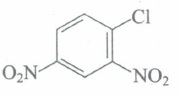
1-chloro-2, 4- dinitrobenzene
6-chloro-1, 3- dinitrobenzene
1-chloro-4, 6-dinitrobenzene
2-chloro-1, 5-dinitrobenzene
11.
What is the correct IUPAC name of the following?
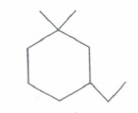
3-ethyl-1,1-dimethylcyclohexane
t-ethyl- 3,3-dimethylcyclohexane
1,1-dimethyl-3-ethylcyclohexane
None of the above
12.
The structure of iso-butyl group in an organic compound is ______.
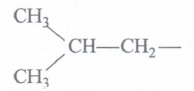
CH3-CH2-CH2-CH3
CH3-CH2-CH2-CH2-
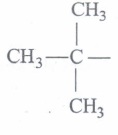
13.
Correct IUPAC name for H3C ______.
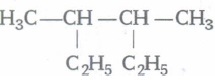
2-ethyl-3-methylpentane
3, 4-dimethylhexane
2-sec-butylbutane
2, 3-dimethylbutane
14.
Which type of compound is shown by the following structure ______.
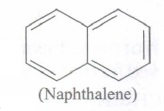
Alicyclic compound
Benzenoid aromatic compound
Non-benzenoid aromatic compound
Acyclic compound
15.
Outer electronic configuration off-block elements is ______.
\((n+1) f^{1-14}(n-1) d^{0-1} n s^{2}\)
\((n-2) f^{1-14}(n+1) d^{0-1} n s^{2}\)
\((n-2) f^{1-14}(n-1) d^{0-1} n s^{2}\)
None of the above
16.
According to IUPAC,total number of groups and periods in the periodic table respectively are ______.
16, 9
18, 7
18, 9
13, 7
17.
The outermost electronic configuration of p-block elements varies from ns2np 1 to ______.
\(n s^{2} n p^{5}\)
\(n s^{2} n p^{4}\)
\(n s^{2} n p^{6}\)
\(n s^{2} n p^{3}\)
18.
Out of the four blocks in which periodic table is divided, helium belongs which block?
s-block
p-block
d-block
f-block
19.
Elements are classified into four blocks like s-block, p-block, d-block and f-block on the basis of ______.
atomic number
atomic mass
atomic orbitals
All of these
20.
The elements in which electrons are progressively filled in 4f-orbital are called______.
actinoids
transition elements
lanthanoids
halogens
21.
General outer electronic configuration of d-block elements is _____.
\((n-1) d^{1-10} n s^{3}\)
\((n+1) d^{1-10} n s^{0-2}\)
\((n-1) d^{1-10} n s^{0-2}\)
\((n-1) d^{0} n s^{0-2}\)
22.
The electronic configuration of gadolinium (Atomic number 64) is _____.
[Xe] 4f3 5d5 6s2
[Xe] 4f7 5d2 6s1
[Xe] 4f7 5d1 6s2
[Xe] 4f8 5d6 6s2
23.
Predict the position of an element having the electronic configuration \(1 s^{2} 2 s^{2} 2 p^{6} 3 s^{2} 3 p^{6} 3 d^{5} 4 s^{1}\) _____.
Period 4, group 6
Period 6, group 4
Period 3, group 1
Period 4, group 5
24.
Periodic classification of elements can be done on the basis of electronic configuration and is used to examine the _____.
periodic trends in physical properties of elements
periodic trends in chemical properties of elements
Both (a) and (b)
None of the above
25.
The period number in the long form of the periodic table is equal to _____.
magnetic quantum number of any element of the period
atomic number of any element of the period
maximum principal quantum number of any element of the period
maximum azimuthal quantum number of any element of the period
26.
Which of the following statements is incorrect?
Mendeleev's arranged elements in horizontal rows and vertical columns
Mendeleev's arranged elements in order of their increasing atomic number
Mendeleev's system of classifying elements was more elaborate than that of Lother Meyer
None of the above
27.
Which important property did Mendeleev use to classify the elements in his periodic table?
Atomic weight
Atomic number
Melting point
None of these
28.
What will be the molarity of pure water?
18 M
50.0 M
55.6 M
100 M
29.
Which law states that if two elements can combine to form more than one compound, the masses of one element that combine with a fixed mass of other element, are in the ratio of small whole numbers?
Avogadro's law
Law of definite composition
Law of multiple proportions
Gay Lussac's law of gaseous volumes
30.
X g of Ag was dissolved in HNO3 and the solution was treated with excess of NaCl, when 2.87g of AgCl was precipitated. The value of x is _______.
1.08 g
2.16 g
2.70 g
1.62g
31.
What will be the molality of the solution made by dissolving 10 g of NaOH in 100 g of water?
2.5 m
5 m
10 m
1.25 m
32.
What is the mass per cent of carbon in carbon dioxide?
0.034%
27.27%
3.4%
28.7%
33.
An organic compound containing C,Hand O has 49.3%carbon, 6.84% hydrogen and its vapour density is 73. Molecular formula of the compound is _______.
C3H5O2
C4H10O2
C6H10O4
C3H10O2
34.
An organic compound containing C and H has 92.3%of carbon, its empirical formula is _______.
CH
CH3
CH2
CH4
35.
Which of the following statements is correct about the reaction given below?
\({ }_{4 \mathrm{Fe}}(s)+30_{2}(g) \longrightarrow 2 \mathrm{Fe}_{2} \mathrm{O}_{3}(g)\)
Total mass of iron and oxygen in reactants = total mass of iron and oxygen in product therefore it follows law of conservation of mass.
Total mass of reactants = total mass of product, therefore, law of multiple proportions is followed
Amount of Fe2O3 can be increased by taking anyone of the reactants (iron or oxygen) in excess
Amount of Fe2O3 produced will decrease if the amount of anyone of the reactants (iron or oxygen) is taken in excess.
36.
A student performs a titration with different burettes and finds titre values of 25.2 mL, 25.25 mL and 25.0 mL. The number of significant figures in the average titre value is _______.
1
2
3
4
37.
Which of the following statements about a compound is incorrect?
A molecule of a compound has atoms of different elements
A compound cannot be separated into its constituent elements by physical methods of separation
A compound retains the physical properties of its constituent elements
The ratio of atoms of different elements in a compound is fIxed
38.
Which of the following are electrophiles?
Dimethyl sulphide
Bromides
Carbon dioxide
Ammonia
39.
The hybridization state of a carbocation is ______.
Sp4
sp3
sp2
sp
40.
The bond that undergoes heterolytic cleavage most readily is ______.
C-C
C-O
C-H
O-H
41.
The IUPAC name of ______.
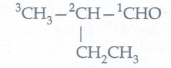
2-methyl butanal
butan-2-aldehyde
2-ethylpropanal
3-methyl isobutraldehyde
42.
The IUPAC name of ______.
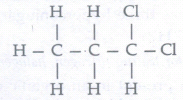
1, 2-dichloropropane
3, 3-dichloropropane
1, 1-dichloropropane
dichloropropane
43.
The reaction: CH3CH2I + KOH (aq) \(\rightarrow\)CH3CH2OH + KI is classified as :________.
electrophilic substitution
nucleophilic substitution
elimination
addition
44.
Which of the following carbocation is most stable ?
\(({ CH }_{ 3 })_{ 3 }C.\overset {+ }{ C } { H }_{ 2 }\)
\(\left( { CH }_{ 3 } \right) _{ 3 }\overset { + }{ C } \)
\({ CH }_{ 3 }{ CH }_{ 2 }\overset { +}{ C } { H }_{ 2 }\)
\({ CH }_{ 3 }\overset {+ }{ C } HC{ H }_{ 2 }{ CH }_{ 3 }\)
45.
In the Lassaigne’s test for nitrogen in an organic compound, the Prussian blue colour is obtained due to the formation of: ______.
Na4[Fe(CN)6]
Fe4[Fe(CN)6]3
Fe2[Fe(CN)6]
Fe3[Fe(CN)6]4
46.
In the organic compound CH2=CH-CH2-CH2-C\(\equiv \)CH, the pair of hydridised orbitals involved in the formation of: C2 - C3 bond is _____.
sp - sp2
sp - sp3
Sp2 - Sp3
sp3 - sp3
47.
What is the electronic configuration of the elements of group 14?
ns2 np4
ns2 np6
ns2 np2
ns2
48.
The number of significant figures in 0.0101 is _______.
3
2
4
5
49.
Which of the following has the highest mass?
1 g atom of C
\(\frac { 1 }{ 2 } \)mole of CH4
10 mL of water
3.011 x 10²³atoms of oxygen
50.
One mole of CO2 contains _______.
6.02 x 10²³atoms of C
3 g of CO2
6.02 x 10²³atoms of O
18.1 x 10²³ molecules of CO2
1.
(c)
Nuclear mass
2.
(b)
The d-block has 8 columns, because a maximum of 8 electrons can occupy all the orbitals in a d-subshell.
3.
Statement (b) is incorrect.
The d-block has 10 columns because a maximum of 10 electrons can occupy all the orbitals in a d subshell.
4.
(b)
\((n-1) d^{1-10} n s^{0-2}\)
5.
(a)
6.022 x 10²³ molecules of oxygen
6.
(d)
82.0%
7.
(a)
To separate different fractions of crude oil in petroleum industry
8.
(d)
steam distillation
9.
(b)
Crystallisation
10.
(a)
1-chloro-2, 4- dinitrobenzene
11.
(a)
3-ethyl-1,1-dimethylcyclohexane
12.
(a)
13.
(b)
3, 4-dimethylhexane
14.
(b)
Benzenoid aromatic compound
15.
(c)
\((n-2) f^{1-14}(n-1) d^{0-1} n s^{2}\)
16.
(b)
18, 7
17.
(c)
\(n s^{2} n p^{6}\)
18.
(b)
p-block
19.
(c)
atomic orbitals
20.
(c)
lanthanoids
21.
(c)
\((n-1) d^{1-10} n s^{0-2}\)
22.
(c)
[Xe] 4f7 5d1 6s2
23.
(a)
Period 4, group 6
24.
(c)
Both (a) and (b)
25.
(c)
maximum principal quantum number of any element of the period
26.
(b)
Mendeleev's arranged elements in order of their increasing atomic number
27.
(a)
Atomic weight
28.
(c)
55.6 M
29.
(c)
Law of multiple proportions
30.
(b)
2.16 g
31.
(a)
2.5 m
32.
(b)
27.27%
33.
(c)
C6H10O4
34.
(a)
CH
35.
(a)
Total mass of iron and oxygen in reactants = total mass of iron and oxygen in product therefore it follows law of conservation of mass.
36.
(c)
3
37.
(c)
A compound retains the physical properties of its constituent elements
38.
(a)
Dimethyl sulphide
39.
(c)
sp2
40.
(d)
O-H
41.
(c)
2-ethylpropanal
42.
(c)
1, 1-dichloropropane
43.
(b)
nucleophilic substitution
44.
(b)
\(\left( { CH }_{ 3 } \right) _{ 3 }\overset { + }{ C } \)
45.
(b)
Fe4[Fe(CN)6]3
46.
(c)
Sp2 - Sp3
47.
(c)
ns2 np2
48.
(a)
3
49.
(a)
1 g atom of C
50.
(a)
6.02 x 10²³atoms of C

11th Standard CBSE Syllabus & Materials
11th Standard CBSE
CBSE 11th Business Studies Forms of Business Organisation Sample Question Papers Study Material - QB365 Set A
NEW11th Standard CBSE
CBSE 11th Business Studies Business, Trade and Commerce Sample Question Papers Study Material - QB365 Set A
NEW11th Standard CBSE
CBSE 11th Physics Waves Sample Question Papers Study Material - QB365 Set A
NEW11th Standard CBSE
CBSE 11th Physics Kinetic Theory Sample Question Papers Study Material - QB365 Set A



NCERT Books

Syllabus

Exam Pattern

Sample Question Papers

Previous year Question Papers

Important Notes

MCQ Practice test

NCERT Exemplers

Case study Questions

Image Based Questions

Passage based Questions

HOT Questions

Value Based Questions

Model Questions Papers
NCERT ( Book Back ) Questions

Assertion and Reason
Important Questions And Answers

CBSE 11th Standard CBSE Subjects
CBSE Standards