
 100% FREE ACCESS
11th Standard Syllabus & Materials
11th Standard
TN 11th Tamil இயற்கை வேளாண்மை,சுற்றுச்சூழல் -செய்யுள் - மனோன்மணீயம் Important Questions And Answers Study Material - QB365 Set A
NEW11th Standard
TN 11th Tamil என்னுயிர் என்பேன் -துணைப்பாடம் - இசைத்தமிழர் இருவர் Important Questions And Answers Study Material - QB365 Set A
NEW11th Standard
TN 11th Tamil மொழி கலை -செய்யுள் - ஒவ்வொரு புல்லையும் Important Questions And Answers Study Material - QB365 Set A
NEW11th Standard
TN 11th Tamil பீடு பெற நில் - இலக்கணம் - பகுபத உறுப்புகள் Important Questions And Answers Study Material - QB365 Set A
NEW11th Standard
TN 11th Tamil பீடு பெற நில் - துணைப்பாடம் - வாடிவாசல் Important Questions And Answers Study Material - QB365 Set A
NEW11th Standard
TN 11th Tamil பீடு பெற நில் - செய்யுள் - குறுந்தொகை Important Questions And Answers Study Material - QB365 Set A

Published on: 13/05/2022
QB365 provides detailed and simple solution for every book back questions in class 11 Biology subject.It will helps to get more idea about question pattern in every book back questions with solution.
latest Book back QuestionsDownload Tamil Nadu 11th Standard Biology question papers, model tests, one-mark questions, important questions, and public exam papers in PDF format. Free study materials and answer keys for TN State Board students.
Questions + Answers key
Take MCQ Biology Test1.
Write a note on conjoint vascular bundles.
2.
3.
Distinguish the anatomy of dicot root from monocot root.
4.
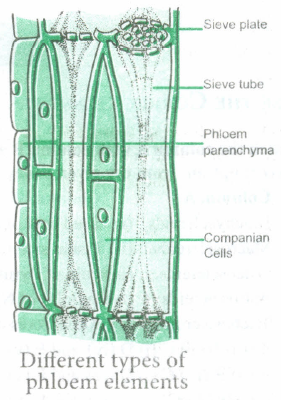
What are Sieve tubes ? Explain.
5.
Explain sclereids with their types.
1.
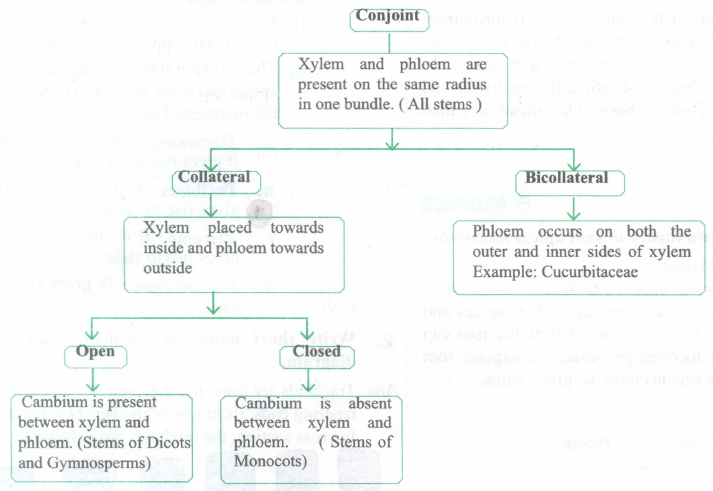
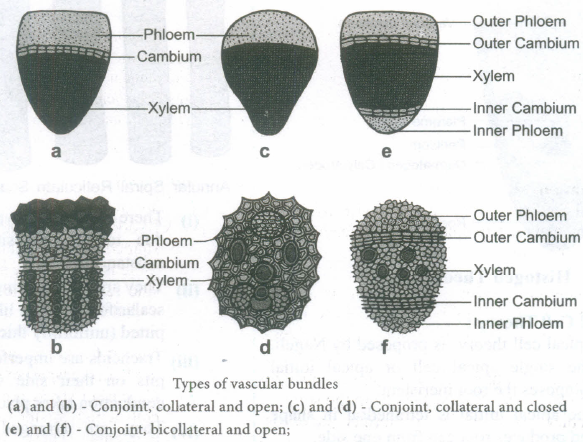
2.
3.
| S.No. | Characters | Dicot root | Monocot root |
|---|---|---|---|
| 1. | Pericyle | Gives rise to lateral roots, phellogen and a part of vascular cambium. | Gives rise to lateral roots only. |
| 2. | Vascular tissue | Usually limited number of xylem and phloem strips. | Usually more number of xylem and phloem strips. |
| 3. | Conjunctive tissue | Parenchymatous; Its cells are differentiated into vascular cambium. | Mostly sclerenchymatous but sometimes parenchymatous. It is never differentiated in to vascular cambium. |
| 4. | Cambium | It appears as a secondary meristem at the time of secondary growth. | It is altogether absent. |
| 5. | Xylem | Usually tetrach | Usually polyarch |
4.
(i) Sieve tubes are long tube like conducting elements in the phloem.
(ii) These are formed from a series of cells called sieve tube elements.
(iii) The sieve tube elements are arranged one above the other and form vertical sieve tube.
(iv) The end wall contains a number of pores and it looks like a sieve hence called as sieve plate.
(v) These elements show nacreous thickenings on their lateral walls with simple or compound sieve plates.
(vi) The function of sieve tubes are believed to be controlled by companion cells.
(vii) In mature sieve tube, Nucleus is absent and it contains a lining layer of cytoplasm with special protein called slime body in it.
(viii) In mature sieve tubes, the pores in the sieve plate are blocked by a substance called callose.
(ix) The conduction of food material takes place through cytoplasmic strands.
(x) Sieve tubes occur only in Angiosperms.
5.
Sclereids (Stone Cells)
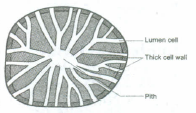
Sclereids are dead cells, usually these are isodiametric but some are elongated too. The cell wall is very thick due to lignification. Lumen is very much reduced. The pits may simple or branched. Sclereids are mechanical in function. They give hard texture to the seed coats, endosperms etc., Sclereids are classified into the folowing types.
Types of Sclereids
(a) Brachysclereids or Stone cells:
Isodiametric sclereids, with hard cell wall. It is found in bark, pith cortex, hard endosperm and fleshy portion of some fruits. Example: Pulp of Pyrus.
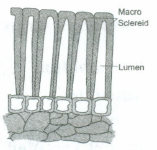
(b) Macrosclereids:
Elongated and rod shaped cells, found in the outer seed coat of leguminous plants. Example: Crotalaria and Pisum sativum.
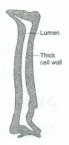
(c) Osteosclereids (Bone cells):
Rod shaped with dilated ends. They occur in leaves and seed coats. Example: seed coat of Pisum and Hakea
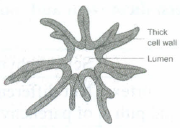
(d) Astrosclereids:
Star cells with lobes or arms diverging form a central body. They occur in petioles and leaves. Ex: Tea, Nymphae and Trochodendron.
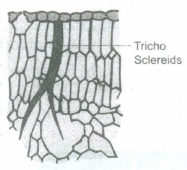
(e) Trichosclereids:
Hair like thin walled sclereids. Numerous small angular crystals are embedded in the wall of these sclereids, present in stems and leaves of hydrophytes. Example: Nymphaea leaf and Aerial roots of Monstera.

11th Standard Syllabus & Materials
11th Standard
TN 11th Tamil பீடு பெற நில் - செய்யுள் - காவடிச்சிந்து Important Questions And Answers Study Material - QB365 Set A
NEW11th Standard
TN 11th Tamil பீடு பெற நில் - உரைநடை - மலை இடப்பெயர்கள் : ஓர் ஆய்வு Important Questions And Answers Study Material - QB365 Set A
NEW11th Standard
TN 11th Tamil மாமழை போற்றுதும் - துணைப்பாடம் - யானை டாக்டர் Important Questions And Answers Study Material - QB365 Set A
NEW11th Standard
TN 11th Tamil மாமழை போற்றுதும் - செய்யுள் - ஐங்குறுநூறு Important Questions And Answers Study Material - QB365 Set A



Tamilnadu Stateboard 11th Standard Subjects

Maths

Commerce

Economics
Biology

Business Maths and Statistics

Accountancy

Computer Science

Physics

Chemistry
Maths
Biology
Economics
Physics
Chemistry

History
Business Maths and Statistics
Computer Science
Accountancy

Computer Applications
History
Computer Technology
Commerce
Computer Applications
Computer Technology
Tamil

English

French
Tamilnadu Stateboard Standards



