 100% FREE ACCESS
12th Standard CBSE Syllabus & Materials
12th Standard CBSE
CBSE 12th Economics Government Budget and the Economy Previous year Question Papers Study Material - QB365 Set A
NEW12th Standard CBSE
CBSE 12th Computer Science Interface Python with MySQL - New Previous year Question Papers Study Material - QB365 Set A
NEW12th Standard CBSE
CBSE 12th Computer Science Database Concept - New Previous year Question Papers Study Material - QB365 Set A
NEW12th Standard CBSE
CBSE 12th Computer Science Data Communication - New Previous year Question Papers Study Material - QB365 Set A
NEW12th Standard CBSE
CBSE 12th Computer Science Data Structures - New Previous year Question Papers Study Material - QB365 Set A
NEW12th Standard CBSE
CBSE 12th Computer Science Functions - New Previous year Question Papers Study Material - QB365 Set A
Published on: 25/10/2025
Download CBSE Class 12th Standard CBSE Chemistry question papers, sample papers, important questions, and previous year solved papers in PDF format. Get free study materials, NCERT solutions, and exam preparation resources for Class 12th Standard CBSE Chemistry
Questions + Answers key
Take MCQ Chemistry Test
1.
How will you distinguish between the following pairs of compounds?
(i) Ethylamine and trimethylamine
(ii) Aniline and N-methylaniline
2.
Write the reactions involved in the following:
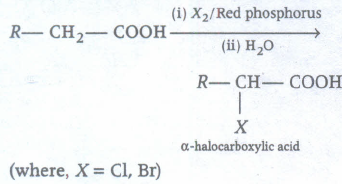
(i) Hell-Volhard-Zelinsky reaction
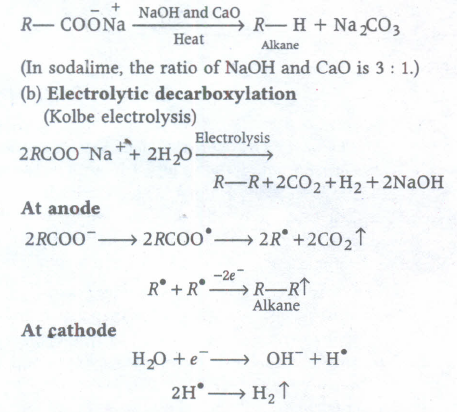
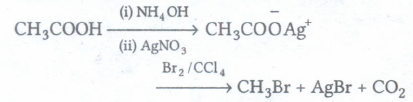
(ii) Decarboxylation reaction
3.
How do you convert the following?
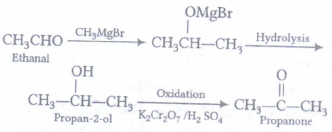
(a) Ethanal to propanone
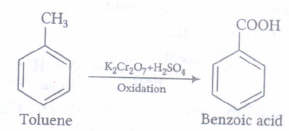
(b) Toluene to benzoic acid
4.
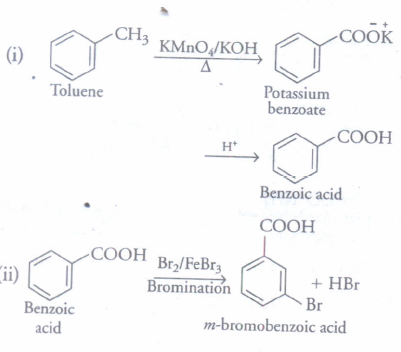
Predict the products of the following reactions:
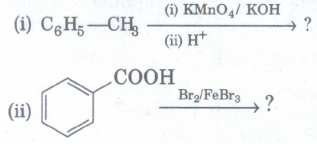
5.
Write the equations involved in the following reactions:
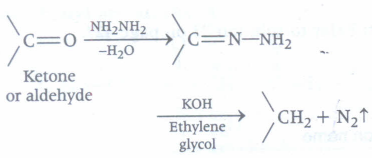
(i) Wolff-Kishner reduction.
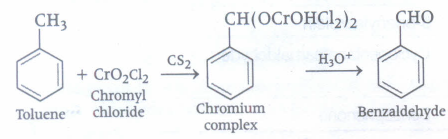
(ii) Etard reaction.
6.
Write the reactions involved in the following reactions:
(i) Clemmensen reduction
(ii) Cannizzaro reaction
7.
Give the simple chemical test to distinguish between ethanal and propanal.
8.
How will you convert the following?
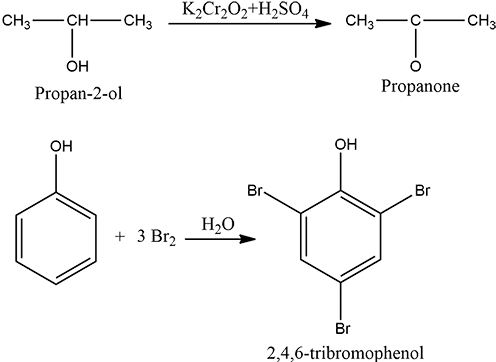
(i) Propan-2-ol to propanone
(ii) Phenol to 2, 4, 6-tribromophenol
9.
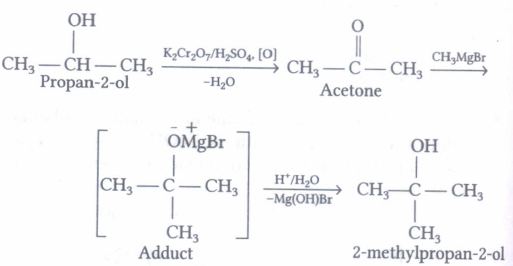
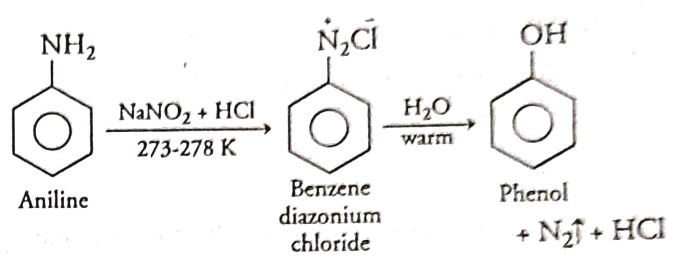
How do you convert the following?
(i) Propan-2-ol to 2-methylpropan-2-ol
(ii) Aniline to phenol
10.
Name the reagents you will use to bring about the following conversions.
a. Ethane nitrile to ethanal
b. But-2-ene to ethanal
11.
Explain the following reactions:
(i) Gabriel phthalimide reaction
(ii) Coupling reaction
12.
Write the equation involved in the reaction Williamson's ether synthesis.
13.
Give simple chemical test to distinguish between the following pairs of compounds.
(i) Ethanal and prop anal
(ii) Benzoic acid and phenol.
14.
Give a chemical test to distinguish between 2-Pentanol and 3-Pentanol
15.
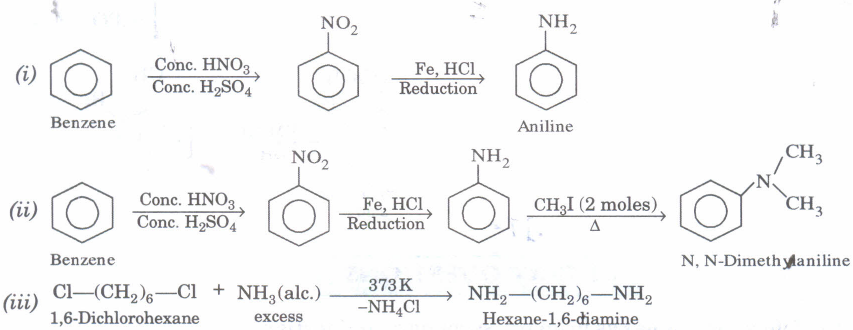
How will you convert
(i) Benzene into aniline
(ii) Benzene into N, N-dimethylaniline
(iii) Cl-(CH2)4-CI into hexane-1, 6-diamine?
16.
Which of the following is the correct method for synthesising methyl tert-butyl ether and why?
(i) (CH3)3CBr + NaOMe\(\longrightarrow \)
(ii) CH3Br + NaO - tert-Bu\(\longrightarrow \)
17.
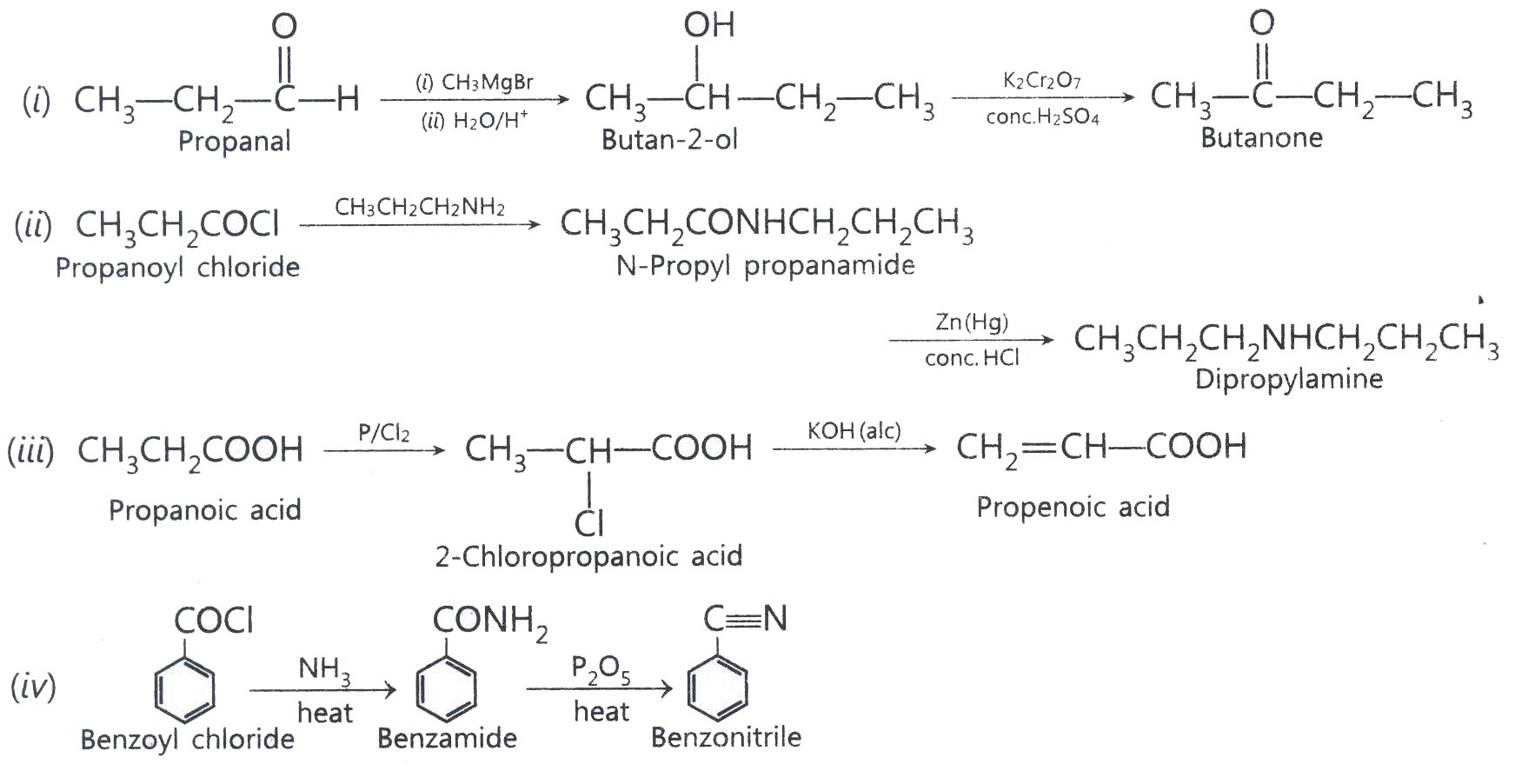
How will your bring about the following conversions in not more than two steps?
(i) Propanal to Butanone
(ii) Propanoyl chloride to Dipropylamine
(iii) Propanoic acid to Propenoic acid
(iv) Benzoyl chloride to Benzonitrile
18.
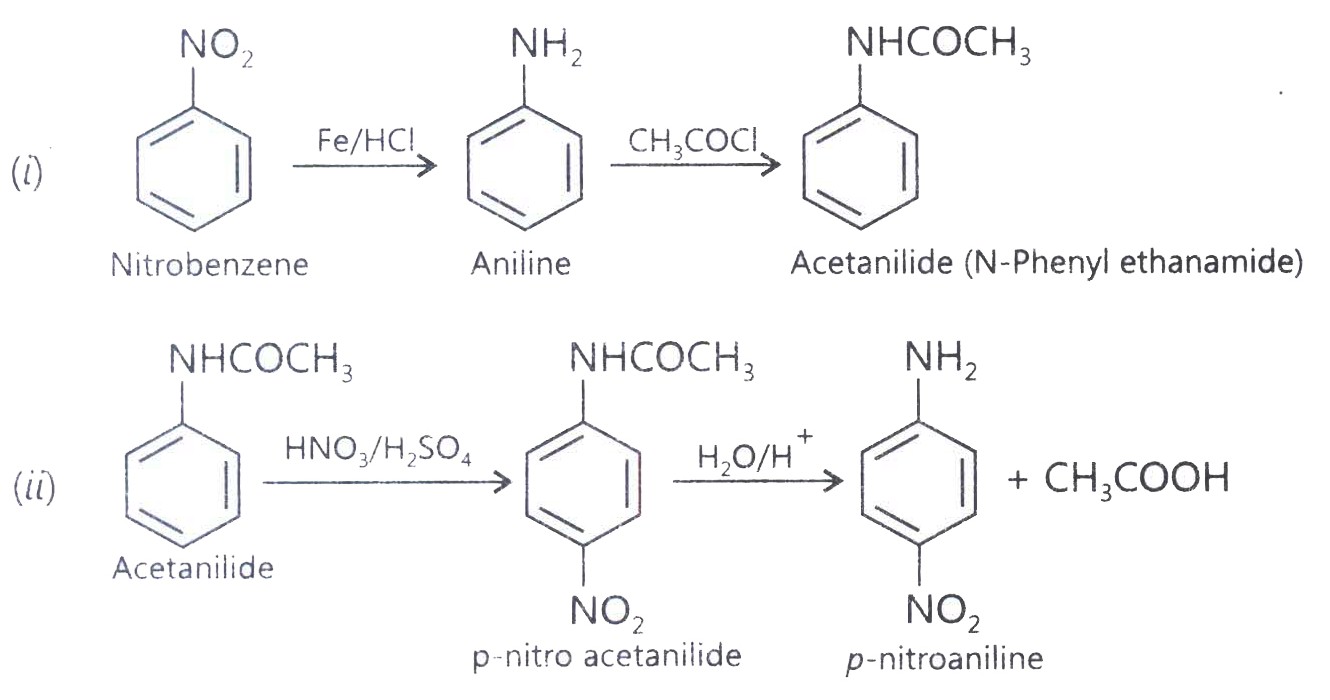
Write following conversions:
(i) nitrobenzene\(\longrightarrow \)acetanilide
(ii) acetanilide\(\longrightarrow \)p-nitroaniline
19.
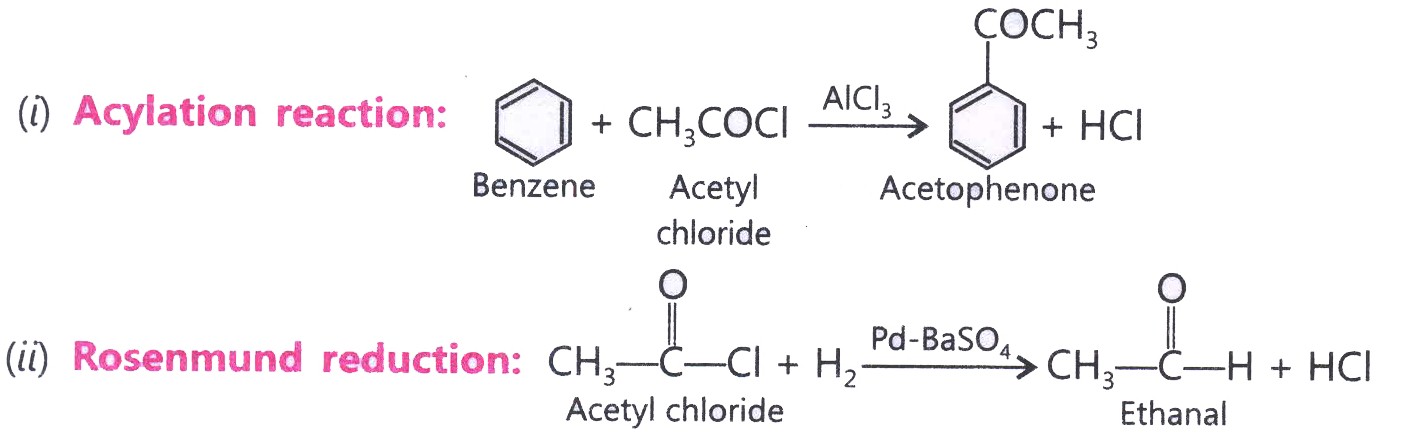
Write chemical equations to illustrate each of the following reactions:
(i) Acylation reaction
(ii) Rosenmund reduction
20.
Give chemical tests to distinguish between the following pairs of compounds:
(i) Propanal and propanone
(ii) Benzaldehyde and benzoic acid.
21.
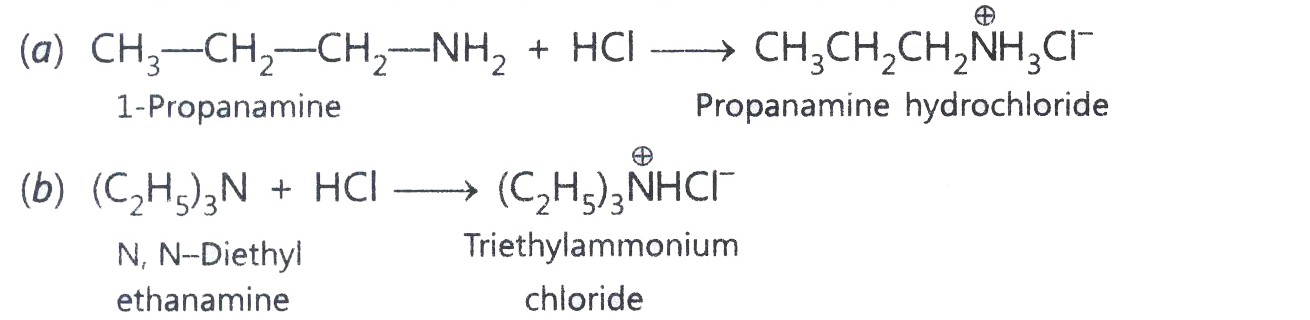
Complete the following acid-base reactions and name the products:
(a) CH3-CH2-CH2-NH2 + HCI \(\rightarrow \)
(b) (C2H5)3N+HCI \(\rightarrow \)
22.
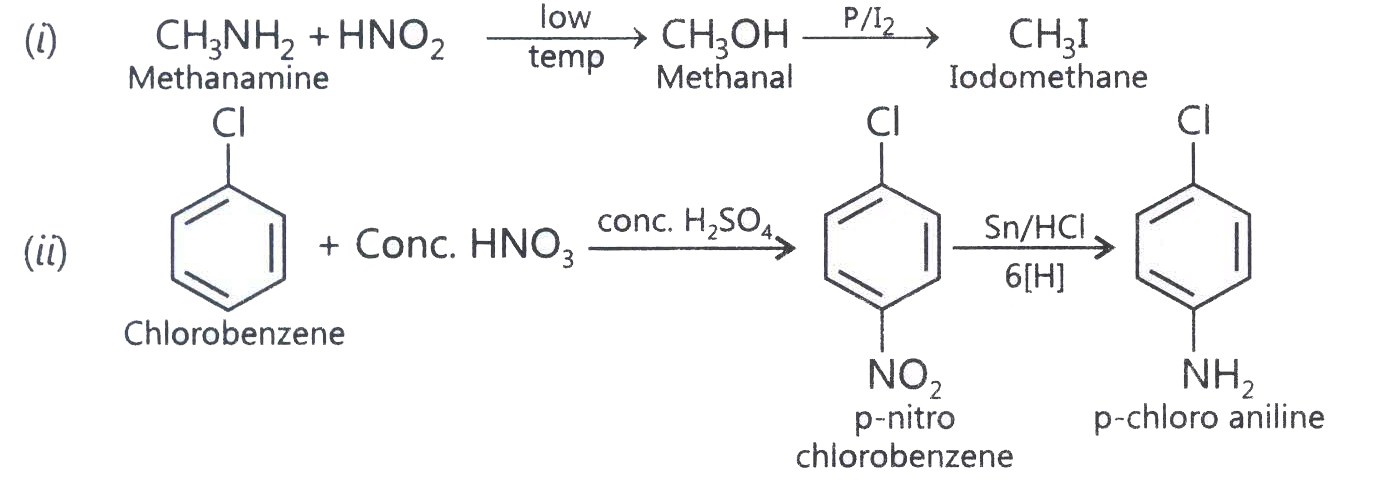
How will you bring the following conversions?
(i) Methanamine into Iodomethane
(ii) Chlorobenzene into p-chloroaniline.
23.
How will you bring about the following conversions?
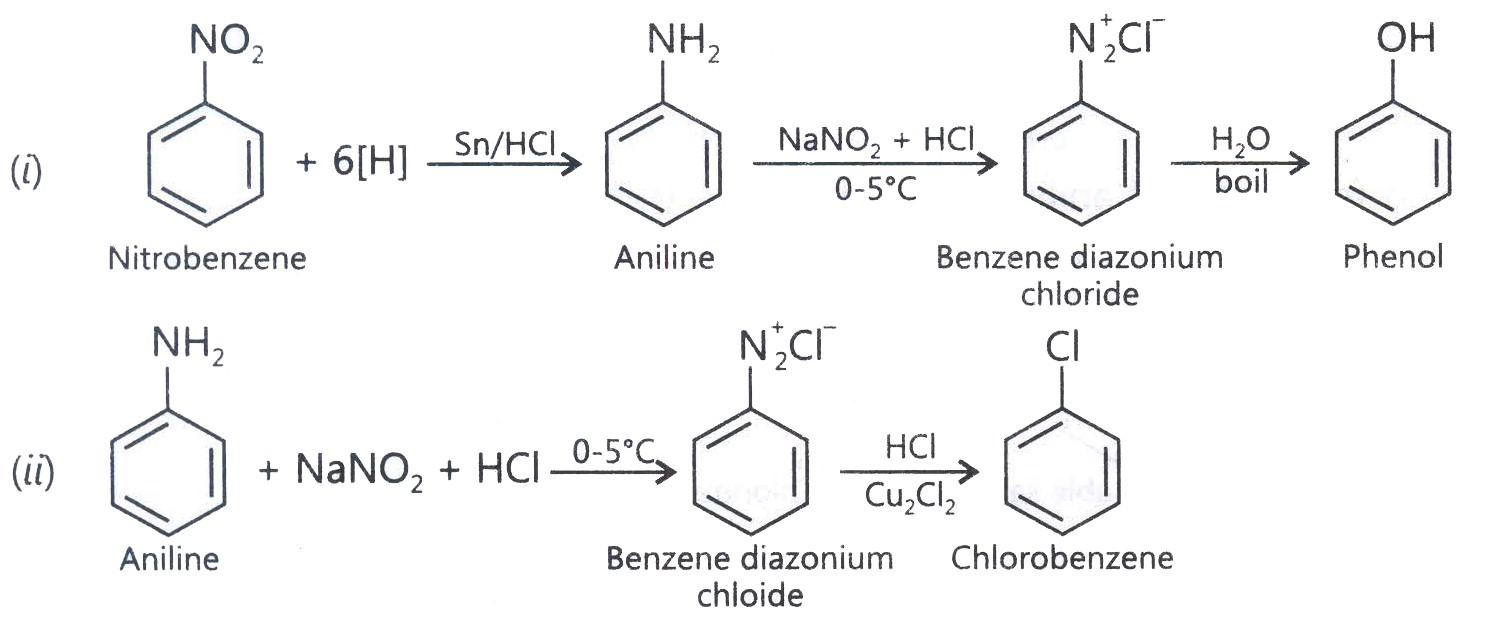
(i) Nitrobenzene to Phenol.
(ii) Aniline to Chlorobenzene.
24.
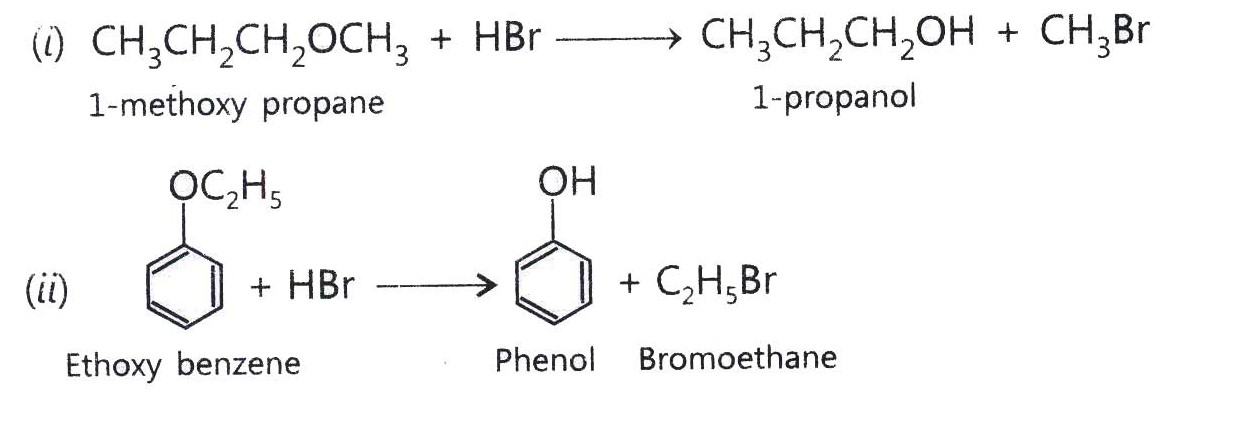
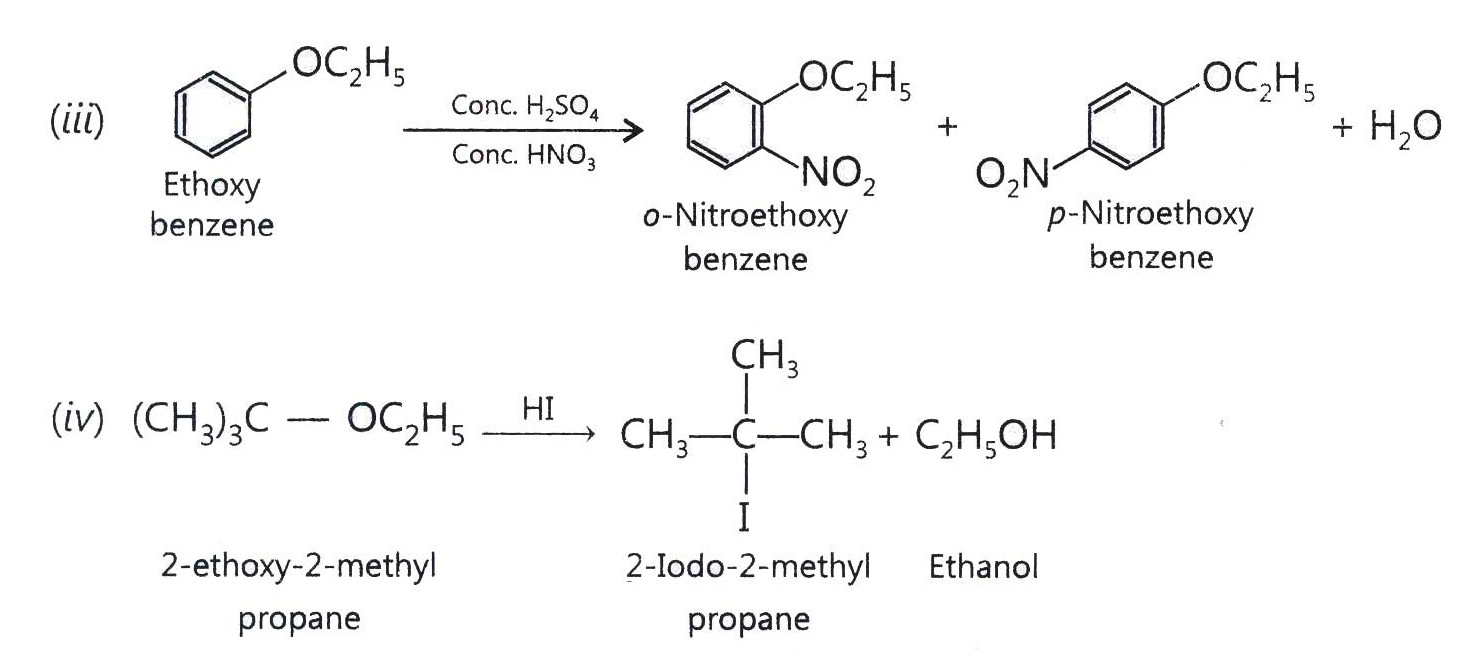
Predict the product of the reaction given below:
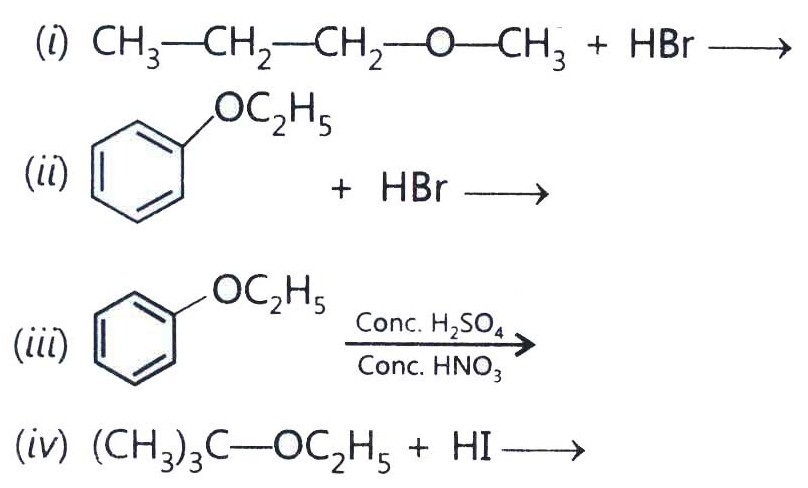
25.
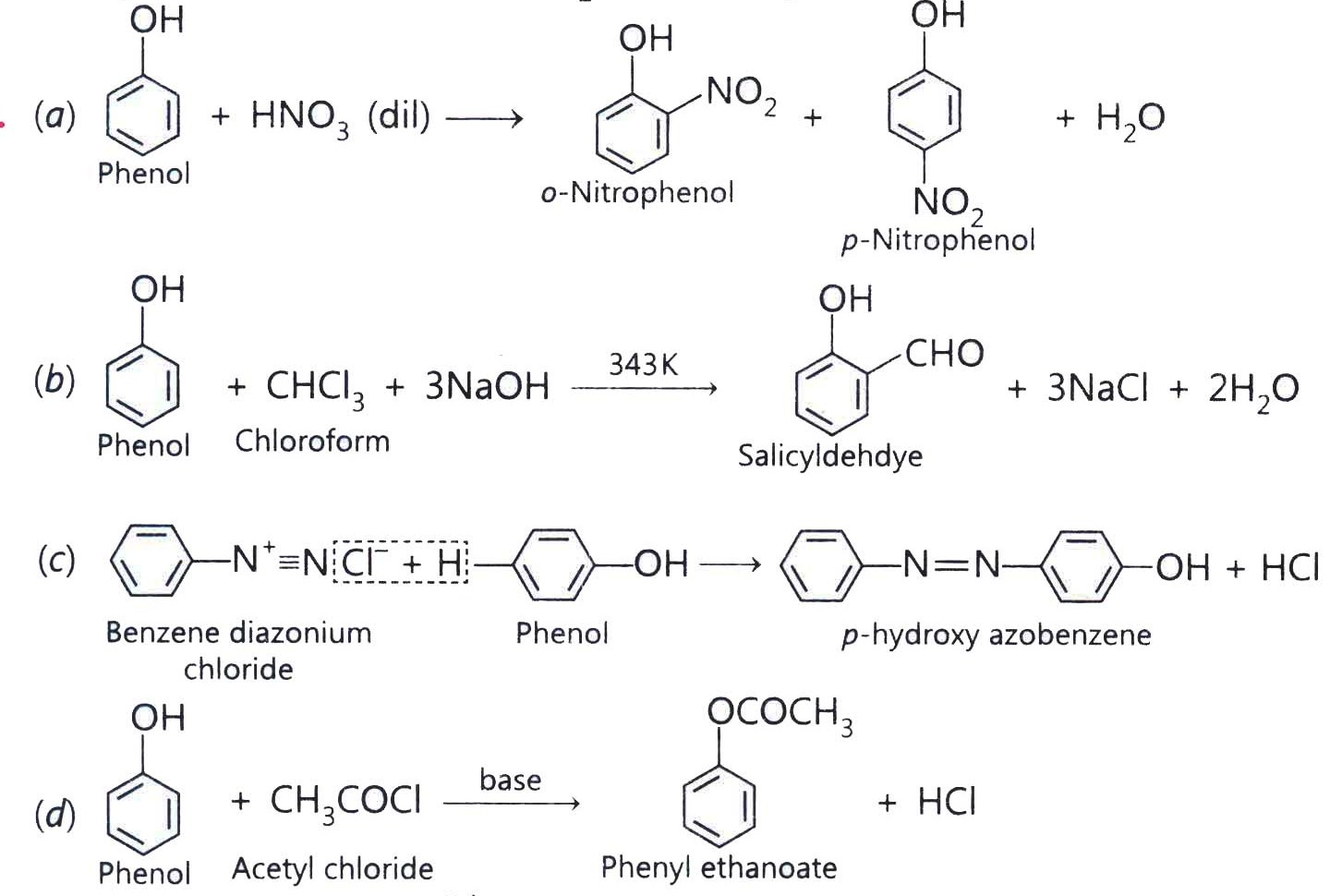
Complete the following:
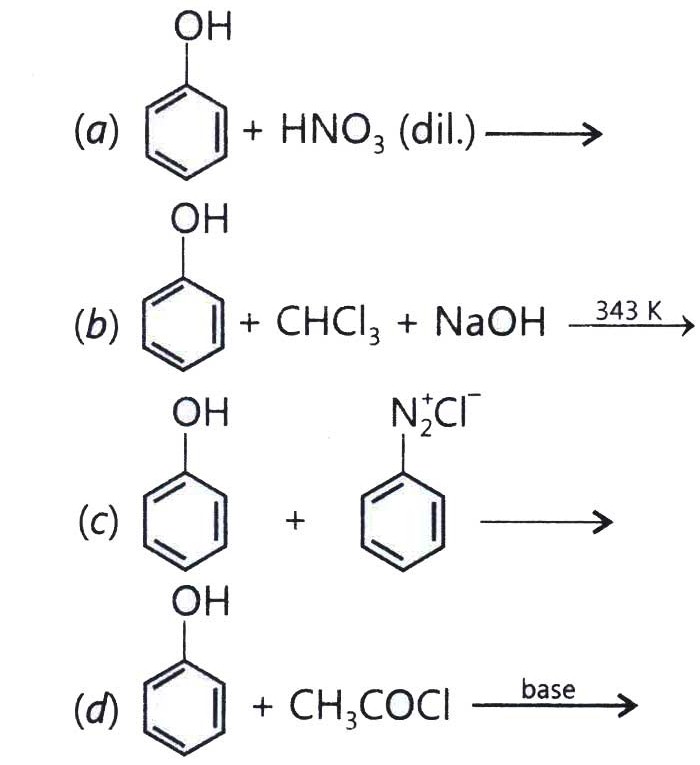
26.
How will you distinguish between the following pairs by chemical reactions?
(i) CH3OH and C2H5OH
(ii) Phenol and methanol
(iii) 1-Propanol and 2-methyl-2-propanol
(iv) Ethanol and 1-Propanol?
27.
How are the following conversions carried out? (Write the reactions and conditions in each case):
(i) Ethanol to 2-propanol
(ii) Phenol to Acetophenone
28.
How are the following conversions carried out?
(i) Phenol to Toluene
(ii) Ethanol to 1,1-dichloroethane.
29.
How would you obtain
(i) Picric acid (2,4,6-trinitrophenol) from phenol,
(ii) 2-Methylpropene from 2-methylpropanol?
30.
How would you convert ethanol to ethene?
1.
1° and 3° amine.
2.
(i) Hell-Volhard-Zelinsky reaction Carboxylic acids having a-hydrogen are halogenated at the a-position. On treatment .with chlorine or bromine in the presence of small amount of red phosphorus, it gives a-halo carboxylic acids. The reaction is known as Hell-Volhard-Zelinsky reaction.
(ii) Decarboxylation reaction
Decarboxylation is a chemical reaction that takes place in carboxylic acid via the release of carbon dioxide (CO2). It is an example of the cleavage of a carbon-carbon single bond.
(a) Using sodalime
(c) Decarboxylation of silver salts of carboxylic acids in presence of bromine (Hunsdiecker reaction).
3.
(a) Ethanal to propanone
(b) Toluene to benzoic acid
4.
5.
(i) Wolff-Kishner Reduction
Carbonyl group are easily reduce by hydrazine followed by heating with strong base like alkali to

(ii) Etard Reaction
Toluene reacts with chromyl chloride in presence of CS2 followed by hydrolysis produces benzaldehyde.
6.
(i) Clemmensen reduction It involves reduction of carbonyl group of an aldehyde or ketone to methylene group to form a hydrocarbon. Clemmensen reduction is carried out in presence of Zn amalgam and conc. HCl.
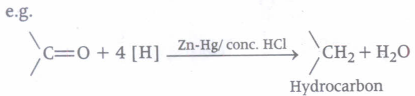
It is widely used for the reduction of aldehydes and ketones which are sensitive to alkalies.
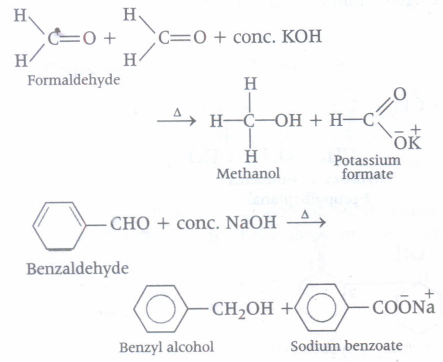
(ii) Cannizzaro reaction Aldehydes which do not have ∝-H atoms undergo Cannizzaro reaction on treatment with cone. alkali. In this reaction, one molecule of aldehyde is reduced to alcohol while another molecule is oxidised to salt of carboxylic acid.
7.
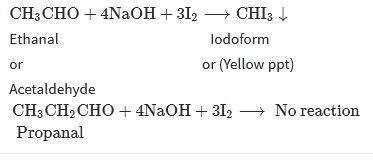
Iodoform test Ethanal, because of the presence of CH3CO-skeleton gives iodoform test whereas propanal due to the absence of such a skeleton does not.
8.
9.
(i)
(ii)
10.
a. Tertiary butyl ketone does not give precipitate with sodium bisulphate whereas acetone does.
b. Dialkyl cadmium is considered superior to grignard reagent for the preparation of a ketone from an acid chloride.
11.
(i) Gabriel's phthalimide synthesis: Phthalimide when treated with alcoholic potassium hydroxide is easily converted into potassium phthalimide which on treatment with alkyl halide followed by hydrolysis with acid or alkali yields phthalic acid and a primary amine.
(ii) Coupling reaction: It involves the reaction of benzene diazonium salts with phenols or aryl amines. Coupling of phenol takes place in mild alkaline solution while with aromatic 10 amines in mild, acidic medium.
12.
The general reaction involved in Williamson's ether synthesis is given as

13.
i) Iodoform test: Ethanal gives this test due to the presence of CH3CO :
CH3HO + 4NaOH + 3I2 \(\longrightarrow \) CHI3 + HCOONa + 3Nal + 3H20
Ethanal (yellow ppt)
loadform
CH3CH2CHO + 4NaOH + 3I2 \(\longrightarrow \) No reaction
(ii) Sodium bicarbonate test: Benzoic acid gives brisk effervescence of CO2 when react with NaHCO3 while phenol does not give it, as it is a weak acid.
14.
3-pentanol immediately gives turbidity with Lucas reagent but 2-pentanol gives turbidity in around five minutes.
15.
16.
(ii) Substitution always competes with elimination. Since 3° alkyl halides preferentially undergo elimination while 1°alkyl halides preferentially undergoes substitution, therefore, reaction
(i) will undergo elimination to give isobutylene while reaction
(ii) will undergo substitution to give t-butyl methyl ether.
.png)
17.
18.
19.
20.
(i) Add Tollen's reagent. Propanal will give silver mirror whereas propanone will not react.
(ii) Add NaHCO3 solution. Benzaldehyde will not react whereas benzoic acid will give brisk effervescence due to CO2.
21.
22.
23.
24.
25.
26.
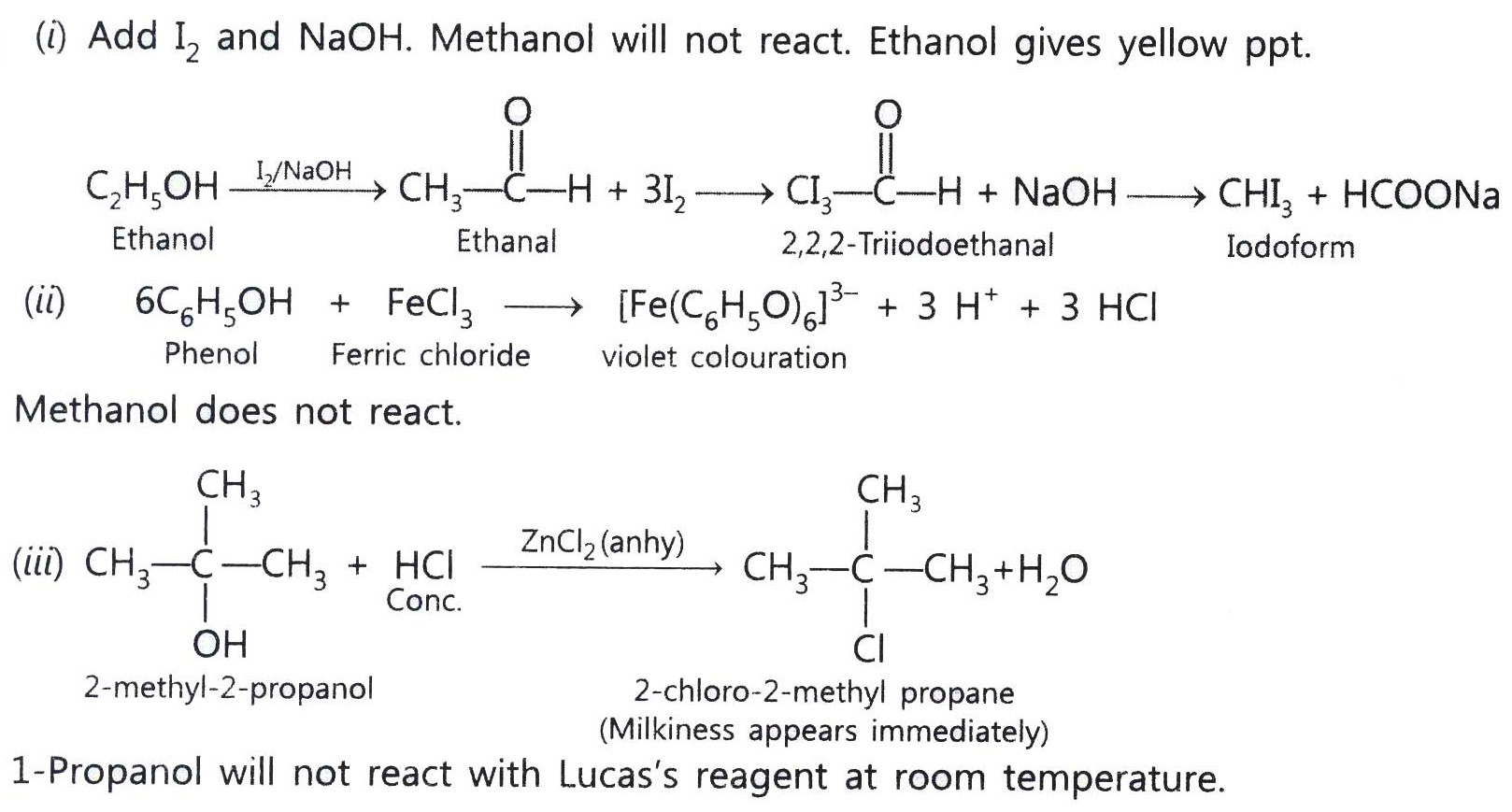

1-Propanol will not react with I2/NaOH to give iodoform.
27.
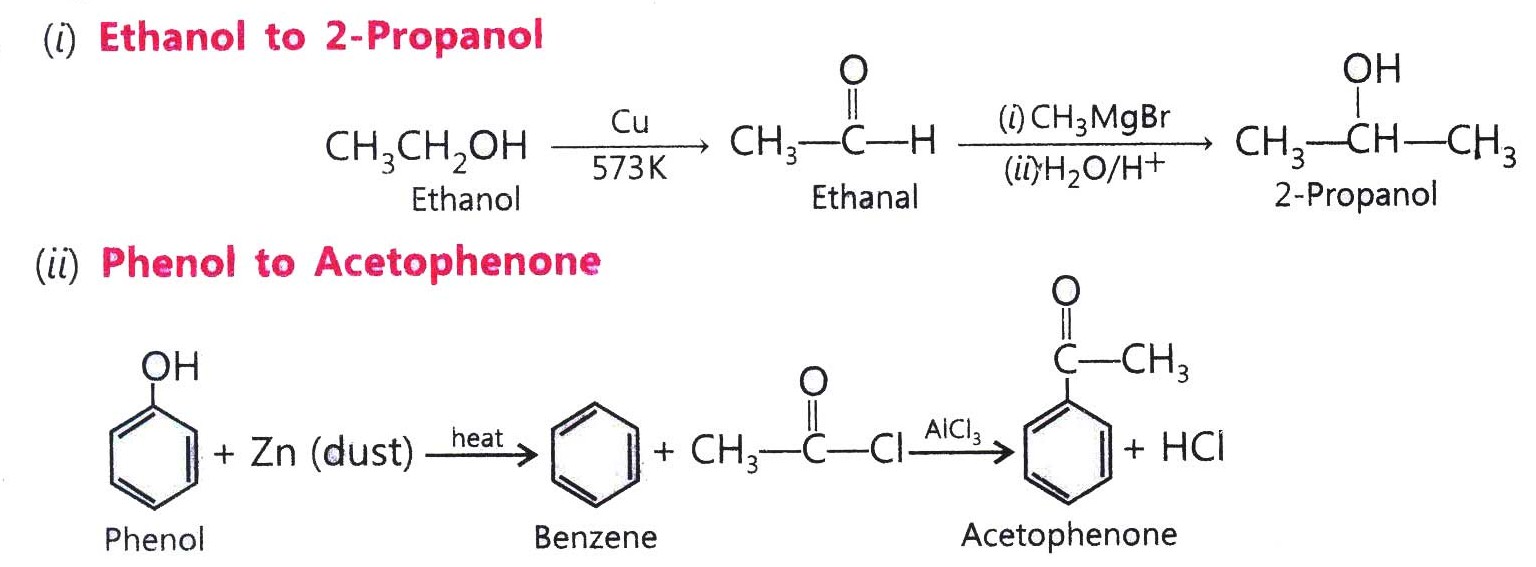
28.
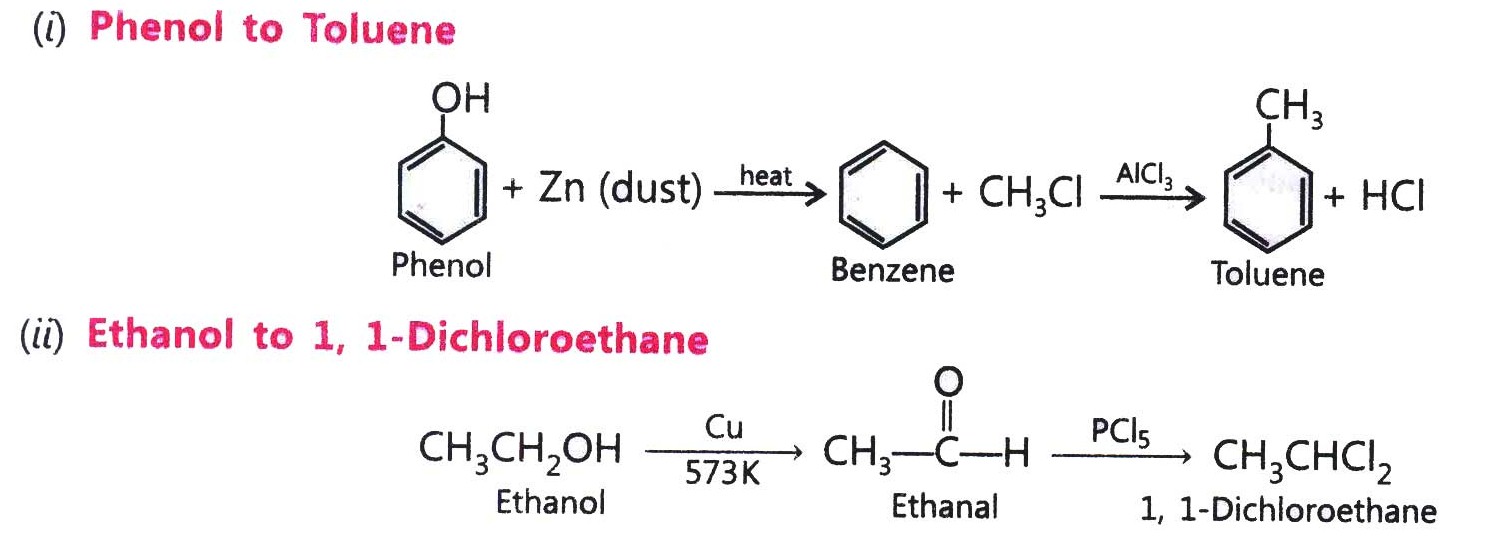
29.
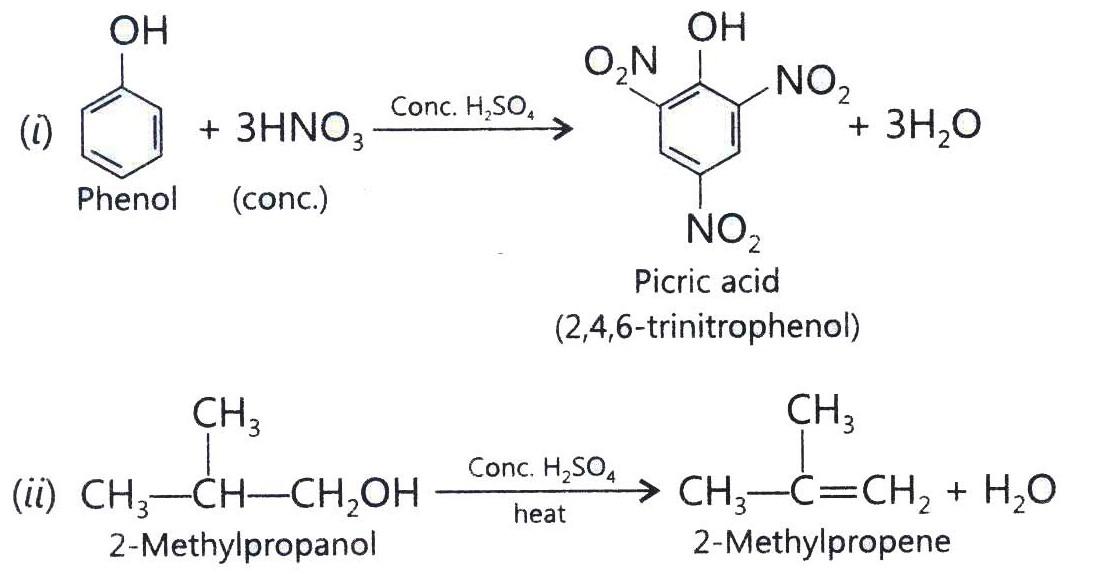
30.


12th Standard CBSE Syllabus & Materials
12th Standard CBSE
CBSE 12th Computer Science Python Revision Tour I - New Previous year Question Papers Study Material - QB365 Set A
NEW12th Standard CBSE
CBSE 12th Business Studies Planning Important Questions And Answers Study Material - QB365 Set A
NEW12th Standard CBSE
CBSE 12th Business Studies Business Environment Important Questions And Answers Study Material - QB365 Set A
NEW12th Standard CBSE
CBSE 12th Business Studies Principles of Management Important Questions And Answers Study Material - QB365 Set A



NCERT Books

Syllabus

Exam Pattern

Sample Question Papers

Previous year Question Papers

Important Notes

MCQ Practice test

NCERT Exemplers

Case study Questions

Image Based Questions

Passage based Questions

HOT Questions

Value Based Questions

Model Questions Papers
NCERT ( Book Back ) Questions

Assertion and Reason
Important Questions And Answers

CBSE 12th Standard CBSE Subjects
CBSE Standards