
 100% FREE ACCESS
12th Standard CBSE Syllabus & Materials
12th Standard CBSE
CBSE 12th Economics Government Budget and the Economy Previous year Question Papers Study Material - QB365 Set A
NEW12th Standard CBSE
CBSE 12th Computer Science Interface Python with MySQL - New Previous year Question Papers Study Material - QB365 Set A
NEW12th Standard CBSE
CBSE 12th Computer Science Database Concept - New Previous year Question Papers Study Material - QB365 Set A
NEW12th Standard CBSE
CBSE 12th Computer Science Data Communication - New Previous year Question Papers Study Material - QB365 Set A
NEW12th Standard CBSE
CBSE 12th Computer Science Data Structures - New Previous year Question Papers Study Material - QB365 Set A
NEW12th Standard CBSE
CBSE 12th Computer Science Functions - New Previous year Question Papers Study Material - QB365 Set A

Published on: 25/10/2025
Download CBSE Class 12th Standard CBSE Chemistry question papers, sample papers, important questions, and previous year solved papers in PDF format. Get free study materials, NCERT solutions, and exam preparation resources for Class 12th Standard CBSE Chemistry
Questions + Answers key
Take MCQ Chemistry Test
1.
Answer the following:
(i) Which vitamin deficiency causes rickets?
(ii) Name the location where protein synthesis occurs in our body.
2.
Give reason why amines are reactive?
3.
Complete the following reaction

4.
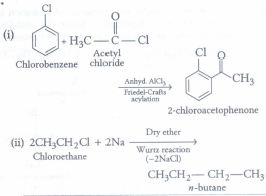
Bring out the following conversions.
(ii) Chlorobenzene to 2-chloroacetophenone
(iii) Chloroethane to butane
5.
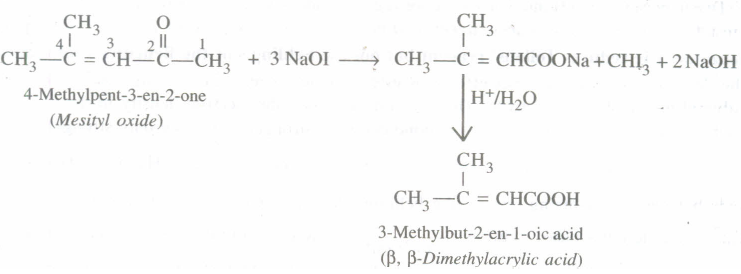
Suggest a suitable oxidising agent for the conversion,
\(\left( { CH }_{ 3 } \right) _{ 2 }C=CHCO{ CH }_{ 3 }\longrightarrow \left( { CH }_{ 3 } \right) _{ 2 }C=CH{ CO }_{ 2 }H\)
6.
What is the structure and IUPAC name of glycerol?
7.
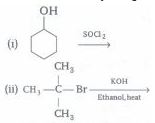
What will be the major organic product of the following reactions?

8.
How is tert-butyl alcohol obtained from acetone?
9.
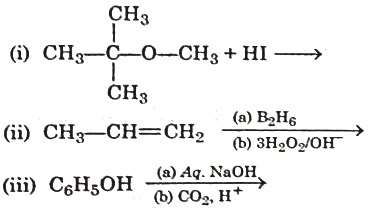
Write the main products(s) in each of the following reactions:
10.
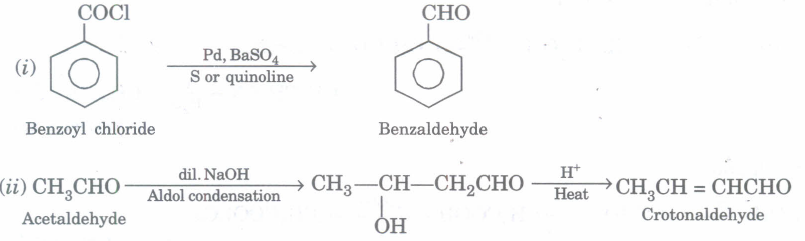
Write the reaction and conditions for the following conversions:
(i) Benzoyl chloride benzaldehyde
(ii) Acetaldehyde to crotonaldehyde
11.
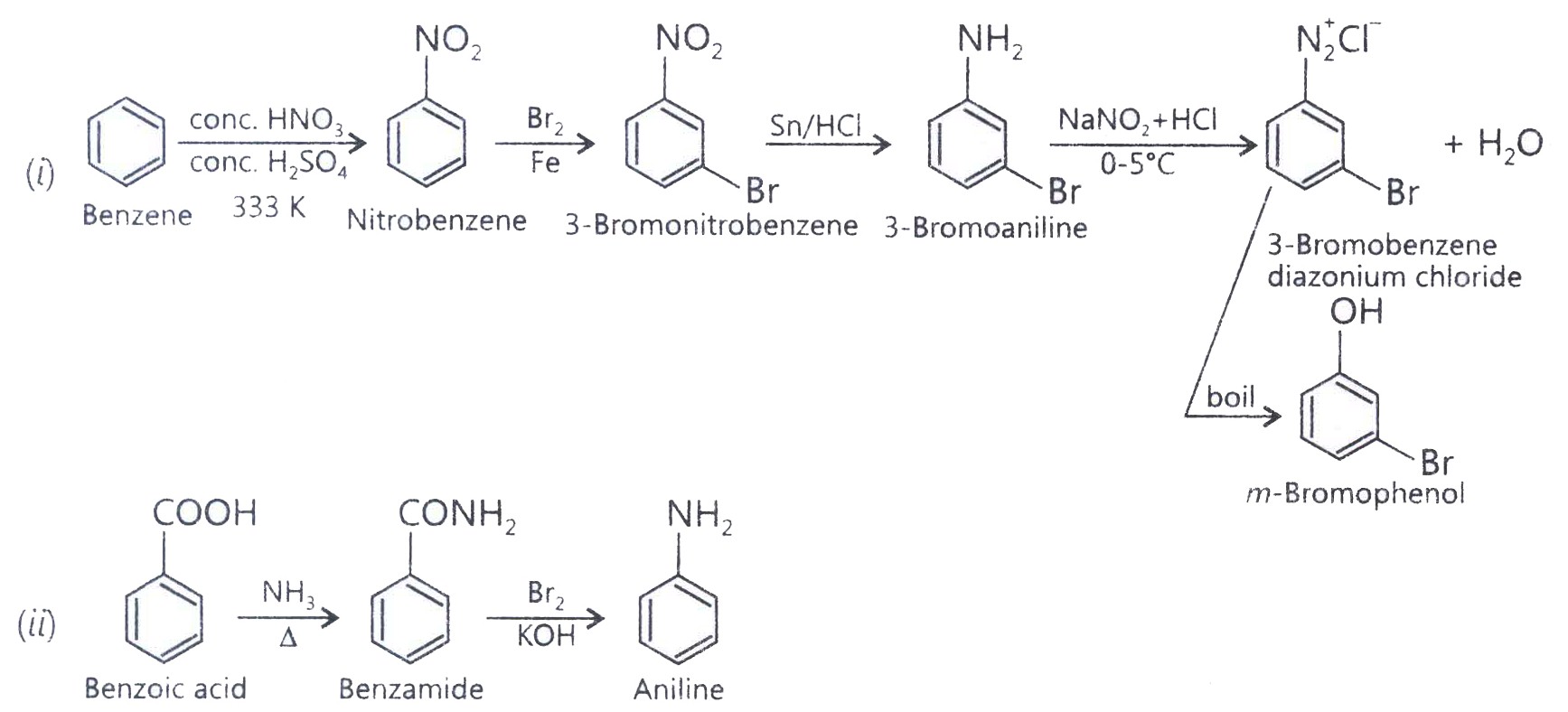
Accomplish the following conversions:
(i) Benzene to m-bromophenol
(ii) Benzoic acid to aniline
12.
Define the following terms:
(i) Co-enzymes
(ii) Mutation in biomolecules
(iii) Nucleotides
13.
A compond (X) with the molecular formula C3H8O can be oxidised to another compound (Y) whose molecular formula is C3H6O2. The compound (X) may be
CH3CH2 - O - CH3
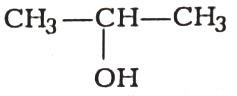
CH3 - CH2 - CH2 - OH
CH3 - CH2 - CHO
14.
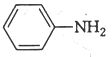
Among the following which is the strongest base?
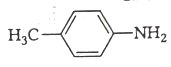
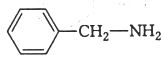
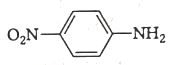
15.
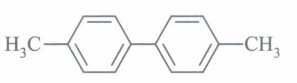
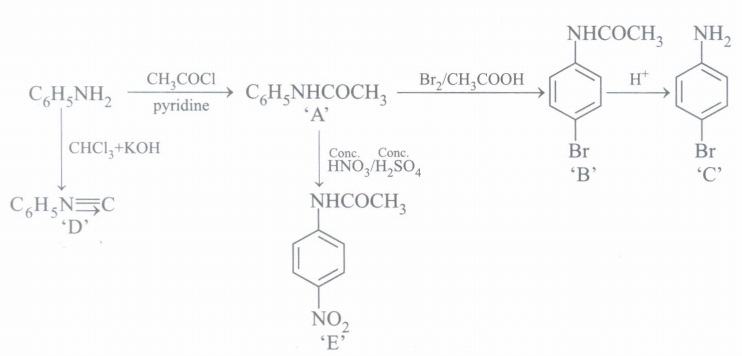
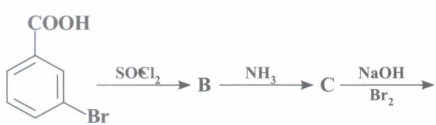 D. 'D' is
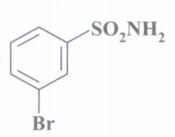
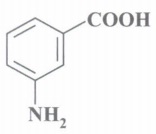
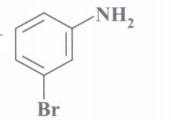
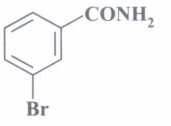
16.
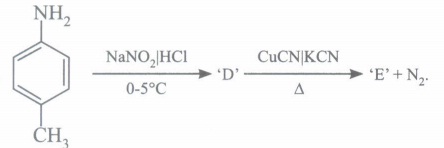
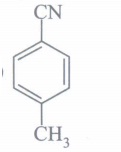
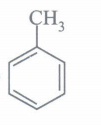
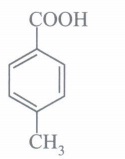
The product 'E' is
17.
The process of converting alkyl halides into alcohols involves___________.
addition reaction
substitution reaction
dehydrohalogenation reaction
rearrangement reaction
18.
The vitamin which is neither soluble in water nor in fat is
biotin
phylloquinone
thiamine
ergocalciferol
pyridoxine
19.
Which of the following compounds will not undergo Friedel-Crafts reaction easily?
Nitrobenzene
Toluene
Cumene
Xylene
20.
\(\alpha\) - Maltose consists of
one \(\alpha -D-\) glucopyranose unit and one \(\beta -D-\) glucopyranose unit by 1,2-glycosidic linkage
one \(\alpha -D-\) glucopyranose units with 1,2-glycosidic linkage
two \(\beta -D-\) glucopyranose units with 1, 4-glycosidic linkage
two \(\alpha -D-\)glucopyranose units with 1, 4-glycosidic linkage
21.
Sucrose (cane sugar) is a disaccharide. One molecule of surcose on hydrolysis gives ........ .
2 molecules of glucose
2 molecules of glucose + 1 molecule of fructose
1 molecules of glucose + 1 molecule of fructose
2 molecule of fructose
22.
Iodofrom test is not given by
2-pentanone
3-pentanone
ethanal
ethanol
23.
CH3CH2 __ C \(\equiv \) N\(\xrightarrow {X}\) CH3CH2 __ CHO
The reagent/s X is (are)
SnCl2/HCI,H2O/boil
H2/Pd - BaSO4
LiAIH4/ether
NaBH4/ether,H3O+
24.
Which of the following does not react with Hinsberg's reagent?
C2H5NH2
(C2H5)2NH
(C2H5)3N
CH3NH2
25.
The conversion of m-nitrophenol resorcinol involves respectively
hydrolysis, diazotization and reduction
diazotisation, reduction and hydrolysis
hydrolysis, reduction and diazotization
reduction, diazotization and hydrolysis
26.
How many stereoisomers does this molecule have ? CH3CH = CHCH2CHB2CHBrCH3
8
2
4
6
27.
Which of the following are arranged in the decreasing order of dipole moment?
CH3Cl, CH3Br, CH3F
CH3Cl, CH3F, CH3Br
CH3Br, CH3Cl, CH3F
CH3Br, CH3F, CH3Cl
28.
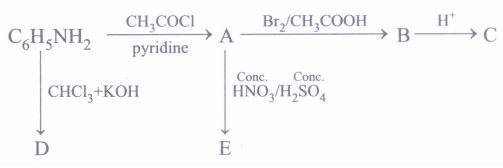
Identify A to E in the following sequence of reaction
29.
(i) Account for the following:
(a) Electrophilic substitution in benzoic acid takes place at meta position.
(b) Carboxylic acids do not give characteristic reactions of carbonyl group.
(ii) Give simple chemical test to distinguish between the following pairs of compounds:
(a) Acetophenone and benzaldehyde
(b) Benzoic acid and ethylbenzoate
30.
A teacher ordered ethanol for laboratory. She preferred denatured alcohol over absolute alcohol.
(i) Give reason for the decision taken by the teacher.
(ii) What value was kept in mind while taking the decision?
31.
Give reason for the following :
(i) On electrolysis in acidic solution, aminoacids migrate towards cathode while in alkaline solution these migrate towards anode.
(ii) The mononamino monocarboxylic acids have two pK values.
32.
Why is an amide more acidic than amine?
33.
(R)-2- Bromooctane reacts with NaSH to form (S)-2- octanethiol with inversion of configuration at the stereocentre.How can we obtain (R)-2 octanethiol from (R)-2-bromoctane?
34.
Assertion: Boiling point of RCI is greater than RF.
Reason: R-CI is more stable than R-F.
Codes:
A) Assertion and reason both are correct statements and reason is correct explanation for assertion.
B) Assertion and reason both are correct statements but reason is not correct explanation for assertion.
C) Assertion is correct statement but reason is wrong statement.
D) Assertion is wrong statement but reason is correct statement.
35.
36.
Assertion: Glycine must be taken through diet.
Reason: It is an essential amino acid.
Codes:
(a) Assertion and reason both are correct and reason is correct explanation of assertion.
(b) Assertion and reason both are wrong statements.
(c) Assertion is correct statement but reason is wrong statement.
(d) Assertion is wrong statement but reason is correct statement.
(e) Both assertion and reason are correct statements but reason is not correct explanation of assertion.
37.
Assertion: Ammonolysis of alkyl halides involves the reaction between alkyl halides and alcoholic ammonia.
Reason: Reaction can be used to prepare 1°, 2°, 3° amines and finally quaternary ammonium salts.
Codes:
(a) Assertion and reason both are correct statements and reason is correct explanation for assertion.
(b) Assertion and reason both are correct statements but reason is not correct explanation for assertion.
(c) Assertion is correct statement but reason is wrong statement.
(d) Assertion is wrong statement but reason is correct statement.
38.
In the following questions. an Assertion (A) is followed by a corresponding Reason (R) Use the following keys to choose the appropriate answer.
Assertion (A) In acylation reaction of amines, equilibrium shifts to the right hand side in the presence of pyridine.
Reason (R) In the presence of strong base, Hel is removed and reaction shifts toward the right hand side.
Codes:
(a) Both (A) and (R) are correct, (R) is the correct explanation of (A).
(b) Both (A) and (R) are correct, (R) is not the correct explanation of (A).
(c) (A) is correct; (R) is incorrect.
(d) (A) is incorrect; (R) is correct.
39.
In the following questions. an Assertion (A) is followed by a corresponding Reason (R) Use the following keys to choose the appropriate answer.
Assertion (A) Aromatic aldehydes and formaldehyde undergo Cannizzaro reaction.
Reason (R) Aromatic aldehydes are almost as reactive as formaldehyde.
Codes:
(a) Both (A) and (R) are correct, (R) is the correct explanation of (A).
(b) Both (A) and (R) are correct, (R) is not the correct explanation of (A). .
(c) (A) is correct; (R) is incorrect.
(d) (A) is incorrect; (R) is correct.
40.
In the following questions. an Assertion (A) is followed by a corresponding Reason (R) Use the following keys to choose the appropriate answer.
Assertion (A) Carbon oxygen bond length of phenol is slightly less than that of methanol.
Reason (R) There exist a partial double bond character and sp2-hybridisation of carbon to which oxygen is attached in phenol.
Codes:
(a) Both (A) and (R) are correct, (R) is the correct explanation of (A).
(b) Both (A) and (R) are correct, (R) is not the correct explanation of (A).
(c) (A) is correct; (R) is incorrect.
(d) (A) is incorrect; (R) is correct.
41.

42.
1.
(i) Vitamin-D
(ii) Cytoplasm
2.
Amines are reactive due to the difference in electronegativity between hydrogen and nitrogen atom.
3.

4.
5.
Alkaline KMnO4, acidified K2Cr2O7 or HNO3 cannot be used since all of these will cleave the molecule at the site of the double bond giving a mixture of ketones/acids. The most suitable reagent for this oxidation is NaOI (I2/NaOH) since methyl ketones on treatment with NaOI undergo iodoform reaction to give iodoform along with the Na salt of a carboxylic acid having one carbon atom less than the starting methyl ketone
6.

7.
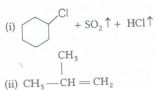

8.
(a) This is because pcc is a mild oxidising agent and can oxide methanol to methanal only while KMnO4 being strong oxidising agent oxidises it to methanoic acid.
(b) Because esterification rxn is reversible and presence of base (pyridine) neutralises HCl produced during reaction thus promoting forward reaction.
9.
(i) \({ CH }_{ 3 }-\overset { \underset { | }{ { CH }_{ 3 } } }{ \underset { \overset { | }{ { CH }_{ 3 } } }{ C } } -O-{ CH }_{ 3 }+HI\longrightarrow { CH }_{ 3 }-\overset { \underset { | }{ { CH }_{ 3 } } }{ \underset { \overset { | }{ { CH }_{ 3 } } }{ C } } -I+\underset { Methanol }{ { CH }_{ 3 }OH } \)
(ii) \({ CH }_{ 3 }-CH={ CH }_{ 2 }\overset { (i){ B }_{ 2 }{ H }_{ 6 } }{ \underset { (ii)3{ H }_{ 2 }{ O }_{ 2 }/{ H }^{ - } }{ \longrightarrow } } { CH }_{ 3 }{ CH }_{ 2 }{ CH }_{ 2 }OH\)

10.
11.
12.
(i) Co-enzymes : Those prosthetic groups which get attached to enzymes at the time of reaction are called co-enzymes. These increase the activity of enzymes.
(ii) Mutation in Biomolecules : A difference of a single base in DNA molecule can cause change in amino acid sequence which leads to mutation.
(iii) Nucleotides : They are monomers of nucleic acids. They consist of heterocyclic base, pentose sugar and phosphoric acis residue.
13.
(c)
CH3 - CH2 - CH2 - OH
14.
(c)
15.
(c)
16.
(a)
17.
(b)
substitution reaction
18.
(a)
biotin
19.
-NO2 is a powerful dectivating group. It reduces the electron density in the benzene ring considerably. As a result, it does not undergo F.C.reactions.
20.
(d)
two \(\alpha -D-\)glucopyranose units with 1, 4-glycosidic linkage
21.
(c)
1 molecules of glucose + 1 molecule of fructose
22.
(b)
3-pentanone
23.
(a)
SnCl2/HCI,H2O/boil
24.
\({ 3 }^{ \circ }\) amines do not react with Hinsberg's reagent.
25.
(d)
reduction, diazotization and hydrolysis
26.
(c)
4
27.
(b)
CH3Cl, CH3F, CH3Br
28.
29.
(i) (a) Electrophilic substitution in benzoic acid takes places at meta position because carboxylic group is a deactivating group. The presence of electron withdrawing carboxylic group results in a decreased electron density at o - and p - position.
(b) Due to resonance, electrophilicity of carbonyl carbon is reduced.
(ii) (a) Add NaOH and I2 to both the compounds and heat them. Acetophenone forms yellow precipitate of iodoform while benzaldehyde does not.
(b) Add NaHCO3 solution to both the compounds. Benzoic acid will give effervescence and liberate CO2 while ethylbenzoate does not.
30.
(i) Teacher preferred denatured alcohol over absolute alcohol as it would be unfit for drinking. As commercial alcohol is mixed with copper sulphate to give it a colour and pyridine to give a foul smell, which makes absolute alcohol unfit for drinking and called as denatured alcohol.
(ii) As the teacher was ordering ethanol for school laboratory, maintaining discipline, repsonsible behaviour and social obligation were values kept in her mind, while taking decision.
31.
(i) Amino acids have zwitterionic structure. Therefore. in presence of strong acids the} exist as cations' (I) and thus on electrolysis, these migrate towards cathode.
\(\overset { + }{ { NH }_{ 3 } } -CHR-{ COO }^{ - }+{ H }^{ + }\longrightarrow \quad \overset { + }{ { NH }_{ 3 } } -CHR-{ COO }H\\ \quad \quad Zwitterion\quad \quad \quad \quad \quad \quad \quad \quad \quad \quad \quad \quad Cation(I)\)
In contrast, in presence of alkalies, the amino acids exist as anions (II) and thus on electrolysis, these migrate towards anode.
\(\overset { + }{ { NH }_{ 3 } } -CHR-{ COO }^{ - }+{ OH }^{ - }\longrightarrow \quad \overset { + }{ { NH }_{ 3 } } -CHR-{ COO }H\\ \quad \quad Zwitterion\quad \quad \quad \quad \quad \quad \quad \quad \quad \quad \quad \quad Anion(II)\\ \)
(ii) A monoamino monocarboxylic acid such as glycine exists as a dipolar ion \((\overset { + }{ { NH }_{ 3 } } -{ CH }_{ 2 }-{ COO }^{ - })\) .In this structure, \(\overset { + }{ { NH }_{ 3 } } \) group acts as the acid and \({ COO }^{ - }\) group acts as the base. Thus, monoamino monocarboxylic acids can act both as an acid as well as a base. Therefore, these acids have two pK values one as an acid (when titrated with a base) and other as a base (when titrated with an acid).
32.
The amide has the following resonating structures:
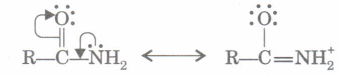
Due to the delocalisation of lone pair of electrons on N over C==O group, amino group acquires a positive charge which ma, es N-H bond weak. Moreover, the anion formed after removal of a proton is also stabilized by resonance as :
.png)
However, no such stabilization is possible in amines.
33.
We know that SN2 reactions proceed with inversion of configuration at the stereocentre. If, however, two SN2 reactions are carried out at the same stereocentre of a compound, retention of configuration will occur. Thus, (R)-2-octanethiol can be obtained from (R)-2-bromooctane by first reacting it with Nal in acetone and then with NaSH in ethanol
34.
C) Assertion is correct statement but reason is wrong statement.
Explanation:
For the same alkyl group, the boiling points are in the order Rl>RBr >RCl>RF. This is because with the increase in the size of halogen, the magnitude of van der Waals' force increases and boiling point increases. Bond strength decreases as the size of the halogen increases. CH3F>CH3Cl>CH3Br>CH3l and stability decreases as the strength of C-X bond decreases.
35.
36.
(b) Both assertion and reason are wrong statements.
Glycine is not essential amino acid because it is produced in our body, so it may not be part of our diet.
37.
(b) Assertion and reason both are correct statements but reason is not correct explanation for assertion.
38.
(a) In acylation reaction of amines, equilibrium shifts . to the right side in the presence of pyridine because it is a stronger base than amine which removes HCI so formed in the reaction. Thus, both (A)and (R) are correct and (R) is the correct
39.
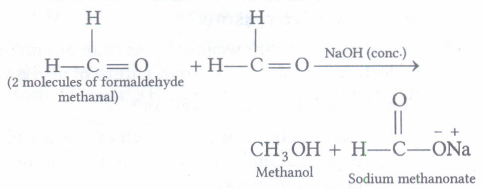
(c) Aromatic aldehydes are less reactive than aliphatic aldehyde like formaldehyde. Cannizzaro's reaction is shown by aldehydes which do not contain any n-H atom. Such aldehydes in the presence of concentrated solution of an alkali undergo self oxidation-reduction to give a mixture of alcohol and a salt of the carboxylic acid. For example, formaldehyde (HCHO) gives methanol and sodium methanoate.
Hence, (A) is correct but (R) is incorrect.
40.
(a) In phenols, the - OH group is attached to sp2-hybridised carbon atom of an aromatic ring. As a result, a partial double bond exist between c-obond. So, the carbon oxygen bond length (136 pm) in phenol is slightly less than that in methanol. Hence, both (A) and (R) are correct and R is the correct explanation of (A).
41.
42.

12th Standard CBSE Syllabus & Materials
12th Standard CBSE
CBSE 12th Computer Science Python Revision Tour I - New Previous year Question Papers Study Material - QB365 Set A
NEW12th Standard CBSE
CBSE 12th Business Studies Planning Important Questions And Answers Study Material - QB365 Set A
NEW12th Standard CBSE
CBSE 12th Business Studies Business Environment Important Questions And Answers Study Material - QB365 Set A
NEW12th Standard CBSE
CBSE 12th Business Studies Principles of Management Important Questions And Answers Study Material - QB365 Set A



NCERT Books

Syllabus

Exam Pattern

Sample Question Papers

Previous year Question Papers

Important Notes

MCQ Practice test

NCERT Exemplers

Case study Questions

Image Based Questions

Passage based Questions

HOT Questions

Value Based Questions

Model Questions Papers
NCERT ( Book Back ) Questions

Assertion and Reason
Important Questions And Answers

CBSE 12th Standard CBSE Subjects
CBSE Standards