
 100% FREE ACCESS
12th Standard CBSE Syllabus & Materials
12th Standard CBSE
CBSE 12th Economics Government Budget and the Economy Previous year Question Papers Study Material - QB365 Set A
NEW12th Standard CBSE
CBSE 12th Computer Science Interface Python with MySQL - New Previous year Question Papers Study Material - QB365 Set A
NEW12th Standard CBSE
CBSE 12th Computer Science Database Concept - New Previous year Question Papers Study Material - QB365 Set A
NEW12th Standard CBSE
CBSE 12th Computer Science Data Communication - New Previous year Question Papers Study Material - QB365 Set A
NEW12th Standard CBSE
CBSE 12th Computer Science Data Structures - New Previous year Question Papers Study Material - QB365 Set A
NEW12th Standard CBSE
CBSE 12th Computer Science Functions - New Previous year Question Papers Study Material - QB365 Set A
Published on: 25/10/2025
Download CBSE Class 12th Standard CBSE Chemistry question papers, sample papers, important questions, and previous year solved papers in PDF format. Get free study materials, NCERT solutions, and exam preparation resources for Class 12th Standard CBSE Chemistry
Questions + Answers key
Take MCQ Chemistry Test
1.
What is the rol of HNO3 in the nitrating mixture used for nitration of benzene?
2.
What is glycogen ? How is it different from starch?
3.
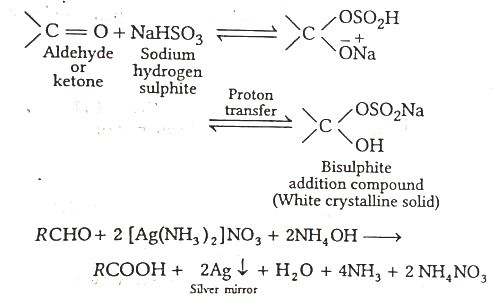
When liquid 'A' is treated with a freshly prepared ammoniacal silver nitrate solution, it gives bright silver mirror. The liquid forms a white crystalline the solid on treatment with sodium hydrogensulphite. Liquid 'B' also forms a white crystalline solid with sodium hydrogensulphite but it does not give test with ammoniacal silver nature. Which of the two liquids is aldehyde? Write the chemical equations of these reactions also.
4.
Give the IUPAC names of the following compounds:
(i) Ph CH2CH2COOH
(ii) (CH3)2C=CHCOOH
(iii)
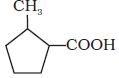
(iv)
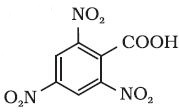
5.
How will you convert 4-nitrotoluene to 2-bromobenzoic acid?
6.
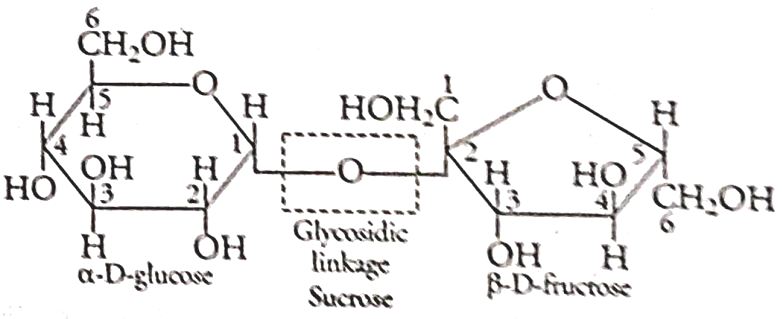
Label the glucose and fructose units in the following disaccharide and identify anomeric carbons atoms in these units. Is the sugar reducing in nature? Explain.
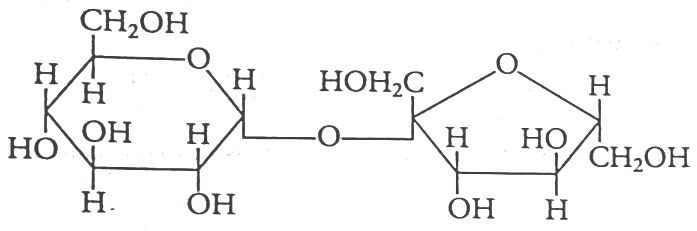
7.
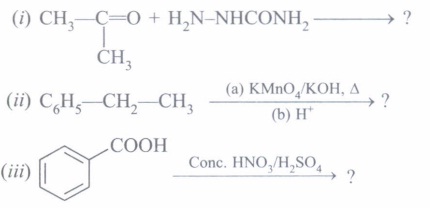
Write the major products:
8.
Account for the following.
(i) Cl-CH2COOH is a stronger acid than CH3COOH.
(ii) Carboxylic acids do not give reactions of carbonyl group.
9.
Write the IUPAC names of the following ketones and aldehydes. Wherever possible, give their common names.
(i) \(\mathrm{CH}_{3} \mathrm{CO}\left(\mathrm{CH}_{2}\right)_{4} \mathrm{CH}_{3}\)
(ii) \( \mathrm{CH}_{3} \mathrm{CH}_{2} \mathrm{CHBrCH}_{2} \mathrm{CH}\left(\mathrm{CH}_{3}\right) \mathrm{CHO}\)
(iii) \( \mathrm{CH}_{3}\left(\mathrm{CH}_{2}\right)_{5} \mathrm{CHO}\)
(iv) \( \mathrm{Ph}-\mathrm{CH}=\mathrm{CH}-\mathrm{CHO}\)
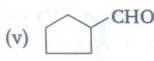
(vi) PhCOPh
10.
Define the following as related to proteins.
(i) Peptide linkage
(ii) Primary structure
(iii) Denaturation.
11.
Describe a method for the identification of primary, secondary and tertiary amines. Also write chemical equations of the reactions involved.
12.
Give one chemical test each to distinguish between the compounds in the following pairs:
(i) Methyleamine and dimethylamine
(ii) Aniline and benzylamine
(iii) Ethylamine and aniline
13.
Which of the following is a polysaccharide?
Glucose
Maltose
Glycogen
Lactose
14.
Which of the following carboxylic acid can undergo decarboxylation easily?
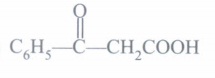
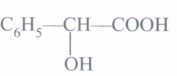
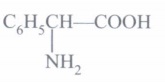
C6H5COCOOH
15.
Which of the following statements about primary amines is 'False' ?
Alkylamines are stronger base than ammonia.
Alkylamines are stronger bases than arylamines
Alkylamines react with nitrous acid to produce alcohols
Arylamines react with nitrous acid to produce pheols
16.
Reaction of cyclohexanone with dimethylamine in the presence of catalytic amount of an acid forms a compound if water during the reaction is continuously removed. The compound formed is generally known as
an enamine
a Schiff's base
an amine
an imine
17.
The number of tripeptides formed by three different amino acids are
Three
Four
Five
Six
18.
DNA and RNA contain four bases each. which of the following bases is not present in RNA ?
Adenine
Uracil
Thymine
Cytosine
19.
Butan-2-one can be converted to propionic acid by which of the following :
NaOH. NaIH+
Fehling solution
NaOH,I2/H+
Tollens'reagent
20.
In the following reaction, X is \(X\overset { Bromination }{ \longrightarrow } Y\overset { NaNO_{ 2 }\quad /HCI }{ \longrightarrow } Z\overset { Boiling }{ \underset { { C }_{ 2 }{ H }_{ 5 }OH }{ \longrightarrow } } Tribromobenzene\)
Benzoic acid
Salicylic acid
Phenol
Aniline
21.
Which is most acidic?
CCl3COOH
CHCl2COOH
CH2ClCOOH
CH3COOH
22.
Three types of RNA are _____________
23.
Denaturation involves conversion of ........... proteins to ....... proteins
24.
Ethanamine reacts with benzenesulphonyl chloride to form.........................which deissolves in.................. .
25.
Aniline on treatment with bromine water gives................................ .
26.
Vinegar is a dilute solution of --------
27.
Hell-Volhard Zelinsky reaction involves the replacement of an -------- atom from the alkyl group of a monocarboxylic acid by a ------ atom
28.
(a) Write the structure of the main products when benzene diazonium chloride reacts with the following reagents.
(i) Kl
(ii) CH3CH2OH
(iii) Cu/HCl
(b) Arrange the following in the increasing order of their basic character in aqueous solution: CH3NH2 , (CH3 )2NH, (CH3 )3N
(c) Give a simple test to distinguish between the following pair of compounds:
C6H5NH2 and CH3NH2.
29.
(a) Write the products of the following reactions:
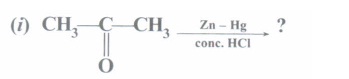
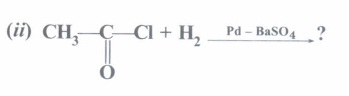
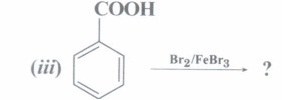
(b) Which acid of each pair shown here would you expect to be stronger?

30.
The Ka and Kb values of \(\alpha\) - amino acids are very low. Explain.
31.
Glucose is an aldohexose. It can occur freely as well as in combined form in the nature. It is present in sweet fruits and honey. It is also present in quantities in ripe grapes. As glucose is an aldohexose, it consists of six C-atoms and an aldehyde group. It is the most abundant organic compound on the earth and used as an immediate source of energy for all metabolic reactions in the animals.
It was found that glucose forms a six membered ring in which -OH at C-5 is involved in the ring formation.The cyclic six membered structure of glucose is known as pyranose structure. It is analogous to pyran which is a cyclic organic compound with one oxygen atom and five carbon atoms in the ring.
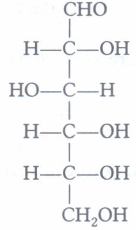
Write the structure of open-chain glucose.
32.
Glucose is an aldohexose. It can occur freely as well as in combined form in the nature. It is present in sweet fruits and honey. It is also present in quantities in ripe grapes. As glucose is an aldohexose, it consists of six C-atoms and an aldehyde group. It is the most abundant organic compound on the earth and used as an immediate source of energy for all metabolic reactions in the animals.
It was found that glucose forms a six membered ring in which -OH at C-5 is involved in the ring formation. The cyclic six membered structure of glucose is known as pyranose structure. It is analogous to pyran which is a cyclic organic compound with one oxygen atom and five carbon atoms in the ring.
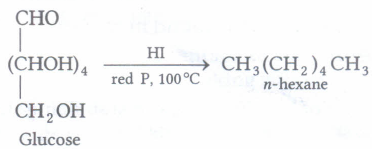
What happens when glucose is treated with HI?
33.
Amines are very reactive due to the difference in electro negativity between nitrogen and hydrogen atoms and due to the presence of unshared pair of electrons over N-atom. The number of hydrogen atoms attached to the N -atorn decides the course of reactions of amine, that is why amines differ in many reactions. In aromatic amines like aniline, electron density at ortho and para-positions with respect to -NH2 group is high. Therefore, this group is ortho or para directing and a powerful activating group.
Aromatic amines are weaker bases than ammonia. Give reasons?
34.
Carboxylic acids evolve hydrogen with metals and form salts with alkalies similar to phenols. However, unlike phenols, they react with weaker bases like sodium carbonate and hydrogen carbonate to evolve carbon dioxide. In aqueous solution, carboxylic acids ionise and exist in dynamic equilibrium between the resonance stabilised carboxylate ions and the hydronium ions.
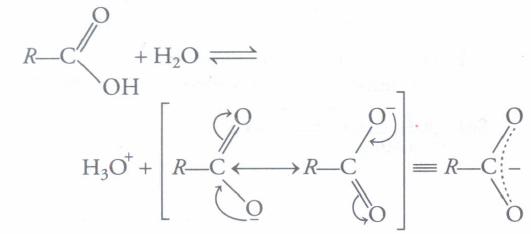
Resonance stabilisation of carboxylate anion is more than that of undissociated carboxylic acid. Therefore, greater stability of carboxylate ion is responsible for the acidic character of carboxylic acids. Carboxylic acids are more acidic than alcohols because carboxylate anions are more stable than alkoxide ions, so carboxylic acids have strong tendency to release a proton.
Give reason, why monochloro ethanoic acid has a higher pKa than dichloroethanoic acid?
35.
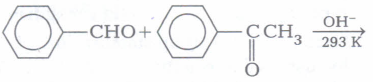
Aldehydes and ketones containing atleast one \(\alpha\)- H atom undergo a reaction in the presence of dilute alkali as catalyst to form \(\beta\)-hydroxy ketones. \(\beta\)- hydroxy aldehydes are called aldols while \(\beta\)-hydroxy ketones are collectively called ketols. When two different aldehydes or ketones combine then mixture of four products are formed. This reaction is called cross-aldol condensation.
Write the products formed in the following reaction.
36.
Read the passage given below and answer the following questions:
Carboxylic acids having an a-hydrogen atom when treated with chlorine or bromine in the presence of small amount of red phosphorus gives a-halo carboxylic acids. The reaction is known as Hell- Volhard-Zelinsky reaction.
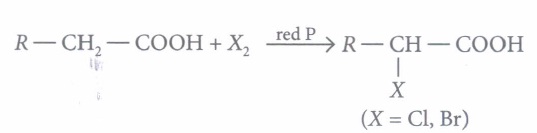
When sodium salt of carboxylic acid is heated with soda lime it loses carbon dioxide and gives hydrocarbon with less number of C-atoms.

In these questions (i - iv), a statement of assertion followed by a statement of reason is given. Choose the correct answer out of the following choices.
(a) Assertion and reason both are correct statements and reason is correct explanation for assertion.
(b) Assertion and reason both are correct statements but reason is not correct explanation for assertion.
(c) Assertion is correct statement but reason is wrong statement.
(d) Assertion is wrong statement but reason is correct statement.
(i) Assertion: (CH3)3CCOOH does not give H.V.Z reaction.
Reason: (CH3)3CCOOH does not have \(\alpha\)-hydrogen atom.
(ii) Assertion: H.V.Z. reaction involves the treatment of carboxylic acids having \(\alpha\)-hydrogens with Cl2 or Br2 in presence of small amount of redphosphorus.
Reason : Phosphorus reacts with halogens to form phosphorus trihalides.
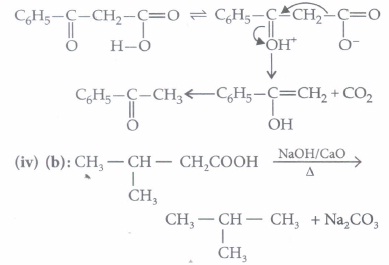
(iii) Assertion: C6H5COCH2COOH undergoes decarboxylation easily than C6H5COCOOH.
Reason : C6H5COCH2COOH is a 13-ketoacid.
(iv) Assertion: On heating 3-methylbutanoic acid with soda lime, isobutane is obtained.
Reason: Soda lime is a mixture of NaOH + CaO in the ratio 3 : 1.
1.
HNO acts as a base in the nitrating mixture (conc.HNO3+conc.H2SO4). H2SO4 acts on HNO3 to generate the electrophile, \({ NO }_{ 2 }^{ + }\) (nitronium ion)
2.
Starch is not a single compound but is a mixture of two components-a water soluble component called amylose (15-20%) and water insoluble component called amylopectin (80-85%). Amylose is a linear polymer of \(\alpha \)-D-glucose.But both glycogen and amylopectin are branched polymers of \(\alpha \)-D-glucose; rather glycogen is more highly branched than amylopectin. Whereas amylopectin chains consist of 20-25 glucose units, glycogen chains consist of 10-14 glucose units.
3.
Since, the liquid A reduces ammoniacal silver nitrate (Tollen's reagent), hence A is aldehyde and B does not give test with ammnoniacal silver nitrate, thus, B is a ketone.
Further, B forms a white crystalline solid on treatment with sodium hydrogen sulphite. This suggests that B is a methyl ketone.
4.
i) PhCH2CH2COOH
3-Phenylpropanoic acid
ii) (CH3)2C = CHCOOH
3-Methylbut-2-enoic acid
iii) 2-Methylcyclopentane carboxylic acid
iv) 2,4,6-Trinitrobenzoic acid
5.
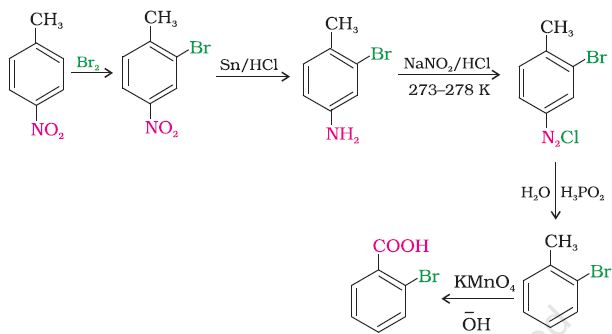
6.
C-1 of glucose unit and C-2 of fructose unit are anomeric carbon atoms in the given disaccharide. The disaccharide is non-reducing sugar because -OH groups attached to anomeric carbon atoms are involved in the formation of glycosidic bond.
7.

8.
(i) CI-CH2COOH is a stronger acid than CH3COOH. It is because --CI group exhibits - I-effect which makes the carboxylate ion more stable. Higher the stability of carboxylate ion, easier is the removal of proton from the carboxylic acid and stronger is the acid. In CH3COOH, --CH3 group has +I- effect which destabilised it. Hence, CH3COOH is a weaker acid.
(ii) Carboxylic acids contain carbonyl group but do not show the reactions of carbonyl group such as nucleophilic addition reaction like aldehydes and ketones. Because of the presence of lone pair of electrons on the O-atom of OH group, the electrophilic character of carbonyl carbon by resonance decreases, hence the partial positive charge on carbonyl carbon atom is reduced and therefore, they do not show nucleophilic addition reactions.
9.
| S.No. | Structure | IUPAC name | Common name |
| (i) | \(\mathrm{CH}_{3} \mathrm{CO}\left(\mathrm{CH}_{2}\right)_{4} \mathrm{CH}_{3}\) | Heptane- 2-one | Methyl n-pentyl ketone |
| (ii) | \(\mathrm{CH}_{3} \mathrm{CH}_{2} \mathrm{CHBrCH}_{2} \mathrm{CH}\left(\mathrm{CH}_{3}\right) \mathrm{CHO}\) | 4-Bromo-2-methylhexanal | ⋎-bromo- ∝.-methyl caproaldehyde |
| (iii) | \( \mathrm{CH}_{3}\left(\mathrm{CH}_{2}\right)_{5} \mathrm{CHO}\) | Heptanal | Heptanaldehyde |
| (iv) | \( \mathrm{Ph}-\mathrm{CH}=\mathrm{CH}-\mathrm{CHO}\) | 3-phenylprop -2-enal | β-phenylacrolein |
| (v) | 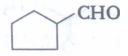 |
Cyclopentane carbaldehyde | Cyclopentane carbaldehyde |
| (vi) | PhCOPh | Diphenylmethanone | Benzophenone |
10.
(i) Peptide linkage. Peptide bond is formed by the condensation of two or more same or different n-amino acids. The condensation occurs between amino acids with the elimination of water. In this case, the carboxyl group of one amino acid and amino group of another amino acid get condensed with the elimination of water molecule.
The resulting \(\quad O\\ \quad \parallel \\ -C-NH-\) linkage is called peptide linkage. The formation of a dipeptide and the peptide
.png)
(ii) Primary structure. The primary structure of proteins gives the sequence in which the amino acids are linked in one or more polypeptide chains of proteins. This is shown below:
.png)
(iii) Denaturation. A process that changes the physical and biological properties of proteins without affecting the chemical composition of a protein is called denaturation. The denaturation is caused by certain physical or chemical treatments such as changes in pH, temperature, presence of some salts or certain chemical agents.
11.
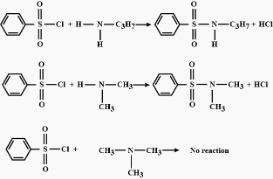
Hinsberg's test is used for the identification of primary, secondary, and tertiary amines.
Hinsberg's reagent is benzenesulphonyl chloride (C6H5SO2Cl).
It reacts differently with primary, secondary, and tertiary amines.
(i) Hinsberg's reagent reacts with primary amines to form N− alkylbenzenesulphonyl amide which is acidic in nature and soluble in alkali.
Note: N− alkylbenzenesulphonyl amide contains a strong electron-withdrawing sulphonyl group. Due to this, the H− atom attached to nitrogen can be removed easily. Hence, it is acidic.
(ii) Hinsberg's reagent reacts with secondary amines to form a sulphonamide which is insoluble in alkali.
Note: As there is no hydrogen atom attached to the N atom in the sulphonamide, it is not acidic and insoluble in alkali.
(iii) Hinsberg's reagent does not react with tertiary amines.
12.
(i) Methylamine and dimethylamine can be distinguished by the carbylamine test. Carbylamine test: Aliphatic and aromatic primary amines on heating with chloroform and ethanolic potassium hydroxide form foul-smelling isocyanides or carbylamines. Methylamine (being aliphatic primary amine) gives a positive carbylamine test, but dimethylamine does not.
(ii) Secondary and tertiary amines can be distinguished by allowing them to react with Hinsbergs reagent (benzenesulphonyl chloride, C6H5SO2Cl). Secondary amines react with Hinsberg’s reagent to form a product that is insoluble in an alkali. For example, N, N−diethylamine reacts with Hinsberg’s reagent to form N, N−diethylbenzenesulphonamide, which is insoluble in an alkali. Tertiary amines, however, do not react with Hinsberg’s reagent amines, however, do not react with Hinsberg’s reagent.
(iii) Aniline and benzylamine can be distinguished by their reactions with the help of nitrous acid, which is prepared in situ from a mineral acid and sodium nitrite. Benzylamine reacts with nitrous acid to form unstable diazonium salt, which in turn gives alcohol with the evolution of nitrogen gas.
13.
(c)
Glycogen
14.
(a)
15.
Arylamines react with NHO2 to form diazonium salts.
16.
An enamine
17.
(d)
Six
18.
(c)
Thymine
19.
(c)
NaOH,I2/H+
20.
(d)
Aniline
21.
(a)
CCl3COOH
22.
()
m-RNA (Messenger RNA), t-RNA (Transfer RNA), r-RNA (Ribosomal RNA).
23.
()
globular, fibrous
24.
()
N-ethylbenzenesulphonamide, aqueous NaOH solurion
25.
()
2, 4, 6-tribromoaniline
26.
()
acetic or ethanoic acid
27.
()
alpha, chlorine or bromine
28.

(b) (CH3)2NH > CH3NH2 > (CH3)2N
(c) Add NaNO2 and conc. HCI. Cool it to 0-5o C. Add alkaline solution of phenol. C6H5NH2 gives orange azo dye, whereas CH3NH2 does not.
29.
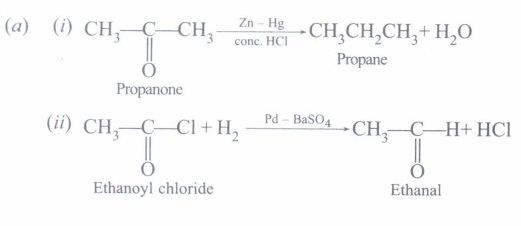
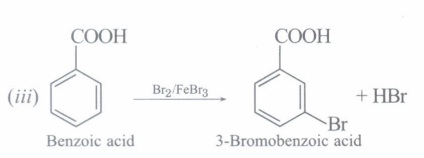
b) (i) F-CH2COOH is stronger acid.
(ii) CH3COOH is stronger acid.
30.
The Ka and Kb values of a-amino acids are very low because, in a-amino acids, the acidic group is \({ NH }_{ 3 }\) instead of -COOH in carboxylic acids and basic group is -\({ COO }^{ - }\) instead of -\({ NH }_{ 2 }\) group in aliphatic amines. For example, the Ka and Kb values of glycine are \(1.6\times { 10 }^{ -10 }\) and \(2.5\times { 10 }^{ -12 }\) respectively.
31.
Open chain strcuture of glucose is
32.
n-hexane is formed.
33.
Aromatic amines are weaker bases than ammonia due to electron withdrawing group nature of aryl group.
34.
This is because dichloroethanoic acid is a stronger acid than mono chloroethanoic acid.
35.
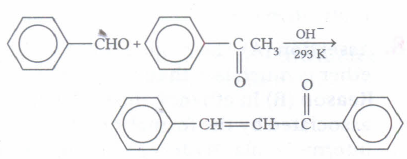
36.
(i) (a)
(ii) (c): Phosphorus converts a little .of the acid into acid chloride which is more reactive than the parent carboxylic acid. Thus, it is the acid chloride, not the acid itself, that undergoes chlorination at the \(\alpha\)-carbon.
(iii) (a): \(\beta\)-ketoacids are unstable acids. They readily undergo decarboxylation through a cyclic transition state.
(i) (b): All aliphatic aldehydes give red ppt. with
Fehling's solution, but ketones do not reduce Fehling's
solution.
(ii) (e): Aliphatic aldehydes reduce Fehling's solution,
but aromatic aldehydes do not.

12th Standard CBSE Syllabus & Materials
12th Standard CBSE
CBSE 12th Computer Science Python Revision Tour I - New Previous year Question Papers Study Material - QB365 Set A
NEW12th Standard CBSE
CBSE 12th Business Studies Planning Important Questions And Answers Study Material - QB365 Set A
NEW12th Standard CBSE
CBSE 12th Business Studies Business Environment Important Questions And Answers Study Material - QB365 Set A
NEW12th Standard CBSE
CBSE 12th Business Studies Principles of Management Important Questions And Answers Study Material - QB365 Set A



NCERT Books

Syllabus

Exam Pattern

Sample Question Papers

Previous year Question Papers

Important Notes

MCQ Practice test

NCERT Exemplers

Case study Questions

Image Based Questions

Passage based Questions

HOT Questions

Value Based Questions

Model Questions Papers
NCERT ( Book Back ) Questions

Assertion and Reason
Important Questions And Answers

CBSE 12th Standard CBSE Subjects
CBSE Standards