100% FREE ACCESS
6th Standard CBSE Syllabus & Materials
6th Standard CBSE
CBSE 6th Social Science The Value of Work - New Sample Question Papers Study Material - QB365 Set A
NEW6th Standard CBSE
CBSE 6th Social Science Family and Community - New Sample Question Papers Study Material - QB365 Set A
NEW6th Standard CBSE
CBSE 6th Social Science India's Cultural Roots - New Sample Question Papers Study Material - QB365 Set A
NEW6th Standard CBSE
CBSE 6th Social Science India,That is Bharat - New Sample Question Papers Study Material - QB365 Set A
NEW6th Standard CBSE
CBSE 6th Social Science Timeline and sources of history - New Sample Question Papers Study Material - QB365 Set A
NEW6th Standard CBSE
CBSE 6th Social Science Oceans and Continents - New Sample Question Papers Study Material - QB365 Set A

Published on: 25/10/2025
Download CBSE Class 6th Standard CBSE Social Science question papers, sample papers, important questions, and previous year solved papers in PDF format. Get free study materials, NCERT solutions, and exam preparation resources for Class 6th Standard CBSE Social Science
Questions + Answers key
Take MCQ Social Science Test
1.
Chotu is a small farmer. He often needs to borrow money. Why?
2.
What do you understand by 'zamindari system?
3.
What changes did the arrival of electricity bring into the life of the villagers?
4.
Give any five causes for the backwardness of Indian agriculture
5.
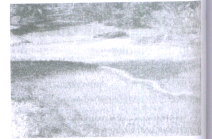
(i) What do you understand through the picture?
(ii) How do Ramalingam and his family survive?
6.
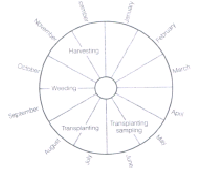
Based on the above diagram would you say that Thulasi earns money throughout the year?
7.
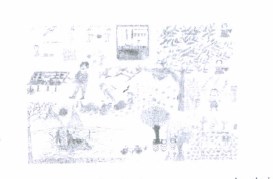
(i) Describe the works that you see people doing in the above picture.
(ii) Identify the different types of work that are related to farming and those that are not. List these in a table.
(iii) In your notebook draw some pictures of work that you have seen people do in rural areas and write a few sentences that describe the work.
8.
Give a brief account on rural livelihoods.
1.
Most of the time, small farmers like Chotu have to borrow money to purchase seeds, fertilisers and pesticides. They borrow money from rich farmers, shopkeepers, traders or moneylenders. Sometimes, either the seeds are not of good quality or pests attack them due to which crops get ruined. Failure of monsoon or untimely rainfall damages crops. In such a situation, farmers are unable to pay back their loans. Farmers also borrow money for marriage or any other social functions in the family. Many a times, they borrow money to purchase food items and to manage other daily expenditures.
2.
Zamindar was an official employed by the Mughals to collect taxes from peasants. The practice was continued under the British rule. The Zamindar was considered as the landlord and he would collect all taxes on his lands and then hand over the collected taxes to the British authorities. The Zamindars exploited the tillers and took for themselves a major share of the produce and the peasant was left with very little. Thus, they had to borrow money from the Zamindars and in return, they served them as bonded labour till the debt was repaid. After independence, the Government of India abolished both the systems
3.
With the arrival of electricity, the output of agricultural produce has greatly increased. Tubewells driven by electricity helps in irrigating land. Besides agriculture, electrification has also helped in the industrial development of villages. Various comforts of life (such as radio, television, etc.) are made available to the villagers. Also, entertainment and education is brought to the doorsteps of the villagers by means television and radio. Thus, the living standard of the villagers has improved.
4.
The main causes for the backwardness of the Indian agriculture are as follows:
(i) Small and fragmented land holdings.
(ii) Vicious circle of poverty.
(iii) Excessive dependence on monsoons.
(iv) No scientific method of cultivation.
(v) Floods and droughts
5.
(i) The picture states that - It is a transplanted paddy growing in a few of Ramalingam's 20 acres land.
It is a result of hard labour performed by agricultural workers like Thulasi.
(ii) Ramalingam and his family owns a rice mill and a shop selling seeds, pesticides etc.
They buy paddy from within the village and from surrounding villages The rice that is produced in the millis sold to traders in nearby towns. This gives them a substantial Income.
6.
Thulasi earns money only for SIX months in a year.
Transplanting of paddy : July and
August
Weeding : September and October
Harvesting : November and December
She does not have work throughout the year.
7.
(i)The works that people are doing:
(a) Hawker
(b) Fishing
(c) Labourers carrying goods
(d) Labourers working in the fields
(e) Plucking fruits and vegetables
(f) Shopkeeper
Works related to farming are:
(a) Labourers working in the fields
(b) Plucking fruits and vegetables
Works not related to farming are:
(a) Hawker
(b) Fishing
(c) Labourers carrying goods
(d) Mansions
(e) Shopkeeper
8.
There are several ways to earn a living of rural areas. These are farming and non-farming activities.
The farming activities are:
(i) Preparing the land
(ii) Sowing
(iii) Harvesting
(iv) Weeding
(v) Transplanting
People of rural areas are dependent upon the seasons, sometime they face problem such as failure of crops etc.
Non-farming activities are:
(i) Making baskets
(ii) Making utensils
(iii) Making pots
(iv) Making bricks
(v) Making bullock-carts
(vi) Fishing
(vii) Crafting
Some of the people have shops such as blacksmith's shop, tea shop, grocery shop, barber shop, cycle repair shop etc.

6th Standard CBSE Syllabus & Materials
6th Standard CBSE
CBSE 6th Social Science Locating Places on the Earth - New Sample Question Papers Study Material - QB365 Set A
NEW6th Standard CBSE
CBSE 6th Science A Journey Through States of Water - New Sample Question Papers Study Material - QB365 Set A
NEW6th Standard CBSE
CBSE 6th Science Temperature and its Measurement - New Sample Question Papers Study Material - QB365 Set A
NEW6th Standard CBSE
CBSE 6th Science Materials Around Us - New Sample Question Papers Study Material - QB365 Set A



NCERT Books

Syllabus

Exam Pattern

Sample Question Papers

Previous year Question Papers

Important Notes

MCQ Practice test

NCERT Exemplers

Case study Questions

Image Based Questions

Passage based Questions

HOT Questions

Value Based Questions

Model Questions Papers
NCERT ( Book Back ) Questions

Assertion and Reason
Important Questions And Answers

CBSE 6th Standard CBSE Subjects
CBSE Standards