 100% FREE ACCESS
8th Standard CBSE Syllabus & Materials
8th Standard CBSE
CBSE 8th Social Science Theme D - Factors of Production - New Model Questions Papers Study Material - QB365 Set A
NEW8th Standard CBSE
CBSE 8th Social Science Theme C - Universal Franchise and India's Electoral System - New Model Questions Papers Study Material - QB365 Set A
NEW8th Standard CBSE
CBSE 8th Social Science Theme B - The Rise of the Marathas - New Model Questions Papers Study Material - QB365 Set A
NEW8th Standard CBSE
CBSE 8th Social Science Theme B - Reshaping India's Political Map - New Model Questions Papers Study Material - QB365 Set A
NEW8th Standard CBSE
CBSE 8th Social Science Theme A - Natural Resources and Their Use - New Model Questions Papers Study Material - QB365 Set A
NEW8th Standard CBSE
CBSE 8th Science Keeping Time with Skies - New Model Questions Papers Study Material - QB365 Set A

Published on: 25/10/2025
Download CBSE Class 8th Standard CBSE Science question papers, sample papers, important questions, and previous year solved papers in PDF format. Get free study materials, NCERT solutions, and exam preparation resources for Class 8th Standard CBSE Science
Questions + Answers key
Take MCQ Science Test
1.
Explain the functions of plastids.
2.
What do you mean by protected area? Explain it with examples.
3.
Write the difference between metals and nonmetals on the basis of their physical properties.
4.
What do you understand by food preservation?
Explain any four methods of food preservation.
5.
Hens and frogs are both oviparous exhibiting different types of fertilisation, explain.
6.
Iron is more reactive than copper. Can you write an activity to show this?
7.
We read in newspapers that burning of fuels is a major cause of global warming. Explain why?
8.
Observe the figure and answer the following questions.
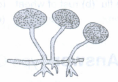
(a) Name the microorganism and the group to which it belongs.
(b) Name the food item on which the organism grows.
(c) Does it grow well in dry or in moist conditions?
(d) Is it safe to eat infected bread?
9.
Explain various agricultural practices in sequential manner.
10.
You must have heard farmers talking about soil fertility. What is it? Mention some methods by which soil fertility can be replenished.
1.
The small coloured bodies in the cytoplasm are called plastids. These are found only in plant cells but not in animal cells. Plastids are of different colours. Some of them contain green pigment called chlorophyll. The plastids having other than green colour are called chromoplast. Some plastids are colourless called leucoplast. These coloured plastids provide various colours to flowers and fruits. The chloroplasts having chlorophyll help in the formation of food by leaves through the process called photosynthesis.
2.
Protected area is the area where our flora and fauna and their habitats are protected. They are called sanctuaries, national parks and biosphere reserves. Plantation, cultivation, grazing, felling trees hunting and poaching are prohibited there.
Sanctuary : Areas where animals are protected from any disturbance to them and their habitat.
National parks : Areas reserved for wildlife where they can freely use the habitats and natural resources.
Biosphere Reserves: Large areas of protected land for conservation of wild-life, plant and animal resources and traditional life of the tribals living in the area.
3.
| S.No | Metals | Non-Metals |
|---|---|---|
| 1 | Metals are good conductors of heat and electricity | Non-metals are poor conductors of heat and electricity |
| 2 | Metals are malleable and ductile. | Non-metals are neither malleable nor ductile |
| 3 | Metals are lustrous and can be polished | Non-metals are nonlustrous and cannot be polished |
| 4 | Metals are solids except mercury | Non-metals can exist in all states. |
| 5 | Metals have generally high melting and boiling points | Non-metals generally have low melting and boiling points. |
4.
Micro-organisms spoil our food. The process of keeping our food safe from micro-organisms is called food preservation. Various methods of food preservation are :
(i) Drying: It reduces the moisture of food material which prevents growth of micro-organisms.
(ii) By common salt and sugar: Meat and fish are covered with dry salt to check the growth of bacteria. Sugar reduces the moisture content, which inhibits the growth of bacteria that spoil food.
(iii) By oil and vinegar: Use of oil and vinegar prevents spoilage of pickles because bacteria cannot live in such an environment.
(iv) Refrigeration and freezing: Low temperature retards the growth of microbes. Thus, it is safe for food.
(v) By chemicals: Chemicals such as sodium benzoate and potassium metabisulphite are used in jams, squash and ketchup.
5.
Hens lay eggs after fertilisation, therefore their eggs are covered with hard shell to protect the young ones. This shows that fertilisation in hen is internal. The frogs on the other hand lay both sperms and eggs in water prior to fertilisation. Thus, the fertilisation in frog takes place in water, hence it is external.
6.
Take about 50 mL of water in a beaker and dissolve 5 g of copper sulphate in it to obtain copper sulphate solution (which is blue in colour). Put a clean iron nail in this solution and keep the beaker undisturbed for sometime.
We will find that the blue colour of copper sulphate solution starts fading gradually and the iron nail gets covered with a red-brown layer of copper metal. It is because iron is more reactive than copper, so it displaces copper metal from its solution of copper sulphate. It is the copper metal set free from its compound which forms a red-brown layer on the surface of iron nail. This shows that iron is more reactive than copper.
Copper sulphate + Iron\(\rightarrow \) Iron sulphate + Copper
(Blue solution) (Grey) (Greenish solution) (Red-brown)
7.
Burning of fuels is a major cause of global warming because they produce a lot of greenhouse gas 'carbon dioxide' on burning.
The earth's atmosphere allows most of the sunlight that falls on it to pass through and heat the surface. But greenhouse gases such as carbon dioxide, methane, water vapours trap the heat radiated from earth. This leads to an increase in earth's temperature. This is known as greenhouse effect.
When concentration of greenhouse gases such as carbon dioxide increases, greenhouse effect also increases. This is known as global warming. It may cause melting of ice caps and glaciers resulting the rise in sea levels.
8.
(a) Microorganism is bread mould (Rhizopus) and the group is fungi.
(b) Organism grows on moist and stale bread.
(c) It grows well in moist condition.
(d) No, the fungus spoils the bread by producing poisonous substances (toxins).
9.
Various agricultural practices are as follows:
(i) Preparation of soil The first step is preparation of soil. The soil is loosened and turned up. It helps the plants to grow and develop. The process of lossening and turning of the soil is called tilling or ploughing. Sometimes manure is added to soil before tilling.
(ii) Sowing After preparation of soil, the second step called sowing takes place. Before sowing good quality seeds are selected. The seeds should be clean and healthy.
(iii) Adding manure and fertilisers Soil supplies minerals and nutrients to the crops. These nutrients are essential for growth of plants. Sometimes these nutrients are lacking, so substances are added to maintain or to replenish the soil. These substances are called manures and fertilisers. Manures and fertilisers are essential to increase the crop production
(iv) Irrigation The process of watering the crop plants is called irrigation. Plants take all the nutrients and minerals in dissolved form. So, water is most essential for germination of seeds, growth and development of plants.
(v) Harvesting After maturation of crop, it is cut off. This process is called harvesting. It is done by a sickle or by a machine called harvester.
(vi) Storage Storage of product is one of the most important tasks. To keep the grains for longer time, it should be safe from moisture, pest, insects and other microorganisms.
10.
The ability of soil to supply all the essential plant nutrients to a crop in adequate quantity is called soil fertility. Repeated growing of crops in the same soil removes various nutrient elements from the soil due to which the soil loses its fertility.
The soil fertility can be replenished or regained by the following methods:
(i) By keeping the field fallow (uncultivated) for one or two seasons.
(ii) By putting manures and fertilisers in the soil.
(iii) By practising crop rotation .
(iv) By practising multiple cropping (mixed cropping).

8th Standard CBSE Syllabus & Materials
8th Standard CBSE
CBSE 8th Science Particulate Nature of Matter - New Model Questions Papers Study Material - QB365 Set A
NEW8th Standard CBSE
CBSE 8th Science Pressure, Winds, Stroms and Cyclones - New Model Questions Papers Study Material - QB365 Set A
NEW8th Standard CBSE
CBSE 8th Mathematics Quadrilaterals - New Model Questions Papers Study Material - QB365 Set A
NEW8th Standard CBSE
CBSE 8th Mathematics A story of Numbers - New Model Questions Papers Study Material - QB365 Set A



NCERT Books

Syllabus

Exam Pattern

Sample Question Papers

Previous year Question Papers

Important Notes

MCQ Practice test

NCERT Exemplers

Case study Questions

Image Based Questions

Passage based Questions

HOT Questions

Value Based Questions

Model Questions Papers
NCERT ( Book Back ) Questions

Assertion and Reason
Important Questions And Answers

CBSE 8th Standard CBSE Subjects
CBSE Standards