
 100% FREE ACCESS
12th Standard CBSE Syllabus & Materials
12th Standard CBSE
CBSE 12th Economics Government Budget and the Economy Previous year Question Papers Study Material - QB365 Set A
NEW12th Standard CBSE
CBSE 12th Computer Science Interface Python with MySQL - New Previous year Question Papers Study Material - QB365 Set A
NEW12th Standard CBSE
CBSE 12th Computer Science Database Concept - New Previous year Question Papers Study Material - QB365 Set A
NEW12th Standard CBSE
CBSE 12th Computer Science Data Communication - New Previous year Question Papers Study Material - QB365 Set A
NEW12th Standard CBSE
CBSE 12th Computer Science Data Structures - New Previous year Question Papers Study Material - QB365 Set A
NEW12th Standard CBSE
CBSE 12th Computer Science Functions - New Previous year Question Papers Study Material - QB365 Set A

Published on: 07/03/2026
Download CBSE Class 12th Standard CBSE Chemistry question papers, sample papers, important questions, and previous year solved papers in PDF format. Get free study materials, NCERT solutions, and exam preparation resources for Class 12th Standard CBSE Chemistry
Questions + Answers key
Take MCQ Chemistry Test
1.
Molecularity of any reaction not be equal to zero?
2.
How many water molecules are involved in coordination in \(CuSO_{ 4 }5H_{ 2 }O\) ?
3.
Why is a molar solution of solute in water more concentrated than a molal solution?
4.
A primary amine, RNH2 can be reacted with CH3-X to get secondary amine, R-NHCH3 but the only disadvantage is that \({ 3 }^{ \circ }\) amine and quaternary ammonium salts are also obtained as side products. Can you suggest a method where RNH2 forms only \({ 2 }^{ \circ }\) amine
5.
Name the linkage connecting monosaccharide units in polysaccharides.
6.
Eo (reduction potential) of Cu and Zn are +0.34 V and - 0.76 V respectively. Which of them is stronger reducing agent?
7.
(i) What is a chelate complex? Give one example.
(ii) What are heteroleptic complexes ? Give one example.
8.
Explain the following observations.
(i) Electrophilic substitution in case of aromatic amines takes place more readily than benzene.
(ii) Tertiary amines do not undergo acylation.
9.
Which oxoanion (among VO3-4 CrO42-, MnO2-4 or FeO42-) is strongest oxidant and which is weak
oxidant?
10.
A solution containing 15g urea (molar mass = 60 g mol-1) per litre of solution in water has the same osmotic pressure (isotonic) as a solution of glucose (molar mass = 180 g mol-1 ) in water. Calculate the mass of glucose present in one litre of its solution.
11.
(i) Write the structural difference between starch and cellulose.
(ii) What type of linkage is present in Nucleic acids?
(iii) Give one example each for fibrous protein and globular protein.
12.
If the rate constant of a first order reaction at a certain temperature is 1.5\(\times\)10-1s-1 and t1 and t2 are the respective times for 50|% and 75% completion of the reaction ,determine the ratio of t2 to t1.
13.
Calculate the equivalent conductivity of 1 M H2SO4 solution, if its conductivity is 26\(\times\)10-2 ohm-1 cm-1 (Atomic weight of sulphur = 32).
14.
(a) Write the important structure difference between DNA and RNA.
(b) Mention the names of the bases produced on hydrolysis of DNA
15.
Neeru observed that her mother kept shrinked or dried vegetables in water before cutting these for cooking. After some time, these dried vegetables looked fresh and their shrinkness has been reduced. Answer the following questions.
(i) Why did Neeru's mother kept the dried vegetables in water?
(ii) Name this process and define it.
(iii) Would an increase in temperature accelerate the process?
(iv) Write the values associated with Neeru's mother.
16.
(i) Name the element of 3d transition series which shows maximum number of oxidation states. Why does it show so?
(ii) Which transition metal of 3d series has positive \(E°(M^{ 2+ }/M)\) value and why?
(iii) Out of \(Cr^{ 3+ }\) and \(Mn^{ 3+ }\), which is a stronger oxidizing agent and why?
(iv) Name a member of the lanthanoid series which is well known to exhibit a +2 oxidation state.
(v) Complete the following equation:
\(MnO_{ 4 }^{ - }8H^{ + }5e^{ - }\longrightarrow \)
17.
Glucose and fructose give the same osazone ? Explain.
18.
Why is an amide more acidic than amine?
19.
What is the relationship between observed colour of the complex and the wavelength of light absorbed by the complex ?
20.
The half time of first order decomposition of nitramide is 2.1 hour at 15oC. NH2NO2(aq) \(\longrightarrow\) N2O(g) + H2O (I)
If 6.2 g of MH2NO2 is allowed to decompose, calculate
(i) time taken for NH2NO2 to decompose 99% and
(ii) volume of dry N2O produced at this point, measured at STP.
21.
The half-life for a zero order reaction equals
\(\frac{2 k}{R}\)
\(\frac{1}{2} \frac{k}{R^2}\)
\(\frac{R^2}{2 k}\)
\(\frac{R}{2 k}\)
22.
In Arrhenius plot of Ink Vs \(\frac{1}{\mathrm{~T}}\) is a linear plot obtained with slope of -2 x 10⁴ k. Ea of reaction in kJ mol -1.
83
166
249
332 kJ mol -1
23.
Out of 1m solution of following dissolved in water. Which one will have lowest freezing point (assuming all are fuel, ionised)
Urea
NaCl
Na2SO4
AI2(SO4)3
24.
Out of the following which one react with NaNO2 + HCl to form alcohol
C6H5NHCH3
(CH3)2NH
CH3NH2
C6H5NH
25.
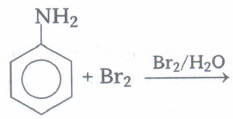
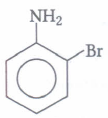
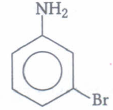
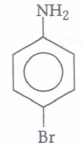
Which of the following products is formed in the given reaction?
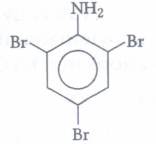
26.
Anode in the Leclanche cell is
zinc container
graphite electrode
carbon
MnO2 + C
27.
The colour of the transition metal ions is due to
d - d transition
charge transfer
change in the geometry
none
28.
The vitamins absorbed from intestine along with fats are
A, D
A, B
A, C
D, B
29.
Identify the correct statements for the behaviour of ethane-1, 2-diamine as a ligand.
It is a neutral ligand
It is a didentate ligand
It is a chelating ligand
It is a unidentate ligand
30.
The value of n in the carbonyl \({ \left( CO \right) }_{ n }-Co-Co-(Co)_n\) is
4
5
6
8
31.
A button cell used in watches functions as follows :
\(Zn(s)+{ Ag }_{ 2 }O(s)+{ H }_{ 2 }O(l)\rightleftharpoons 2Ag(s)+{ Zn }^{ 2+ }(aq)+2{ OH }^{ - }(aq)\)
The half-cell potentials are
\({ Zn }^{ 2+ }(aq)+{ 2e }^{ - }\longrightarrow Zn(s);{ E }^{ 0 }=-0.76V\)
\({ Ag }_{ 2 }O(s)+{ H }_{ 2 }O(l)+{ 2e }^{ - }\longrightarrow 2Ag(s)+2{ OH }^{ - }(aq);{ E }^{ 0 }=0.34V\)
The cell potential will be
1.10 V
0.42 V
0.84 V
1.34 V
32.
Which of the following has largest number of isomers?
[Ru(NH3)4Cl2]+
[Co(en)2Cl2]+
[Ir(PR3)2H(CO)]2+
[Co(NH3)5Cl]2+
33.
34.
Assertion (A) Inversion of configuration is observed in SN2 reaction.
Reason (R) The reaction proceeds with the formation of carbocation.
(a) Both Assertion (A) and Reason (R) are true and Reason (R) is the correct explanation of Assertion (A).
(b) Both Assertion (A) and Reason (R) are true, but Reason (R) is not the correct explanation of Assertion (A).
(c) Assertion (A) is true, but Reason (R) is false.
(d) Asserton (A) is false, but Reason (R) is true.
35.
Assertion: The potential difference between the two electrodes of a galvanic cell is called the cell potential.
Reason : Cell potential is equal to the emf of a cell.
Codes :
(a) Assertion and reason both are correct statements and reason is correct explanation for assertion.
(b) Assertion and reason both are correct statements but reason is not correct explanation for assertion.
(c) Assertion is correct statement but reason is wrong statement.
(d) Assertion is wrong statement but reason is correct statement.
36.
In the following questions. an Assertion (A) is followed by a corresponding Reason (R) Use the following keys to choose the appropriate answer.
Assertion (A) One molar aqueous solution has always higher concentration than one molal.
Reason (R) The molality of a solution depends upon the density of the solution whereas molarity does not.
(a) Both (A) and (R) are correct, (R) is the correct explanation of (A).
(b) Both (A) and (R) are correct, (R) is not the correct explanation of (A).
(c) (A) is correct; (R) is incorrect.
(d) (A) is incorrect; (R) is correct.
37.
Observe the histogram showing boiling points of pentane, iso pentane, 1°,2° and 3 ° amines. Answer the questions that follow based on table and related concepts.
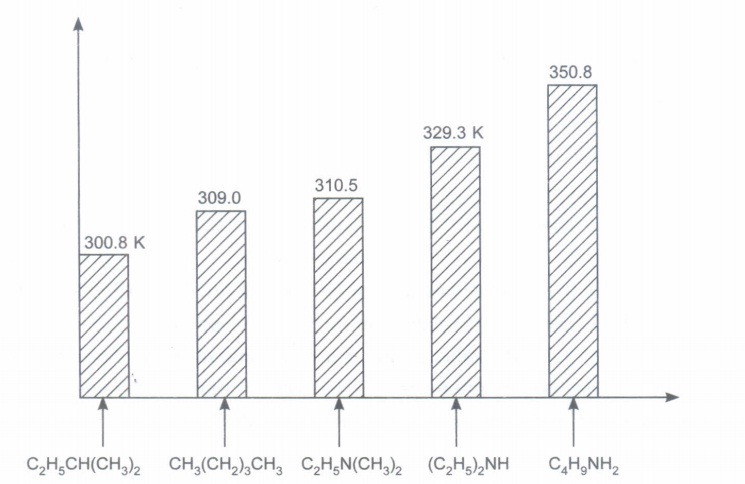
(a) Why does CH3CH2CH2CH2NH2 (1° amine) has higher boiling point than (C2H5)2NH and C2H5N(CH3 )2?
(b) Why does ethanol have higher boiling point than ethanamine?
(c) Why amines are more basic than alcohol?
(d) Why are Primary amines more soluble in water than 2° and 3° amines?
(e) Arrange the compounds shown in graph, increasing order of boiling points. Give reason.
38.
Read the passage given below and answer the following questions:
Nernst equation relates the reduction potential of an electrochemical reaction to the standard potential and activities of the chemical species undergoing oxidation and reduction. Let us consider the reaction, \(M_{(a q)}^{n+} \longrightarrow n M_{(s)}\)
For this reaction, the electrode potential measured with respect to standard hydrogen electrode can be given as
\(E_{\left(M^{n+} / M\right)}=E_{\left(M^{n+} / M\right)}^{\circ}-\frac{R T}{n F} \ln \frac{[M]}{\left[M^{n+}\right]}\)
In these questions ( i-iv), a statement of assertion followed by a statement of reason is given. Choose the correct answer out of the following choices.
| (a) Assertion and reason both are correct statements and reason is correct explanation for assertion. |
| (b) Assertion and reason both are correct statements but reason is not correct explanation for assertion |
| (c) Assertion is correct statement but reason is wrong statement |
| (d) Assertion is wrong statement but reason is correct statement. |
(i) Assertion : For concentration cell, \(\begin{array}{c} \mathrm{Zn}_{(s)}\left|\mathrm{Zn}^{2+}{ }_{(a q)} \| \mathrm{Zn}^{2+}{ }_{(a q)}\right| \mathrm{Zn} \\ \mathrm{C}_{1} \quad \mathrm{C}_{2} \end{array}\)
For spontaneous cell reaction, C1 < C2.
Reason : For concentration cell \(E_{\text {cell }}=\frac{R T}{n F} \log \frac{C_{2}}{C_{1}}\)
For spontaneous reaction, \(E_{\text {cell }}=+\mathrm{ve} \Rightarrow C_{2}>C_{1}\)
(ii) Assertion : For the cell reaction, \(\mathrm{Zn}_{(s)}+\mathrm{Cu}_{(a q)}^{2+} \longrightarrow \mathrm{Zn}_{(a q)}^{2+}+\mathrm{Cu}_{(s)}\) voltmeter gives zero reading at equilibrium.
Reason : At the equilibrium, there is no change in concentration of Cu2+ and Zn2+ ions.
(iii) Assertion : The Nernst equation gives the concentration dependence of emf of the cell.
Reason : In a cell, current flows from cathode to anode
(iv) Assertion : Increase in the concentration of copper half cell in a cell, increases the emf of the cell
Reason : \(E_{\text {cell }}=E_{\text {cell }}^{\circ}+\frac{0.059}{2} \log \frac{\left[\mathrm{Cu}^{2+}\right]}{\left[\mathrm{Zn}^{2+}\right]}\)
1.
Molecularity of the reaction is the number of molecules taking part in an elementary step. For this we require at least a single molecule leading to the value of minimum molecularity of one. Hence, molecularity of any reaction can never be equal to zero.
2.
Four water molecules are coordinated to Cu2+ ion and fifth is attached to anion by hydrogen bonding.
3.
A molar solution contains one mole of the solute present in one litre or 1000 mL of solution. On the other hand, a molal solution contains one mole of the solute in 1000 g of water. At room temperature, density of water is slightly less than one so that the volume of water corresponding to 1000 g will be greater than 1000 mL (vol = mass/density < 1). So,
the volume of water containing one mole of solute will be more in case of molal solution than molar solution. Therefore, molar solution is more concentrated than molal solution.
4.
Carbylamine reaction is shown by 1° amines only which results in the replacement of two hydrogen atoms attached to nitrogen atom of NH2 group by one carbon atom. On catalytic reduction the isocyanide forms a secondary amine with one methyl group.
\({ RNH }_{ 2 }\overset { KOH/{ CHCl }_{ 3 } }{ \longrightarrow } RNC\overset { { H }_{ 2 }/Pd }{ \longrightarrow } RNH{ CH }_{ 3 }\\ \quad 1°\quad \quad \quad \quad \quad \quad \quad \quad \quad \quad \quad \quad 2°\)
5.
Glycosidic linkage.
6.
Zn is stronger reducing agent because it has lower standard reduction potential than that of Cu.
7.
(i) When a di- or polydentate ligand uses its two or more donor atoms simultaneously to bind a single metal ion, it is said to be a chelate ligand. Such complexes are called chelate complexes.
For example: \(\left[\mathrm{CoCl}_2(\mathrm{en})_2\right]^{+}\)
(ii) i. Homoleptic complexes: The complexes in which metal ion is bound to only one type of ligands are called homoleptic complexes.
e.g. In \(\left[\mathrm{Co}\left(\mathrm{NH}_3\right)_6\right]^{3+}\), only one type of ligand, \(\mathrm{NH}_3\) surrounds the \(\mathrm{Co}^{3+}\) ion.
ii. Heteroleptic complexes: The complexes in which metal ion is surrounded by more than one type of ligands are called heteroleptic complexes.
e.g. In complex \(\left[\mathrm{Co}\left(\mathrm{NH}_3\right)_4 \mathrm{Cl}_2\right]^{+}\), there are two types of ligands, \(\mathrm{NH}_3\) and Cl attached to \(\mathrm{Co}^{3+}\) ion.
iii. Double Salt: Double salts are ionic substances created by combining two distinct salt compounds. In aqueous media, double salts totally dissociate.
eg. \(\mathrm{FeSO}_4\left(\mathrm{NH}_4\right)_2 \mathrm{SO}_4 \cdot 6 \mathrm{H}_2 \mathrm{O}\) (Mohr's salt).
8.
(i) Due to strong electron donating effect of the -NH2 group, the electron density increases at the o-, p = positions. Further when aniline is treated with Br2, the Br+ attacks the benzene ring at o-, p = positions to form carbocation intermediates which are stabilised not only by the usual resonance of the benzene ring but also by the -NH2 group.
(ii) Due to the absence of H+ atom.
9.
Strongest oxidant = MnO2-4 weakest oxidant = VO3-4
10.
Here,
\( Here, W_{1}=15 \mathrm{~g}, M_{1}=60 \mathrm{~g} \mathrm{~mol}^{-1}, V_{1}=1 \mathrm{~L}\)
\(M_{2}=180 \mathrm{~g} \mathrm{~mol}^{-1}, V_{2}=1 \mathrm{~L}\)
\(\pi=C R T=\frac{W}{m} \frac{R T}{V} \)
For both solutions, \(\pi\), R, T and V are same.
For urea solution, \(\pi=\frac{15 R T}{60}\)
For glucose solution,\(\pi=\frac{W_{2} R T}{180}\)
\(\because\frac{15 R T}{60} =\frac{W_{2} R T}{180} \)
\(\therefore W_{2} =\frac{15 \times 180}{60}=45 \mathrm{~g}\)
11.
(i) In starch, the glucose monomers are in alpha configuration while in cellulose the glucose monomers are in beta configuration. Starch is a polymer consisting of amylose and amylopectin while cellulose is a long chain composed only of
β-D-glucose units.
(ii) Phosphodiester linkage between the 5' and 3'atoms is present in nucleic acids.
(iii) Example of fibrous protein-Collagen, keratin, myosin.
Example of globular protein-Insulin, haemoglobin, egg albumin.
12.
2.
13.
130 ohm-1 cm2 eq-1
14.
(i)
| DNA | RNA |
| (i) It has double helix structure. |
(i) It has single helix structure |
| (ii) It has Adenine , Thymine, Guanine and Cytocine. | (ii) It has Adenine, Guanine, Cytocine and Uacil |
(b) Hydrolysis of DNA gives Adenine, Thymine,Guanine and Cytocine.
15.
(i) Neeru's mother wanted to make the vegetables fresh so, they can easily be peeled, cut and cooked.
(ii) The phenomenon of the flow of solvent through a semipermeable membrane from pure solvent to the solution is known as osmosis.
(iii) The process would be accelerated with increase of temperature as osmosis becomes faster with increase of temperature.
(iv) Neeru's mother is an intelligent and responsible home-maker.
16.
(i) Electronic configuration of Mn2+ is [Ar]3d5 which are half filled and hence is stable. Therefore, third ionization enthalpy is very high i.e. third electron cannot be easily removed. In the case of Fe2+, the electronic configuration is 3d6. Therefore, Fe2+ can easily lose one electron to acquire 3d5 stable configuration. Thus, Mn2+is more stable than Fe2+ towards oxidation to + 3 states.
(ii) The high enthalpies of atomization of transition elements are due to the participation of electrons (n - 1) d-orbitals in addition to ns electrons in the interatomic metallic bonding. In the case of zinc, no electrons' from 3d-orbitals are involved in the formation of metallic bonds. On the other hand, in all other metals of 3d series electrons from d-orbitals are always involved in the formation of metallic bonds.
(iii) Lanthanoids show limited the number of oxidation states, such as +2, +3 and +4 (+3 is the principal oxidation state). This is because of the large energy gap between 5d and 4f subshells. On the other hand, actinoids also show principal oxidation state of +3 but a number of other oxidation states also. For example uranium (Z= 92) exhibits oxidation states of+3, +4, +5, +6 and +7 and neptunium (Z = 94) shows oxidation states of +3, +4, +5, +6 and +7. This is because of the small energy difference between 5f and 6d orbitals.
17.
During osazone formation, the reaction occurs only at CI and C2 while rest of the molecule remains intact. Since glucose and fructose differ from each other only in the arrangement of atoms at CI and C2, therefore, they. give the same osazone.
18.
The amide has the following resonating structures:
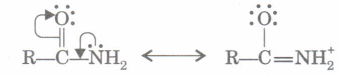
Due to the delocalisation of lone pair of electrons on N over C==O group, amino group acquires a positive charge which ma, es N-H bond weak. Moreover, the anion formed after removal of a proton is also stabilized by resonance as :
.png)
However, no such stabilization is possible in amines.
19.
When white light falls on the complex, some part of it is absorbed. Greater the CFSE, greater is the energy absorbed or shorter is the wavelength absorbed \((E={hc\over\lambda })\). The observed colour is the complementary colour of the colour absorbed.
20.
\(k={0.693\over t_{1/2}}={0.693\over 2.1hr}=0.33hr^{-1}\)
x = 99% of a = 0·99 a
\(t={2.303\over k}log{a\over a-x}={2.303\over 0.33hr^{-1}}log{a\over a-0.99a}={2.303\over 0.33}log 10^2=13.69hours\)
(ii) Amount decomposed = 99% of 6.2 g =\({99\over 100}\times 6.2g=6.138g\)
1 mol NH2NO2 (63g) produce N2O at STP = 22·4 L
6.138 g will produce N2O at STP =\({22.4\over 63}\times6.138\ L=2.2176L\)
21.
(d)
\(\frac{R}{2 k}\)
22.
(b)
166
23.
(d)
AI2(SO4)3
24.
(c)
CH3NH2
25.
(d)
26.
(a)
zinc container
27.
(a)
d - d transition
28.
(a)
A, D
29.
(a)
It is a neutral ligand
30.
(a)
4
31.
(a)
1.10 V
32.
(b)
[Co(en)2Cl2]+
33.
34.
(c) SN1 reaction proceeds with the formation of carbocation, while SN2 reaction proceeds through the transition state formation.
Hence, Assertion (A) is true, but Reason (R) is false.
35.
(c) : The cell potential is called the emf of the cell when the cell is used in such a manner that no current is drawn through the cell.
36.
(b) Both (A) and (R) are true but (R) is not the correct explanation of (A). The correct explanation is that one molar aqueous solution has 1 mole in less than 1000 g of water. Hence, 1000 g of water will be associated with more than 1 mole while 1 molal has 1 mole in 1000 g of water
37.
(a) It is because extent of H-bonding is more in CH3CH2CH2CH2NH2 than 2° and 3° amines.
(b) It is because H-bonds are stronger in alcohols than amines because 'O' is more electronegative than 'N'.
(c) It is because \(\stackrel{\oplus}{\mathrm{RNH}_{3}}\) is more stable than \(\underset{\mathrm{ROH2}}{\oplus}\) . +ve charge on oxygen is not stable.
(d) It is because primary amines can form H-bonds with water to more extent.
(e) C2H5CH(CH3)2 < CH3(CH2)3CH3 < C2H5N(CH3)2 < (C2H5)2NH < C4H9NH2.
Isopentane has lower boiling point that n-Pentane due to branching less surface area, less van der Waals' forces of attraction. 3° < 2° < 1° is order of boiling point in amines because extent of H-bonding increases.
38.
(i) (a) : \(\log \left(\frac{C_{1}}{C_{2}}\right)<0\) for spontaneity.
∴ C1 < C2
(ii) (a)
(iii) (b)
(iv) (a)

12th Standard CBSE Syllabus & Materials
12th Standard CBSE
CBSE 12th Computer Science Python Revision Tour I - New Previous year Question Papers Study Material - QB365 Set A
NEW12th Standard CBSE
CBSE 12th Business Studies Planning Important Questions And Answers Study Material - QB365 Set A
NEW12th Standard CBSE
CBSE 12th Business Studies Business Environment Important Questions And Answers Study Material - QB365 Set A
NEW12th Standard CBSE
CBSE 12th Business Studies Principles of Management Important Questions And Answers Study Material - QB365 Set A



NCERT Books

Syllabus

Exam Pattern

Sample Question Papers

Previous year Question Papers

Important Notes

MCQ Practice test

NCERT Exemplers

Case study Questions

Image Based Questions

Passage based Questions

HOT Questions

Value Based Questions

Model Questions Papers
NCERT ( Book Back ) Questions

Assertion and Reason
Important Questions And Answers

CBSE 12th Standard CBSE Subjects
CBSE Standards