 100% FREE ACCESS
7th Standard CBSE Syllabus & Materials
7th Standard CBSE
CBSE 7th Social Science Theme E - Understanding Market - New Sample Question Papers Study Material - QB365 Set A
NEW7th Standard CBSE
CBSE 7th Social Science Theme E - From Barter to Money - New Sample Question Papers Study Material - QB365 Set A
NEW7th Standard CBSE
CBSE 7th Social Science Theme D - The Constitution of India- An Introduction - New Sample Question Papers Study Material - QB365 Set A
NEW7th Standard CBSE
CBSE 7th Social Science Theme D - From the Rulers to the Ruled : Types of Governments - New Sample Question Papers Study Material - QB365 Set A
NEW7th Standard CBSE
CBSE 7th Social Science Theme B - The Age of Reorganisation - New Sample Question Papers Study Material - QB365 Set A
NEW7th Standard CBSE
CBSE 7th Social Science Theme B - The Rise of Empires - New Sample Question Papers Study Material - QB365 Set A
Published on: 31/10/2025
Download CBSE Class 7th Standard CBSE Mathematics question papers, sample papers, important questions, and previous year solved papers in PDF format. Get free study materials, NCERT solutions, and exam preparation resources for Class 7th Standard CBSE Mathematics
Questions + Answers key
Take MCQ Mathematics Test
1.

2.

3.

4.

5.

6.
How many faces does the given solid have?
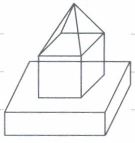
7.
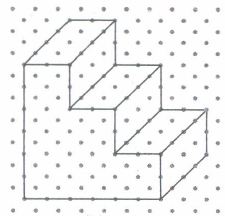
Use isometric dot paper and make an isometric sketch for each one of the given shapes
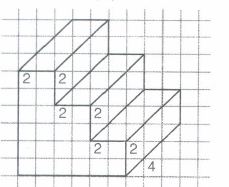
8.
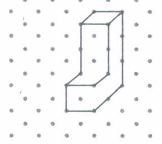
Use isometric dot paper and make an isometric sketch for each one of the given shapes
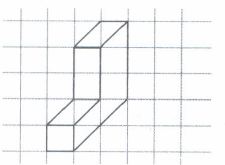
9.
What will be the base of a square pyramid?
10.
How many vertices does a cone have?
11.
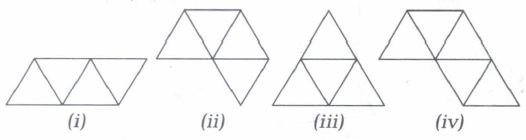
Here, you find four nets. There are two correct nets among them to make a tetrahedron. See if you can work out, which nets will make a tetrahedron
12.
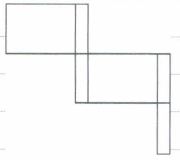
Which figure will be formed by folding the net shown below?
13.
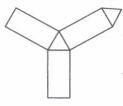
The following diagrams show the nets of various solids. Name the solids.
14.
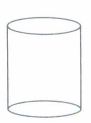
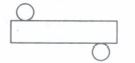
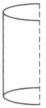
Draw the figure of cross-section obtained by cutting vertically the following shape of cylinder
15.
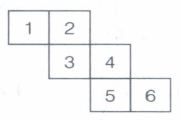
Can this be a net for a die? Explain your answer
16.
Fill the correct symbol >, =, < in the following blanks.
(a) Faces of pyramid ----- Vertices of the pyramid.
(b) Faces of pyramid ----- Edge of the base
(c Edges on the base of a tetrahedron ------ Faces of a tetrahedron.
17.
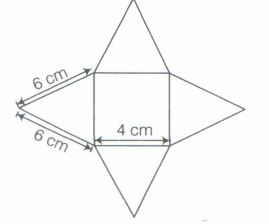
Draw the net of a square pyramid with base as square of side 4 cm and slant edges 6 cm.
18.
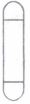
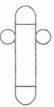
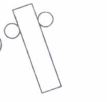
Which of the following nets is a net of a cylinder?

19.
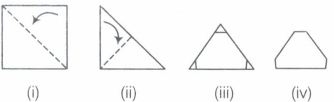
Take a square piece of paper as shown in fig. (i). Fold it along its diagonals as shown in fig. (ii). Again, fold it as shown in fig. (iii). Imagine that you have cut-off 3 pieces of the form of congruent isosceles right-angled triangles out of it as shown in figure 4


20.
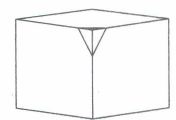
When we cut a corner of a cube as shown in the figure, we get the cut-out piece as
square pyramid
trapezium prism
triangular pyramid
a triangle
21.
Total number of edges a cylinder has
0
1
2
3
22.
All faces of a pyramid are always
triangular
rectangular
congruent
None of these
23.
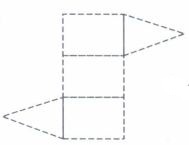 is a net of a -----
24.
A triangular pyramid has ------ faces ----- edges and ------ vertices.
25.
An example of solid with no vertex is ------
26.
A plane surface of a solid enclosed by edges is called a/an ------
27.
The common portion of two adjacent faces of a cuboid is called a/an-----
28.
While sphere is a 2-D figure, circle is a 3-D figure
29.
A rectangular pyramid has 5 rectangular faces.
30.
A pyramid has only one vertex
31.
A cylinder has no vertex
32.
In oblique sketch of the solid,the measurements are kept proportional
1.
()
2.
()
Trapezium
3.
()
Circle
4.
()
Cube
5.
()
Cylinder
6.
14
7.
An isometric sketch for each one of the given shape are as follow:
8.
An isometric sketch for each one of the given shape are as follow:
9.
Square
10.
One
11.
In the given figures, nets (i) and (iii) are two correct nets to make a tetrahedron.
12.
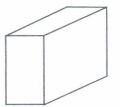
13.
Triangular prism
14.
The figure of cross-section obtained by cutting vertically the shape of cylinder.
15.
No, we know that, opposite faces of a die always have a total of seven dots on them. In the given net, one pair of opposite faces will have 1 and 4 on them whose total is 5 (≠7) and another pair of opposite faces will have 3 and 6 on them, whose total is 9 (≠7). So, given figure cannot be a net for a die.
16.
(a) = (b) > (b) <
17.
The net of such square pyramid will be
18.
(c)
19.
(a)
20.
(c)
triangular pyramid
21.
(c)
2
22.
(d)
None of these
23.
()
triangular prism.
24.
()
4 faces, 6 edges and 4 vertices.
25.
()
sphere.
26.
()
face.
27.
()
edge.
28.
(b)
29.
(b)
30.
(b)
31.
(a)
32.
(b)

7th Standard CBSE Syllabus & Materials
7th Standard CBSE
CBSE 7th Social Science Theme B - New Beginnings : Cities and States - New Sample Question Papers Study Material - QB365 Set A
NEW7th Standard CBSE
CBSE 7th Social Science Theme A - Climates of India - New Sample Question Papers Study Material - QB365 Set A
NEW7th Standard CBSE
CBSE 7th Social Science Theme A - Geographical Diversity of India - New Sample Question Papers Study Material - QB365 Set A
NEW7th Standard CBSE
CBSE 7th Science Earth, Moon and the Sun - New Sample Question Papers Study Material - QB365 Set A



NCERT Books

Syllabus

Exam Pattern

Sample Question Papers

Previous year Question Papers

Important Notes

MCQ Practice test

NCERT Exemplers

Case study Questions

Image Based Questions

Passage based Questions

HOT Questions

Value Based Questions

Model Questions Papers
NCERT ( Book Back ) Questions

Assertion and Reason
Important Questions And Answers

CBSE 7th Standard CBSE Subjects
CBSE Standards