 100% FREE ACCESS
7th Standard CBSE Syllabus & Materials
7th Standard CBSE
CBSE 7th Social Science Theme E - Understanding Market - New Sample Question Papers Study Material - QB365 Set A
NEW7th Standard CBSE
CBSE 7th Social Science Theme E - From Barter to Money - New Sample Question Papers Study Material - QB365 Set A
NEW7th Standard CBSE
CBSE 7th Social Science Theme D - The Constitution of India- An Introduction - New Sample Question Papers Study Material - QB365 Set A
NEW7th Standard CBSE
CBSE 7th Social Science Theme D - From the Rulers to the Ruled : Types of Governments - New Sample Question Papers Study Material - QB365 Set A
NEW7th Standard CBSE
CBSE 7th Social Science Theme B - The Age of Reorganisation - New Sample Question Papers Study Material - QB365 Set A
NEW7th Standard CBSE
CBSE 7th Social Science Theme B - The Rise of Empires - New Sample Question Papers Study Material - QB365 Set A

Published on: 31/10/2025
Download CBSE Class 7th Standard CBSE Science question papers, sample papers, important questions, and previous year solved papers in PDF format. Get free study materials, NCERT solutions, and exam preparation resources for Class 7th Standard CBSE Science
Questions + Answers key
Take MCQ Science Test
1.
(a) Draw a circuit diagram to represent a circuit shown in a figure
.png)
(b) If the bulb is not glowing in a circuit, what could be two possible reasons for the same
2.
Distinguish between an open circuit and a closed circuit.
3.
Name any two effects of electric current.
4.
Current does not flow in an____circuit.
5.
Filament is made of________
6.
The core of an electromagnet is made from____________.
7.
Our body is a_____________of electricity.
8.
The combination of two or more cells is called a___________.
9.
What are MCBs ?How do they work?
10.
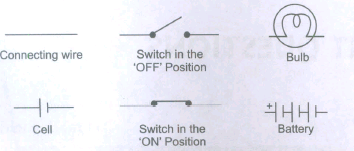
Draw in your notebook the symbols to represent the following components of electrical circuits : connecting wires, switch in the 'OFF' position, bulb, cell, switch in the 'ON' position and battery.
11.
Why is an electric fuse required in all electrical appliance?
1.
(a) Circuit Diagram
.png)
(b)Two possible reasons:
(i) Switch is in OFF position.
(ii) Filament of bulb gets broken.
2.
Difference between an open circuit and a closed circuit
| Open (Electric) circuit | Closed (Electric) circuit |
| An open electric circuit is or electric path which begins from the positive terminal of a battery or cell, gets broken at some point. | A closed circuit is an electric path which begins from the positive terminal of a cell or battery and terminates at its negative terminal without any break. |
3.
The two effects of electric current are
(i) Heating effect
(ii) Magnetic effect
4.
()
Open
5.
()
Tungsten
6.
()
iron
7.
()
good conductor
8.
()
battery
9.
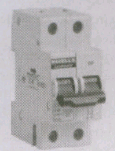
MCBs (Miniature circuit breakers) are switches which automatically turn off when current in a circuit exceeds the safe limit. We turn them on and the circuit is once again complete
10.
11.
Electric fuse is required in all electrical appliances to prevent damage from excessive current flow and during short circuit.

7th Standard CBSE Syllabus & Materials
7th Standard CBSE
CBSE 7th Social Science Theme B - New Beginnings : Cities and States - New Sample Question Papers Study Material - QB365 Set A
NEW7th Standard CBSE
CBSE 7th Social Science Theme A - Climates of India - New Sample Question Papers Study Material - QB365 Set A
NEW7th Standard CBSE
CBSE 7th Social Science Theme A - Geographical Diversity of India - New Sample Question Papers Study Material - QB365 Set A
NEW7th Standard CBSE
CBSE 7th Science Earth, Moon and the Sun - New Sample Question Papers Study Material - QB365 Set A



NCERT Books

Syllabus

Exam Pattern

Sample Question Papers

Previous year Question Papers

Important Notes

MCQ Practice test

NCERT Exemplers

Case study Questions

Image Based Questions

Passage based Questions

HOT Questions

Value Based Questions

Model Questions Papers
NCERT ( Book Back ) Questions

Assertion and Reason
Important Questions And Answers

CBSE 7th Standard CBSE Subjects
CBSE Standards