
 100% FREE ACCESS
7th Standard CBSE Syllabus & Materials
7th Standard CBSE
CBSE 7th Social Science Theme E - Understanding Market - New Sample Question Papers Study Material - QB365 Set A
NEW7th Standard CBSE
CBSE 7th Social Science Theme E - From Barter to Money - New Sample Question Papers Study Material - QB365 Set A
NEW7th Standard CBSE
CBSE 7th Social Science Theme D - The Constitution of India- An Introduction - New Sample Question Papers Study Material - QB365 Set A
NEW7th Standard CBSE
CBSE 7th Social Science Theme D - From the Rulers to the Ruled : Types of Governments - New Sample Question Papers Study Material - QB365 Set A
NEW7th Standard CBSE
CBSE 7th Social Science Theme B - The Age of Reorganisation - New Sample Question Papers Study Material - QB365 Set A
NEW7th Standard CBSE
CBSE 7th Social Science Theme B - The Rise of Empires - New Sample Question Papers Study Material - QB365 Set A

Published on: 31/10/2025
Download CBSE Class 7th Standard CBSE Science question papers, sample papers, important questions, and previous year solved papers in PDF format. Get free study materials, NCERT solutions, and exam preparation resources for Class 7th Standard CBSE Science
Questions + Answers key
Take MCQ Science Test
1.
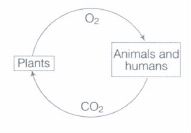
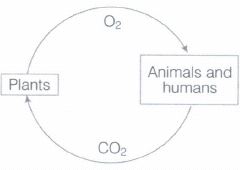
Sketch a diagram to show how plants maintain the balance between carbon dioxide and oxygen in the atmosphere?
2.
List five products we get from forests.
3.
Explain the role of forests in maintaining the balance between oxygen and carbon dioxide in the atmosphere.
4.
Explain how animals dwelling in the forest help it to grow and regenerate.
5.
Which one of the following is a role of forests?
Provide, food, shelter, water and medicines
Prevent soil erosion
Prevent flood
All of the above
6.
Which of the following is not a correct statement?
Forest trees are cut down to obtain timber
Forest trees are cut down to obtain paper
Forest trees are cut down to obtain natural rubber
Forest trees are cut down to obtain firewood
7.
Which of the products is not obtained from a forest?
Honey
Catechu
Gum
Ginger
8.
Pick the option which gives the names of a tree and an animal respectively from the following.
Semal and hornbill
Sal and khair
Chinkara and blue bull
Neem and Palash
9.
Which of the following statements is incorrect?
Forests protect the soil from erosion
Plants and animals in a forest are not dependent on one another
Forests influence the climate and water cycle
Soil helps forest to grow and regenerate
10.
Observe various things in your home and make a list of those which are made from material which may have been obtained from the forest.
11.
Draw any simple food chain in a pond.
12.
Give names of any four birds which you expect to see in a forest.
13.
State the consequence when one food chain is disturbed in an ecosystem.
14.
Cycling of papers help in the conservation of the forests. Justify.
15.
Write the major steps by which we can conserve the forest.
16.
________ helps forests to grow and regenerate.
17.
Different layers provide _______ and ________ for animals
18.
If there are no plants in the soil, heavy rain will cause extensive soil__________
19.
The forest are called green lungs because they supply ______ to the atmosphere.
20.
Forest help in cloud formation as they release _________ in the air.
21.
Forests are lifeline for forest dwelling communities.
22.
Various components of forests are not interdependent on each other.
23.
Forest is self sustaining entity comprising of plants animals and microorganisms.
24.
Plants release CO2 in the process of photosynthesis.
25.
Roots of the tree are called crown of the tree.
26.
Canopy
27.
Decomposers
28.
Rubber tree
29.
Eucalyptus
30.
Soil
1.
Decomposers and scavengers are cleaning agents. So, every entity in the forest plays a key and vital role making it a dynamic living entity, full of life and vitality.
2.
(i) Fruits
(ii) Vegetables
(iii) Medicines
(iv) Oxygen
(v) Cereals
3.
Forests are called the green lungs. This is because plants in forests release oxygen through the process of photosynthesis and help in providing oxygen to animals for respiration. They consume carbon dioxide released by the animals. In this way, plants help in maintaining a balance of oxygen and carbon dioxide in atmosphere.
4.
The animals in forests are of various types. These could be herbivores, carnivores, microorganisms, etc. These play an important role in maintaining the food chains.
(i) Microorganisms convert the dead plants and animals into humus. This humus helps in returning the nutrients back to the soil. These are absorbed by plants.
(ii) The animals also help in dispersing the seeds of certain plants.
(iii) The decaying animal dung provides nutrients.
All these activities of animals dwelling in the forest help it to grow and regenerate.
5.
(d)
All of the above
6.
(c)
Forest trees are cut down to obtain natural rubber
7.
(d)
Ginger
8.
(a)
Semal and hornbill
9.
(b)
Plants and animals in a forest are not dependent on one another
10.
Doors and window frames, table, chair, bed, paper, match stick, gum, spices etc.
11.
A typical food chain in a pond is Algae ⟶ Small fishes ⟶ Large fishes.
12.
The four birds which we expect to see in a forest are jungle crow, hornbill, myna and koel.
13.
Since, all food chains are interlinked disturbance in one food chain will affect the other food chain in a forest.
14.
The papers are made from wood pulp. We derive wood by cutting down trees. If we recycling existing quantity of paper in the market and will not let it decompose, we can stop cutting of forest trees for new raw materials required for paper making.It takes years to grow a tree and cutting a tree takes only few minutes. So, we should give a serious thought before cutting a single tree even and should encourage recycling of papers every where In our country and in the world.
15.
Forests maintain balance in nature. There conservation is the need of the hour. We should take the following steps to conserve the forests.
(i) Planned harvesting An efficient way to get wood from forests for our requirements is to cut only some of the trees in an area. The uncut trees prevent erosion. Fruits of these trees produce seeds so that new trees can grow. This way the forest cover is maintained.
(ii) Afforestation This is the practice of renewing a forest by planting seedlings or small trees. These days, in our country, planned afforestation is being done not only by the government but also by private organisations for commercial purposes. Selective cutting of trees in these plantations provides wood for construction and also keeps the forest cover intact.
(iii)Protection from fire Huge forest areas are destroyed by fire every year. Fire may occur due to the carelessness of people or due to lightning during a storm or by friction between dry stems and dry branches of trees.Forest fires are controlled by spraying fire extinguishing solutions from aircrafts or by changing the direction of wind by using strong blowers.
16.
()
Soil
17.
()
food,shelter
18.
()
erosian
19.
()
oxygen
20.
()
water vapour
21.
(a)
22.
(b)
23.
(a)
24.
(b)
25.
(b)
26.
()
Branches of tall trees
27.
()
Microorganisms
28.
()
Tyres
29.
()
Oil
30.
()
Helps forests to grow

7th Standard CBSE Syllabus & Materials
7th Standard CBSE
CBSE 7th Social Science Theme B - New Beginnings : Cities and States - New Sample Question Papers Study Material - QB365 Set A
NEW7th Standard CBSE
CBSE 7th Social Science Theme A - Climates of India - New Sample Question Papers Study Material - QB365 Set A
NEW7th Standard CBSE
CBSE 7th Social Science Theme A - Geographical Diversity of India - New Sample Question Papers Study Material - QB365 Set A
NEW7th Standard CBSE
CBSE 7th Science Earth, Moon and the Sun - New Sample Question Papers Study Material - QB365 Set A



NCERT Books

Syllabus

Exam Pattern

Sample Question Papers

Previous year Question Papers

Important Notes

MCQ Practice test

NCERT Exemplers

Case study Questions

Image Based Questions

Passage based Questions

HOT Questions

Value Based Questions

Model Questions Papers
NCERT ( Book Back ) Questions

Assertion and Reason
Important Questions And Answers

CBSE 7th Standard CBSE Subjects
CBSE Standards