
 100% FREE ACCESS
7th Standard CBSE Syllabus & Materials
7th Standard CBSE
CBSE 7th Social Science Theme E - Understanding Market - New Sample Question Papers Study Material - QB365 Set A
NEW7th Standard CBSE
CBSE 7th Social Science Theme E - From Barter to Money - New Sample Question Papers Study Material - QB365 Set A
NEW7th Standard CBSE
CBSE 7th Social Science Theme D - The Constitution of India- An Introduction - New Sample Question Papers Study Material - QB365 Set A
NEW7th Standard CBSE
CBSE 7th Social Science Theme D - From the Rulers to the Ruled : Types of Governments - New Sample Question Papers Study Material - QB365 Set A
NEW7th Standard CBSE
CBSE 7th Social Science Theme B - The Age of Reorganisation - New Sample Question Papers Study Material - QB365 Set A
NEW7th Standard CBSE
CBSE 7th Social Science Theme B - The Rise of Empires - New Sample Question Papers Study Material - QB365 Set A

Published on: 31/10/2025
Download CBSE Class 7th Standard CBSE Science question papers, sample papers, important questions, and previous year solved papers in PDF format. Get free study materials, NCERT solutions, and exam preparation resources for Class 7th Standard CBSE Science
Questions + Answers key
Take MCQ Science Test
1.
Why does a doctor put a glucose drip to a patient who has just been operated?
2.
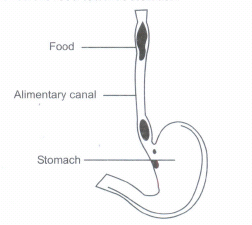
How does food move in opposite direction during vomiting?
3.
What happens when the food pushed by the food pipe is not accepted by the stomach?
4.
What is a food pipe? Write its functions.
5.
What are milk teeth and permanent teeth?
6.
What is large intestine? Write its function.
7.
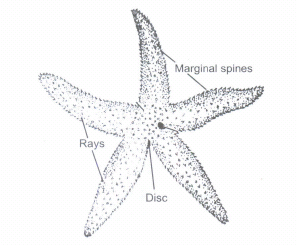
Explain the mode of feeding of starfish.
8.
Name the various digestive organs of human.
9.
Paheli wants to know why these animals cannot chew food properly at the time they take it in?
10.
Can you guess what the role of villi could be in the intestine?
11.
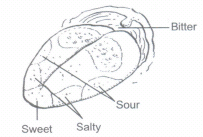
Now write down your observations and label Fig.
12.
Do you know the functions of the tongue?
13.
Name the simple forms of carbohydrates, fats and proteins.
14.
Explain the role of mucus secreted by stomach.
15.
Identify the location of salivary gland.
1.
This is because the patient cannot digest the food and glucose needs no digestion.
2.
Food is pushed into the stomach by the peristaltic movement of the walls of oesophagus. Sometimes the food is not accepted by stomach and then the walls of food pipe move the food in opposite directions and food comes out as vomiting.
3.
When the food is not accepted by the stomach then it is vomited out.
4.
A long tube along the neck and the chest is called a food pipe or oesophagus. The swallowed food passes into the food pipe. Food is pushed down by the movement of the wall of the food pipe. It pushed the food towards stomach.
5.
The first set of teeth grows during infancy and they fall off at the age between six to eight years. This set of teeth is called milk teeth. The second set of teeth that replaces them are the permanent teeth which may last throughout life.
6.
Large intestine is the part of a alimentary canal which is wider and shorter than small intestine. Its main function is to absorb water and some salts from the undigested food. It also helps in the egestion of undigested food.
7.
Starfish feeds on aquatic animals which are covered by hard shells of calcium carbonate. After opening the shells, the starfish pops out its stomach through its mouth to eat the soft animals inside the shell. After eating the animal, the stomach goes back into the body and the food is slowly digested.
8.
The organs which are used to intake, to digest and to absorb the food are called digestive organs. The various digestive organs are mouth, buccal cavity, oesophagus, stomach, small intestine, large intestine, liver, gall bladder and pancreas.
9.
The ruminants mainly live on grass and bush which always contain cellulose or roughage. For the splitting of cellulose a lot of chewing and saliva, both are necessary. So, the ruminants need to chew the grass for a long time. So, they chew it twice. If they chew for long while eating, they will get less time to eat.
10.
The villi increase the surface area for absorption of the digested food. Each villus has a network of thin and small blood vessels near to its surface. The surface of the villi absorbs the digested food materials.
11.
12.
We use our tongue for talking and taste. Besides, it mixes saliva with the food during chewing and aids in swallowing food. We also taste food with our tongue. It has taste buds that detect different tastes of food.
13.
The food components and their simple forms are carbohydrates (glucose), fatty (fats) acids and glycerol, proteins (amino acids).
14.
The function of mucus is to protect the lining of stomach from the action of hydrochloric acid secreted by stomach lining.
15.
Salivary gland is present in the buccal cavity and it secretes saliva.
7th Standard CBSE Syllabus & Materials
7th Standard CBSE
CBSE 7th Social Science Theme B - New Beginnings : Cities and States - New Sample Question Papers Study Material - QB365 Set A
NEW7th Standard CBSE
CBSE 7th Social Science Theme A - Climates of India - New Sample Question Papers Study Material - QB365 Set A
NEW7th Standard CBSE
CBSE 7th Social Science Theme A - Geographical Diversity of India - New Sample Question Papers Study Material - QB365 Set A
NEW7th Standard CBSE
CBSE 7th Science Earth, Moon and the Sun - New Sample Question Papers Study Material - QB365 Set A

NCERT Books

Syllabus

Exam Pattern

Sample Question Papers

Previous year Question Papers

Important Notes

MCQ Practice test

NCERT Exemplers

Case study Questions

Image Based Questions

Passage based Questions

HOT Questions

Value Based Questions

Model Questions Papers
NCERT ( Book Back ) Questions

Assertion and Reason
Important Questions And Answers

CBSE 7th Standard CBSE Subjects
CBSE Standards