 100% FREE ACCESS
8th Standard CBSE Syllabus & Materials
8th Standard CBSE
CBSE 8th Social Science Theme D - Factors of Production - New Model Questions Papers Study Material - QB365 Set A
NEW8th Standard CBSE
CBSE 8th Social Science Theme C - Universal Franchise and India's Electoral System - New Model Questions Papers Study Material - QB365 Set A
NEW8th Standard CBSE
CBSE 8th Social Science Theme B - The Rise of the Marathas - New Model Questions Papers Study Material - QB365 Set A
NEW8th Standard CBSE
CBSE 8th Social Science Theme B - Reshaping India's Political Map - New Model Questions Papers Study Material - QB365 Set A
NEW8th Standard CBSE
CBSE 8th Social Science Theme A - Natural Resources and Their Use - New Model Questions Papers Study Material - QB365 Set A
NEW8th Standard CBSE
CBSE 8th Science Keeping Time with Skies - New Model Questions Papers Study Material - QB365 Set A

Published on: 29/10/2025
Download CBSE Class 8th Standard CBSE Science question papers, sample papers, important questions, and previous year solved papers in PDF format. Get free study materials, NCERT solutions, and exam preparation resources for Class 8th Standard CBSE Science
Questions + Answers key
Take MCQ Science Test
1.
Give a reason, why the stars are visible only at night
2.
Write a short note on (i) Comets (ii) Meteors and (iii) Meteorites
3.
When will Halley's comet be visible again?
4.
Explain why we always see the same side of the moon.
5.
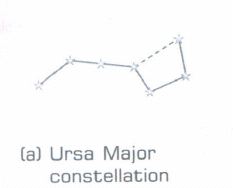
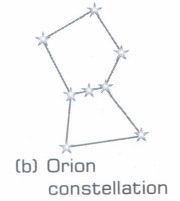
Draw sketches to show the relative positions of prominent stars in
(a) Ursa Major (b) Orion
6.
Why does earth have seasons?
7.
In which year, Halley's comet will be visible again?
8.
Are the stars have the same colour?
9.
Write a short note about planets of the solar system.
10.
Suppose the distance between the earth and sun becomes half of its present distance. What is likely to happen to life?
11.
Mars appears red due to the presence of large amount of
Iron oxide
Copper oxide
calcium oxide
Aluminium oxide
12.
Our galaxy is known as
earth galaxy
sun galaxy
milky way
constellation
13.
Which small objects revolve between the orbits of Mars and Jupiter?
Satellites
Comets
Asteroids
Meteorites
14.
Which star is nearest to the Earth?
Pole star
Cassiopeia
Orion
Sun
15.
Suppose a new planet is discovered between Uranus and Neptune. Its time period would be
less than that of Neptune
more than that of Neptune
equal to that of Neptune or Uranus
less than that of Uranus
16.
_____________is the brightest planet in the night sky
17.
_________________are groups of stars that appear to form recognizable shapes
18.
__________ are minor planets that revolve around the Sun and are located between Mars and Jupiter.
19.
_________ is a group of stars arranged in a definite pattern.
20.
_______ are celestial bodies of the universe and continuously emit heat and light
21.
The Orion is also called the hunter
22.
There are nine planets in the solar system.
23.
Pole star is a member of the solar system.
24.
The planets keep changing their position with respect to stars.
25.
All the stars are at the same distance from us.
26.
Brightest star in the sky.
27.
American astronaut who landed on the moon for the first time.
1.
Stars are present both during day time as well as during night time. Because of the bright light of the Sun, the stars are not visible during day time.
2.
(i) Comets : Comets are also members of our solar system. Comets are celestial bodies that revolve around the sun in highly elliptical orbits. However, their period of revolution round the sun is usually very large. A comet appears generally as bright head with a long tail. The length of the tail of the comet grows in size as it approaches the sun. The tail of a comet is always directed away from the sun.
(ii) Meteors : At night, when the sky is clear and the moon is not there, you may sometimes see bright streaks of light in the sky. These are commonly known as shooting stars, although they are not stars. They are called meteors. A meteor is usually a small heavenly object moving around the sun. Occasionally, a meteor enters the earth's atmosphere. At that time it has a very high speed. The friction due to atmosphere heats up meteor. It glows and evaporates in a very short time. That is why the bright streak appears for a very short time.
(iii) Meteorites: Some meteors are so large that a part of them reaches the surface of earth before they evaporate completely. These are called meteorites. Meteorites help scientists in investigating the nature of the material from which solar system was formed.
3.
Halley's comet appears periodically after every 76 years. It was last seen in 1986. So it will be visible again in the mid of 2061.
4.
We always see the same side of the moon because the moon does not rotate (i.e. spin at its own axis) like the Earth does, so we only see the side that faces us and this side faces at us all the time.
5.
Sketches are shown as given below:
6.
The axis of rotation of the Earth is not perpendicular to the path of its orbit, but it is slightly tilted. The tilt is responsible for the change of seasons on the earth.
7.
Halley's comet appears periodically after every 76 years. It was last seen in 1986. So, it will be visible again in the mid of 2061.
8.
No, some are dim (yellow) while some are bright (white).
9.
There are eight planets in our solar system:
(i) Mercury (Budh) : It is nearest to the Sun. It is the smallest planet of our solar system. It is very difficult to visualize because it is near to the Sun. It has no satellite.
(ii) Venus (Shukra) : It is nearest to the Earth. It is the brightest planet. It is also called as morning and evening star due to its appearance. It also has no moon or satellite. It rotates from East to West.
(iii) Earth (Prithvi) : The earth is the only planet where life exists. It has special environmental conditions, right distance from the Sun, so has right temperature, presence of water and blanket of ozone that makes life possible here.
(iv) Mars (Mangal) : It is the first planet outside the orbit of the Earth. It appears reddish, so is called red planet. It has two small natural satellites.
(v) Jupiter (Brihaspati) : It is the largest planet. It rotates very rapidly on its axis. It has large number of satellites. It also has faint rings and large moons.
(vi) Saturn (Shani) : Saturn is yellowish in colour. It has beautiful rings. It has large number of satellites. It is least dense, density is less than water.
(vii) Uranus and Neptune: They are outermost planets of our solar system. Uranus rotates East to West, and has high rotation speed
10.
We know that (time period)2 ∝ (radius of orbit)3
\({ T }_{ 1 }^{ 2 }={ Kr }_{ 1 }^{ 3 }\) . . . (i)
\({ T }_{ 1 }^{ 2 }={ Kr }_{ 2 }^{ 3 }\Rightarrow { T }_{ 2 }^{ 2 }=\left( \frac { { r }_{ 1 } }{ 2 } \right) ^{ 3 }\) .... (ii) \(\left[ \because { r }_{ 2 }=\frac { { r }_{ 1 } }{ { r }_{ 2 } } \right] \)
\(\frac { { T }_{ 1 }^{ 2 } }{ { T }_{ 2 }^{ 2 } } =\frac { { r }_{ 1 }^{ 3 } }{ { r }_{ 1 }^{ 3 } } \times 8\)
⇒ \({ T }_{ 2 }^{ 2 }=\frac { { T }_{ 1 }^{ 2 } }{ 8 } \)
⇒ \({ T }_{ 2 }=\frac { 1 }{ 2\sqrt { 2 } } \)
It means that time period reduces by \(\left( \frac { 1 }{ 2\sqrt { 2 } } \right) \) factor.
So, the days in a year will be approx. 129 instead of 365 days.
11.
12.
(c)
milky way
13.
(c)
Asteroids
14.
(d)
Sun
15.
(a)
less than that of Neptune
16.
()
Venus
17.
()
Constellations
18.
()
Asteroids
19.
()
Constellation
20.
()
Stars
21.
(a)
22.
(b)
23.
(b)
24.
(a)
25.
(b)
26.
()
Venus.
27.
()
Neil Armstrong
8th Standard CBSE Syllabus & Materials
8th Standard CBSE
CBSE 8th Science Particulate Nature of Matter - New Model Questions Papers Study Material - QB365 Set A
NEW8th Standard CBSE
CBSE 8th Science Pressure, Winds, Stroms and Cyclones - New Model Questions Papers Study Material - QB365 Set A
NEW8th Standard CBSE
CBSE 8th Mathematics Quadrilaterals - New Model Questions Papers Study Material - QB365 Set A
NEW8th Standard CBSE
CBSE 8th Mathematics A story of Numbers - New Model Questions Papers Study Material - QB365 Set A

NCERT Books

Syllabus

Exam Pattern

Sample Question Papers

Previous year Question Papers

Important Notes

MCQ Practice test

NCERT Exemplers

Case study Questions

Image Based Questions

Passage based Questions

HOT Questions

Value Based Questions

Model Questions Papers
NCERT ( Book Back ) Questions

Assertion and Reason
Important Questions And Answers

CBSE 8th Standard CBSE Subjects
CBSE Standards