 100% FREE ACCESS
8th Standard CBSE Syllabus & Materials
8th Standard CBSE
CBSE 8th Social Science Theme D - Factors of Production - New Model Questions Papers Study Material - QB365 Set A
NEW8th Standard CBSE
CBSE 8th Social Science Theme C - Universal Franchise and India's Electoral System - New Model Questions Papers Study Material - QB365 Set A
NEW8th Standard CBSE
CBSE 8th Social Science Theme B - The Rise of the Marathas - New Model Questions Papers Study Material - QB365 Set A
NEW8th Standard CBSE
CBSE 8th Social Science Theme B - Reshaping India's Political Map - New Model Questions Papers Study Material - QB365 Set A
NEW8th Standard CBSE
CBSE 8th Social Science Theme A - Natural Resources and Their Use - New Model Questions Papers Study Material - QB365 Set A
NEW8th Standard CBSE
CBSE 8th Science Keeping Time with Skies - New Model Questions Papers Study Material - QB365 Set A

Published on: 29/10/2025
Download CBSE Class 8th Standard CBSE Science question papers, sample papers, important questions, and previous year solved papers in PDF format. Get free study materials, NCERT solutions, and exam preparation resources for Class 8th Standard CBSE Science
Questions + Answers key
Take MCQ Science Test
1.
Write a short note about planets of the solar system.
2.
Across:
(i) Groups of stars
(iii) A use of artificial satellite
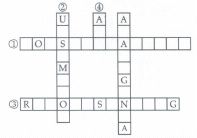
Down:
(ii) Constellation with seven stars looking like questions mark.
(iv) The other name of Milky way.
3.
Suppose the distance between the earth and sun becomes half of its present distance. What is likely to happen to life?
4.
Look at figure carefully and answer the following questions:
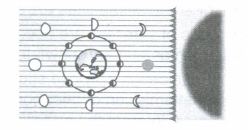
(a) In which part of the sky would you see the full moon in the evening?
(b) In which part of the sky would you see the crescent moon in the evening?
5.
A student of class VIII recognises Y group of stars which is visible during the summer season in the early part of the night. It resembles a bowl with a handle to the student.
(a) Mention the general name of group of star like Y.
(b) Write two names of Y.
(c) Give the name of the famous star which the student can locate from Y.
6.
Explain in brief about planets. How is a planet differ from a star?
7.
Explain the difference between a natural and an artificial satellite. Enlist any three applications of artificial satellite.
8.
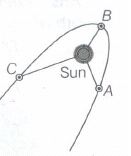
Figure shows comets without their tail. Show the tails of the comets at positions A, B, and C. In which position will the tail be longest?
9.
Last week, Ramesh (a science teacher) was teaching about the planets to his students of class 5th• After giving a small lecture on planets, he started cross questioning with his students on the same topic. He found that almost, all the students answered all the questions. He asked following questions:
(i) Give the names of all the planets of solar system with respect to their distance from the Sun.
(ii) Name the planet on which the life is known to exist.
(iii) Mention the values shown by students of Ramesh here.
10.
Give a reason, why the stars are visible only at night
1.
There are eight planets in our solar system:
(i) Mercury (Budh) : It is nearest to the Sun. It is the smallest planet of our solar system. It is very difficult to visualize because it is near to the Sun. It has no satellite.
(ii) Venus (Shukra) : It is nearest to the Earth. It is the brightest planet. It is also called as morning and evening star due to its appearance. It also has no moon or satellite. It rotates from East to West.
(iii) Earth (Prithvi) : The earth is the only planet where life exists. It has special environmental conditions, right distance from the Sun, so has right temperature, presence of water and blanket of ozone that makes life possible here.
(iv) Mars (Mangal) : It is the first planet outside the orbit of the Earth. It appears reddish, so is called red planet. It has two small natural satellites.
(v) Jupiter (Brihaspati) : It is the largest planet. It rotates very rapidly on its axis. It has large number of satellites. It also has faint rings and large moons.
(vi) Saturn (Shani) : Saturn is yellowish in colour. It has beautiful rings. It has large number of satellites. It is least dense, density is less than water.
(vii) Uranus and Neptune: They are outermost planets of our solar system. Uranus rotates East to West, and has high rotation speed
2.
(i) Constellations
(ii) Ursa Major
(iii) Remote sensing
(iv) Akash Ganga
3.
We know that (time period)2 ∝ (radius of orbit)3
\({ T }_{ 1 }^{ 2 }={ Kr }_{ 1 }^{ 3 }\) . . . (i)
\({ T }_{ 1 }^{ 2 }={ Kr }_{ 2 }^{ 3 }\Rightarrow { T }_{ 2 }^{ 2 }=\left( \frac { { r }_{ 1 } }{ 2 } \right) ^{ 3 }\) .... (ii) \(\left[ \because { r }_{ 2 }=\frac { { r }_{ 1 } }{ { r }_{ 2 } } \right] \)
\(\frac { { T }_{ 1 }^{ 2 } }{ { T }_{ 2 }^{ 2 } } =\frac { { r }_{ 1 }^{ 3 } }{ { r }_{ 1 }^{ 3 } } \times 8\)
⇒ \({ T }_{ 2 }^{ 2 }=\frac { { T }_{ 1 }^{ 2 } }{ 8 } \)
⇒ \({ T }_{ 2 }=\frac { 1 }{ 2\sqrt { 2 } } \)
It means that time period reduces by \(\left( \frac { 1 }{ 2\sqrt { 2 } } \right) \) factor.
So, the days in a year will be approx. 129 instead of 365 days.
4.
(a) We will see the full moon on the left side (according to figure) in the evening.
(b) On the right side lower part, we will see the crescent moon which is on the next day of the new moon day.
5.
(a) Constellation
(b) Great Bear or Ursa Major
(c) Pole star
6.
Since, the planets are celestial bodies which revolve around the Sun. They do not have their own light due to which they reflect Sun's light. Out of eight planets of solar system, only five are clearly visible to the naked eye. Planets keep changing slightly during the day or after the night with respect to the stars. Difference between stars and planets are
| Stars | Planets |
| Stars have their own light, so they twinkle |
Planets do not have their own light. They just reflect the light of the star to which they belong, so planets do not twinkle. |
| Their number of stars are infinite in the celestial sphere. |
Number of planets are only eight in the solar system. |
| Even the relative distance between stars remains constant |
The relative distance between the planets changes with time |
| These are very big in size. They appear small as they are very far off. |
These are relatively smaller |
| It is a huge mass of extremely hot gases and its temperature very high. |
It is made up of rocks and metal and its temperature depends on its distance from the Sun |
7.
Difference between a natural and an artificial satellite.
| Natural satellites | Artificial satellites |
| Those heavenly bodies which revolve around a planet in their fixed orbits. |
Those man made bodies which are fitted with large sensitive instruments and cameras |
| These are comparatively bigger in size and are made satellites up of rocky materials or gases. |
Made to rotate around their planets in pre-fixed orbits. These satellites are much closer to their planet, e.g. Earth. |
| Example of natural satellite is moon. | Examples of artificial satellite are IRS, INSAT, Kalpana-1, EDUSAT, etc. |
Applications of artificial satellites are
(i) These kinds of satellites are used for weather for casting such as rainfall, snowfall, etc.
(ii) For communication purpose such as long distance transmission of telephone calls, TV programmes, internet the artificial satellites are used.
(iii) The natural sources of earth are usually surveyed by the artificial satellites.
8.
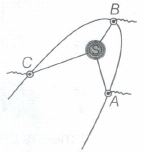
The tail of the comet is always directed away from the Sun. The tail will be longest in the position B because the tail is visible only when the comet passes through the inner solar system and B is nearest.
9.
(i) Mercury, Venus, Earth, Mars, Jupiter, Saturn, Uranus, Neptune.
(ii) Earth is the planet on which the life is known to exist.
(ill) Students of Ramesh seem to be very sharp minded and intelligent. They learn all the facts immediately which Ramesh teaches them.
10.
Stars are present both during day time as well as during night time. Because of the bright light of the Sun, the stars are not visible during day time.
8th Standard CBSE Syllabus & Materials
8th Standard CBSE
CBSE 8th Science Particulate Nature of Matter - New Model Questions Papers Study Material - QB365 Set A
NEW8th Standard CBSE
CBSE 8th Science Pressure, Winds, Stroms and Cyclones - New Model Questions Papers Study Material - QB365 Set A
NEW8th Standard CBSE
CBSE 8th Mathematics Quadrilaterals - New Model Questions Papers Study Material - QB365 Set A
NEW8th Standard CBSE
CBSE 8th Mathematics A story of Numbers - New Model Questions Papers Study Material - QB365 Set A

NCERT Books

Syllabus

Exam Pattern

Sample Question Papers

Previous year Question Papers

Important Notes

MCQ Practice test

NCERT Exemplers

Case study Questions

Image Based Questions

Passage based Questions

HOT Questions

Value Based Questions

Model Questions Papers
NCERT ( Book Back ) Questions

Assertion and Reason
Important Questions And Answers
CBSE 8th Standard CBSE Subjects
CBSE Standards