
 100% FREE ACCESS
9th Standard Syllabus & Materials
9th Standard
TN 9th Tamil உள்ளத்தின் சீர் -கற்கண்டு (இலக்கணம்) - தொடர் இலக்கணம், ஆகுபெயர் Important Questions And Answers Study Material - QB365 Set A
NEW9th Standard
TN 9th Tamil உள்ளத்தின் சீர் -விரிவானம் (துணைப்பாடம்) - தாய்மைக்கு வறட்சி இல்லை! Important Questions And Answers Study Material - QB365 Set A
NEW9th Standard
TN 9th Tamil உள்ளத்தின் சீர் -கவிதை பேழை (செய்யுள்) - மார்கழி பெருவிழா Important Questions And Answers Study Material - QB365 Set A
NEW9th Standard
TN 9th Tamil உயிருக்கு வேர்-இலக்கணம் - பகுபத உறுப்பிலக்கணம் Important Questions And Answers Study Material - QB365 Set A
NEW9th Standard
TN 9th Tamil அமுதென்று பேர் - இலக்கணம்-எழுத்து -அளபெடை Important Questions And Answers Study Material - QB365 Set A
NEW9th Standard
TN 9th Tamil அமுதென்று பேர்-துணைப்பாடம் - ஆறாம்திணை Important Questions And Answers Study Material - QB365 Set A

Published on: 31/08/2026
Download Tamil Nadu 9th Standard Social Science question papers, model tests, one-mark questions, important questions, and public exam papers in PDF format. Free study materials and answer keys for TN State Board students.
Questions + Answers key
Take MCQ Social Science Test
1.
Former Soviet Union is an example for _________.
aristocracy
theocracy
oligarchy
republic
2.
The Sumerian system of writing
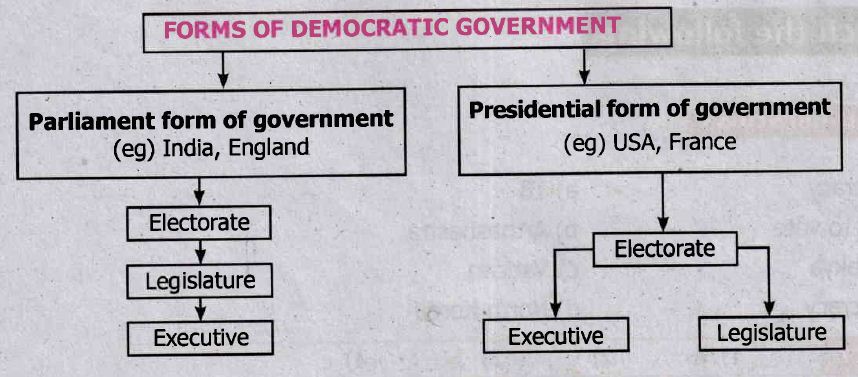
Pictographic
Hieroglyphic
Sonogram
Cuneiform
3.
The point of origin of an Earthquake is called the ________.
epicentre
focus
seismic wave
magnitude
4.
_______ is genetically closest to humans
Gorilla
Chimpanzee
Orang-utan
Great Apes
5.
The head quarters of HRD Ministry is in _____________
6.
_________ was the first Prime Minister of independent India
7.
The Constitution of India was finally adopted on _________
8.
The early form of writing of the Egyptians is known as _______.
9.
The methods and techniques involved in the production of stone tools are called ________ technology
10.
What do you mean by a hanging valley?
11.
What are ox-bow lakes?
12.
What is an Earthquake and how it occurs?
13.
Mention the layers of the interior of the Earth.
14.
Write a brief note on the various spheres of the Earth.
15.
Write a note on the impact of pastoralism on the prehistoric people in Tamil Nadu.
16.
Discuss how the age of speculation made humans become conscious and knowledgeable.
17.
Mention any five environmental acts and their action
18.
What are the challenges to Indian democracy? explain
19.
Define the terms Hieroglyphics and Cuneiform with their main features.
20.
What is a glacier? Explain its types.
21.
How are volcanoes classified based on the periodicity of their eruptions
22.
The history of humans is closely related to the history of the earth. Elucidate.
23.
Igneous rocks are also called Primary Rocks or Mother rocks.
24.
Core and crust
25.
Expand the following:
1. PPP
2. HDI
26.
Mention the forms of democracy.
27.
Give Abraham Lincoln’s definition for democracy.
28.
Earthquake
29.
Chanakya
30.
Red sand dunes
31.
The Great Bath
32.
Assertion (A): The Net National Product (NNP) is considered as a true measure of national output.
Reason (R): It is also known as national income.
a. Both (A) and (R) are true and (R) explains (A)
b. Both (A) and (R) are true and (R) does not explain (A)
c. (A) is correct and (R) is false
d. (A) is false and (R) is true
1.
(c)
oligarchy
2.
(d)
Cuneiform
3.
(b)
focus
4.
(b)
Chimpanzee
5.
()
New Delhi
6.
()
Jawaharlal Nehru
7.
()
26th November 1949
8.
()
Hieroglyphic
9.
()
lithic
10.
These are valleys eroded by tributary glacier and that hangs over the main valley
11.
(i) Meanders in due course of time become almost a complete circle with narrow necks
(ii) This is turn gets abandoned and forms a lake.This is called an Ox-bow lake
12.
(i) Earthquakes are generally caused by the sudden vibrations in the Earth's crust.
(ii) It spreads outward in all directions from the Earth's crust.
(iii) The point of origin of an Earthquake is called 'Focus' which generates a series of elastic waves.
(iv) 'Epicentre' is a point on the Earth's surface that lies directly above the focus.
(v) The impact of the Earthquake is felt the most at the epicentre.
13.
The structure of the Earth's interior is divided into three layers namely the crust, the mantle and the core.
14.
(i) The Earth is a unique planet of the Solar family.
(ii) The Earth is composed of four spheres.
(iii) They are lithosphere, the atmosphere, the hydrosphere and the biosphere.
(iv) The four spheres of the Earth interact with one another.
(v) The abiotic spheres are the lithosphere, atmosphere and hydrosphere.
(v) The biotic sphere is the biosphere.
15.
1. The people in the Iron Age practiced agriculture, domesticated animals.
2. Cattle rearing was an important occupation of these people.
3. They domesticated catHe and sheep.
4. They lived in small villages.
16.
1. In the course of evolution, humans became conscious and knowledgeable.
2. They turned curious and began to think and ask questions.
3. At first, they considered nature as God.
4. They worshipped sun, moon and various natural forces about which they developed their own understanding.
17.
| S.No. | Act | Action |
|---|---|---|
| 1. | National Green Tribunal Act, 2010 | Environmental protection and conservation of forests and other natural resources. |
| 2. | Biological Diversity Act, 2002 | To provide for conservation of biological diversity. |
| 3. | The Environment (Protection) Act, 1986 | Providing for the protection and improvement of the environment. |
| 4. | Forest (Conservation) Act, 1980 | Check deforestation and encourage afforestation of non-forest areas. |
| 5. | Water (Prevention and control of pollution) Act; 1974 | Provides maintenance and restoration and quality of all types of surface and groundwater. |
| 6. | Wildlife Protection Act, 1972 | Providing protection to wild animals and birds. |
18.
Democracy is the dominant form of government in the contemporary world. It has not faced a serious challenge or a rival so far. In the last hundred years, there has been an expansion of democracy all over the world. The various aspects of democracy and its challenges are:
1. Illiteracy
2. Poverty
3.. Gender discrimination
4. Regionalism
5. Casteism, communalism and religious fundamentalism
6. Corruption
7. Criminalisation of politics.
8. Political violence
19.
1. The writing of Egyptians were called hieroglyphic.
2. This form of writing used a pictogram based system.
3. Hieroglyphic was used in inscriptions on seals and other objects.
4. Many texts and books were written using this script.
5. The Egyptian writing system was deciphered by the French scholar Franco is Champollion cuneiform.
6. Cuneiform is the Sumerian writing system.
7. The shape of the letter is in the form of wedge and hence it is called cuneiform
8. It is one of the earliest scripts of the world.
9. The epic of Gilgamesh was written in this script.
10 The Sumerians used this script for commercial transactions and writing letters and stories.
11. The clay tablets contain loads of information on the Sumerian civilisation.
20.
GLACIERS:
(i) A Glacier is a large mass of ice that moves slowly over the land from its place is called River of ice.
(ii) A large mass of ice creates pressure at its bottom and generates heat due to this it melts and starts to move.
TYPES OF GLACIER:
(i) Glaciers are broadly divided into two types based on the place of occurrance such as continental glacier and valley glacier.
CONTINENTAL GLACIER:
(i) This sheets of ice that covers vast areas of a continent is called continental Glacier.
VALLEY GLACIERS:
(i) The glacier which takes its origin from a snow covered mountain range is known Valley Glacier.
21.
Based on the periodicity of eruptions, volcanoes are classified into
(i) Active volcano,
(ii) Dormant volcano,
(iii) Extinct volcano.
(i) Active Volcano: Active volcanoes are those which constantly eject volcanic lava,gases and fragmented materials. (e.g.) Mount St. Helens in the United States.
(ii) Dormant Volcano: Volcanoes that do not show any sign of volcanic activity for a long period of time are known as dormant volcanoes. Sometimes there may be a sudden explosion which may cause unimaginable loss to life and property (e.g.) Mt. Fuji, Japan.
(iii) Extinct or Dead Volcano: When a volcano permanently stops its volcanic activity, then it is called as extinct or dead volcano (e.g.) Mt. Kilimanjaro, Tanzania.
Volcanoes can also be classified based on their structure and composition as composite volcano, shield volcano and dome volcano.
22.
(i) The history of humans is closely related to the history of the earth.
(ii) The earth contains geological, archaeological and biological records of historical times in its upper layers.
(iii) They are important for reconstructing the history of the earth and various living organisms.
(iv) The fossil bones of the human ancestors are embedded in the earth's layers.
(v) Palaeoanthropologists and archaeologists excavate the soil and rock layers on the earth and extract evidence about human ancestors.
(vi) These layers and the fossils are scientifically dated to study the various stages in human evolution and prehistory.
(vii) Through the gathered evidence they attempt to understand the evolution of human history and developments in a chronological order.·
(viii) The earth was formed approximately 4.54 billion years ago.
(ix) Gradually conditions emerged for the growth of organisms. Then plants and animals came into being and thereby foundation was laid for the evolution of humans. The long span of time in earth's history is divided into eras, periods and epochs by the Geologists. Thus the history of humans is closely related to the history of the earth.
23.
All other rocks are directly or indirectly formed from them.
24.
| S.No | Core | Crust |
| (i) | The core is the inner most and hottest layer of the Earth. |
Crust is the outer layer of the Earth where we live. |
| (ii) | It lies below the mantle. | It ranges between 5 to 30 km. |
| (iii) | It is composed mainly of Nickel and Iron. | It is the solid and rigid layer of the Earth. |
| (iv) | Hence it is called NIFE. | The elements of the crust are Silica and Aluminium. It is termed as SIAL. |
25.
(i) PPI - Purchasing Power Parity
(ii) HD - Human Development Index.
26.
27.
Abraham Lincoln defines democracy as a government of the people, by the people and for the people
28.
Seismograph
29.
Arthashastra
30.
Teris
31.
Mohenjo-Daro
32.
a. Both (A) and (R) are true and (R) explains (A)

9th Standard Syllabus & Materials
9th Standard
TN 9th Tamil உள்ளத்தின் சீர் - திருக்குறள் Important Questions And Answers Study Material - QB365 Set A
NEW9th Standard
TN 9th Tamil உள்ளத்தின் சீர் - மணிமேகலை Important Questions And Answers Study Material - QB365 Set A
NEW9th Standard
TN 9th Tamil உள்ளத்தின் சீர் - ஏறு தழுவுதல் Important Questions And Answers Study Material - QB365 Set A
NEW9th Standard
TN 9th Tamil உயிருக்கு வேர் - தண்ணீர் Important Questions And Answers Study Material - QB365 Set A



Tamilnadu Stateboard 9th Standard Subjects
Tamilnadu Stateboard Standards