6th Standard CBSE Syllabus & Materials
6th Standard CBSE
cbse 6th Standard Social Science CIV - Urban Livelihoods Important Questions And Answers Study Material - QB365 Set C
NEW6th Standard CBSE
cbse 6th Standard Social Science CIV - Urban Livelihoods Important Questions And Answers Study Material - QB365 Set B
NEW6th Standard CBSE
cbse 6th Standard Social Science CIV - Urban Livelihoods Important Questions And Answers Study Material - QB365 Set A
NEW6th Standard CBSE
cbse 6th Standard Social Science CIV - Rural Livelihoods Important Questions And Answers Study Material - QB365 Set C
NEW6th Standard CBSE
cbse 6th Standard Social Science CIV - Rural Livelihoods Important Questions And Answers Study Material - QB365 Set B
NEW6th Standard CBSE
cbse 6th Standard Social Science CIV - Rural Livelihoods Important Questions And Answers Study Material - QB365 Set A

Published on: 24/10/2025
Download CBSE Class 6th Standard CBSE Social Science question papers, sample papers, important questions, and previous year solved papers in PDF format. Get free study materials, NCERT solutions, and exam preparation resources for Class 6th Standard CBSE Social Science
Questions + Answers key
Take MCQ Social Science Test
1.
What work does Sekar's family do? Why do you think Sekar does not usually employ labourers for doing farming work?
2.
Why do both Sekar's and Aruna's families have to borrow? What similarities and differences do you find?
3.
Have you heard of tsunami? What is this and what damage do you think it might have done to the life-of fishing families like Aruna' s?
4.
What are other shops of the village Kalpattu?
5.
Why did Thulasi and Raman have to sell their cow?
6.
Where do Thulasi and Sekar work?
At their own land.
At their relative's land.
At Ramalingam's land.
They do not do farm activities.
7.
How much money did Ramalingam pay his workers?
Rs 100
Rs 50
Rs 40
Rs 80
8.
Who has a hybrid cow?
Raman
Sekar
Ramalingam
Aruna
9.
Which of the following villages is a fishing village?
Pudupet
Kuppakulam
Nagaland
Kalpattu
10.
When did they go to the sea?
At 2 am
At noon
At 4 am
At evening
11.
Kalpattu village is located in which state?
12.
Name the work of people who reside in the village?
13.
Who sell tiffin? Name the items?
14.
What is the problem with Thulasi?
15.
How much rural families are dependent on agricultural labour?
16.
In your notebook draw some picture of work that you have seen people do in rural areas and write a few sentences that describe the work.
17.
Give a brief account on rural livelihoods.
18.
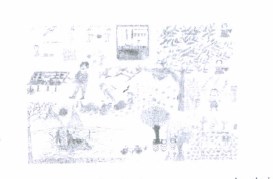
(i) Describe the works that you see people doing in the above picture.
(ii) Identify the different types of work that are related to farming and those that are not. List these in a table.
(iii) In your notebook draw some pictures of work that you have seen people do in rural areas and write a few sentences that describe the work.
19.
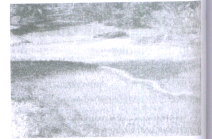
(i) What do you understand through the picture?
(ii) How do Ramalingam and his family survive?
20.
I work from 8:30 in the morning till 4:30 in the evening and ________ supervises us.
21.
Our _______ daughters are the joy of our lives.
22.
Nearly _________ of all rural families are agricultural labourers in our country.
23.
Soon the _________ becomes so large that no matter what they earn, they are unable to repay.
24.
Aruna and her family suffered a lot because of monsoon.
25.
Thulasi lives in Pudupet village.
26.
Ramalingam has 20 acres of paddy fields in Kalpattu.
27.
Only 20 per cent of India's farmers are like Ramalingam.
28.
The people of Chizami belong to the Chakhesang community.
1.
Sekar's family works in fields cultivating and growing crops. Sekar does not usually employ labourers for doing farming work because he owns a very small plot ofland and it is cultivated by him and his family. If outside help is needed at the time of harvesting, he takes help of other small farmers and in turn helps them harvest their field.
2.
Both Sekar's and Aruna's families have to borrow because Sekar's family owns about 2 acres of land and produces about 60 bags of paddy, which is not sufficient for his family. So, he has to borrow money. Aruna's family has to borrow money because four months in a year are the breeding season and men cannot go to the sea.
Similarities
(i) Both have to work very hard, from morning till evening to earn their living.
(ii) Both are under the clutches of the traders, from whom they have borrowed money.
Differences
(i) Sekar is a small farmer and Aruna is a fisherwoman.
(ii) Sekar has to do additional work, while Aruna does not need so.
3.
Tsunami is a Japanese word. It is made of two smaller words 'tsu' and 'nami'.
It is a killer wave. When the waves reach the coast, they gain both in height and'speed. They cause wide destruction, wash away the villages. The villages are flooded with water debris floating on the water. It takes away everything which comes in its way. The fishermen, who live near the coast, may have lost the huts and belongings.
4.
The other shops of the village Kalpattu are:
(i) Blacksmith family whose home serves as their workshop. Next to their home is a cycle hire and repair shop.
(ii) There are also two washerman families. Some people go to nearby town to work as construction workers. Some work as lorry drivers.
5.
Thulasi and Raman's one of the daughters fell ill and had to be taken to the hospital in town. They borrowed money from Ramalingam, so to pay back the money they had to sell their cow.
6.
(c)
At Ramalingam's land.
7.
(c)
Rs 40
8.
(b)
Sekar
9.
(a)
Pudupet
10.
(a)
At 2 am
11.
()
Kalpattu village is located in Tamil Nadu.
12.
()
People here do many kirfds of work. Here people do both kinds of work i.e. non-farming and farming. Non-farm works such as making baskets, utensils, pots, bricks, bullock-carts etc.
13.
()
There are four tea shops, which sell tiffin. In morning, they sell idli, dosa and upama and in evening they sell snacks like vadai, bond a and mysorepak.
14.
()
When Thulasi was young, she could do any work. But now as she grew older, she finds bending for long hours with her feet in water very painful.
15.
()
In India, about two out of every five rural families are agricultural labourer families. All of them depend on the work they do on other people's fields to earn a living.
16.
()
Students should do it themselves
17.
There are several ways to earn a living of rural areas. These are farming and non-farming activities.
The farming activities are:
(i) Preparing the land
(ii) Sowing
(iii) Harvesting
(iv) Weeding
(v) Transplanting
People of rural areas are dependent upon the seasons, sometime they face problem such as failure of crops etc.
Non-farming activities are:
(i) Making baskets
(ii) Making utensils
(iii) Making pots
(iv) Making bricks
(v) Making bullock-carts
(vi) Fishing
(vii) Crafting
Some of the people have shops such as blacksmith's shop, tea shop, grocery shop, barber shop, cycle repair shop etc.
18.
(i)The works that people are doing:
(a) Hawker
(b) Fishing
(c) Labourers carrying goods
(d) Labourers working in the fields
(e) Plucking fruits and vegetables
(f) Shopkeeper
Works related to farming are:
(a) Labourers working in the fields
(b) Plucking fruits and vegetables
Works not related to farming are:
(a) Hawker
(b) Fishing
(c) Labourers carrying goods
(d) Mansions
(e) Shopkeeper
19.
(i) The picture states that - It is a transplanted paddy growing in a few of Ramalingam's 20 acres land.
It is a result of hard labour performed by agricultural workers like Thulasi.
(ii) Ramalingam and his family owns a rice mill and a shop selling seeds, pesticides etc.
They buy paddy from within the village and from surrounding villages The rice that is produced in the millis sold to traders in nearby towns. This gives them a substantial Income.
20.
()
Karuthamma
21.
()
school-going
22.
()
Karuthamma
23.
()
loan
24.
(b)
25.
(b)
26.
(a)
27.
(a)
28.
(a)

6th Standard CBSE Syllabus & Materials
6th Standard CBSE
cbse 6th Standard Social Science CIV - Urban Administration Important Questions And Answers Study Material - QB365 Set B
NEW6th Standard CBSE
cbse 6th Standard Social Science CIV - Urban Administration Important Questions And Answers Study Material - QB365 Set A
NEW6th Standard CBSE
cbse 6th Standard Social Science CIV - Rural Administration Important Questions And Answers Study Material - QB365 Set C
NEW6th Standard CBSE
cbse 6th Standard Social Science CIV - Rural Administration Important Questions And Answers Study Material - QB365 Set B



NCERT Books

Syllabus

Exam Pattern

Sample Question Papers

Previous year Question Papers

Important Notes

MCQ Practice test

NCERT Exemplers

Case study Questions

Image Based Questions

Passage based Questions

HOT Questions

Value Based Questions

Model Questions Papers
NCERT ( Book Back ) Questions

Assertion and Reason
Important Questions And Answers

CBSE 6th Standard CBSE Subjects
CBSE Standards