7th Standard CBSE Syllabus & Materials
7th Standard CBSE
CBSE 7th Standard Science Wastewater Story Sample Question Papers Study Material - QB365
NEW7th Standard CBSE
CBSE 7th Standard Science Forests: Our Lifeline Sample Question Papers Study Material - QB365
NEW7th Standard CBSE
CBSE 7th Standard Science Water: A Precious Resource Sample Question Papers Study Material - QB365
NEW7th Standard CBSE
CBSE 7th Standard Science Light Sample Question Papers Study Material - QB365
NEW7th Standard CBSE
CBSE 7th Standard Science Electric Current and Effects Sample Question Papers Study Material - QB365 Set C
NEW7th Standard CBSE
CBSE 7th Standard Science Electric Current and Effects Sample Question Papers Study Material - QB365 Set B

Published on: 31/10/2025
Download CBSE Class 7th Standard CBSE Science question papers, sample papers, important questions, and previous year solved papers in PDF format. Get free study materials, NCERT solutions, and exam preparation resources for Class 7th Standard CBSE Science
Questions + Answers key
Take MCQ Science Test
1.
Unscramble the following words:
(i) Tbtayer
(ii) Sfeu
(iii) Htrco
(iv) lewts
2.
Can we use the same fuse in geyser and a television set? Explain.
3.
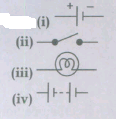
Draw the symbols components :
(i) electric cell
(ii) switch in off position
(iii) electric bulb
(iii) battery
4.
Why do we cover plug pin holes which are within the reach of children with cellotape or plastic cover when not in use?
5.
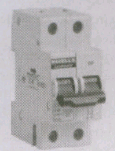
What are MCBs ?How do they work?
6.
Explain the reasons of excessive currents in our houses.
7.
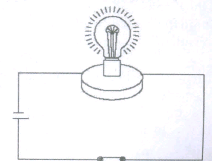
What is a closed circuit with respect to the on off switch?
8.
Why should we not touch the lighted bulb?
9.
What do you mean by open circuit?
10.
Explain the construction of battery
11.
We should not touch the lighted bulb. Explain, why.
12.
What happens to the current in a circuit at the time of short circuit?
13.
State whether the bulb glows when the circuit is opened.
14.
If the current through the coil stops flowing. Will the coil remain an electromagnet?
15.
Name some electric appliances where the heating effect of the electric current is used.
1.
(i) Battery
(ii) Fuse
(ill) Torch
(iv) Switch
2.
No, a geyser and a television set require different amount of current. Therefore the fuse used in these will be of different ratings.
3.
4.
The child may put his/her fingers into the socket and he/she may get an electric shock which could be fatal.
5.
MCBs (Miniature circuit breakers) are switches which automatically turn off when current in a circuit exceeds the safe limit. We turn them on and the circuit is once again complete
6.
There are following two reasons of excessive currents in our houses:
(i) Direct touching of wires : This may happen if the insulation on the wires has come off due to wear and tear. This may cause a short circuit.
(ii) Connection of many devices to a single socket. This may overload in the circuit
7.
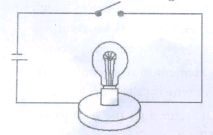
When the switch is in ON position then the circuit from the positive terminal of battery to the negative terminal is complete. The circuit is then said to be closed and the current flows throughout the circuit instantly and bulb starts glowing
8.
We should never touch a lighted electric bulb connected to the mains. It may be very hot and our hand may get burnt badly. In the same way, we do not experiment with the electric supply from the mains or a generator or an inverter. It may cause an electric shock.
9.
When the switch is in off position then the circuit from the positive terminal of battery to the negative terminal is not complete. The circuit is then said to be opened and current does not flow throughout the circuit and bulb does not glow.
10.
Battery is a combination of two or more cells. This can be constructed by placing cells properly on cell holder such that the positive terminal of one cell is connected to the negative terminal of the other. A piece of wire is connected to each of the two metal clips on the cell holder
11.
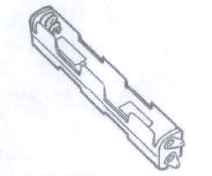
The lighted bulb connected to main supply should not be touched by our hand directly, as a lighted bulb can be very hot and can burn our hand as well.
12.
The value of the current in a circuit increases heavily at the time of short circuit.
13.
No, the bulb does not glow when the circuit is opened. The bulb glows only when the circuit is closed.
14.
When the current through the coil stops flowing, the coil does not remain an electromagnet.
15.
Some of the electric appliances where the heating effect of the electric current is used are electric heater, geyser, micro-oven, room heater, boiler, etc.

7th Standard CBSE Syllabus & Materials
7th Standard CBSE
CBSE 7th Standard Science Motion and Time Sample Question Papers Study Material - QB365 Set D
NEW7th Standard CBSE
CBSE 7th Standard Science Motion and Time Sample Question Papers Study Material - QB365 Set C
NEW7th Standard CBSE
CBSE 7th Standard Science Motion and Time Sample Question Papers Study Material - QB365 Set B



NCERT Books

Syllabus

Exam Pattern

Sample Question Papers

Previous year Question Papers

Important Notes

MCQ Practice test

NCERT Exemplers

Case study Questions

Image Based Questions

Passage based Questions

HOT Questions

Value Based Questions

Model Questions Papers
NCERT ( Book Back ) Questions

Assertion and Reason
Important Questions And Answers

CBSE 7th Standard CBSE Subjects
CBSE Standards