
10th Standard CBSE Syllabus & Materials
10th Standard CBSE
cbse 10th Standard Social Science HIS - Print Culture and Modern World Important Questions And Answers Study Material - QB365 Set C
NEW10th Standard CBSE
cbse 10th Standard Social Science HIS - Print Culture and Modern World Important Questions And Answers Study Material - QB365 Set B
NEW10th Standard CBSE
cbse 10th Standard Social Science HIS - Print Culture and Modern World Important Questions And Answers Study Material - QB365 Set A
NEW10th Standard CBSE
cbse 10th Standard Social Science HIS - The Age of Industrialization Important Questions And Answers Study Material - QB365 Set C
NEW10th Standard CBSE
cbse 10th Standard Social Science HIS - The Age of Industrialization Important Questions And Answers Study Material - QB365 Set B
NEW10th Standard CBSE
cbse 10th Standard Social Science HIS - The Age of Industrialization Important Questions And Answers Study Material - QB365 Set A

Published on: 26/10/2025
Download CBSE Class 10th Standard CBSE Science question papers, sample papers, important questions, and previous year solved papers in PDF format. Get free study materials, NCERT solutions, and exam preparation resources for Class 10th Standard CBSE Science
Questions + Answers key
Take MCQ Science Test
1.
Give an example of photochemical reactions.
2.
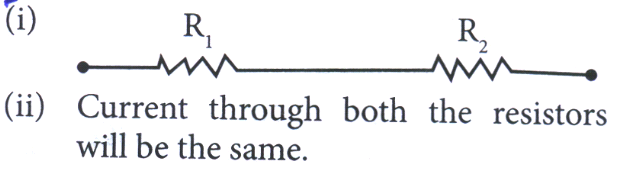
(i) Draw a diagram to show how two resistor R1 and R2 are connected in series.
(ii) In a circuit, if the two resistors of 5 ohm and 10 ohm are connected in series, how does the current passing through the two resistors compare?
3.
What is reflex action?
4.
Point out two differences between an artery and vein.
5.
Unsaturated hydrocarbons contain multiple bonds between the two C-atoms and show addition reactions. Give the test to distinguish ethane from ethene.
6.
How is the sex of a newborn determined in humans?
7.
List two advantages of vegetative reproduction practiced in case of an orange plant.
8.
(a) In question 8, what are the combinations of character in the F2 progeny?
(b) What are their ratios?
9.
When Mendel crossed a tall plant with a dwarf plant, no medium height plants were obtained in F1 generation. Why?
10.
Name two decomposers operating in our ecosystem.
11.
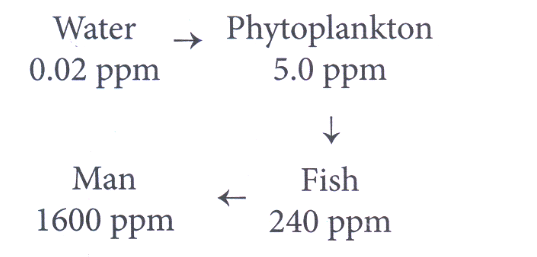
Explain the phenomenon of "biological magnification" How does it affect organisms belonging to different trophic levels particularly the tertiary consumers?
12.
Why should we conserve forests and wildlife?
13.
Study the diagram and answer the questions following it.
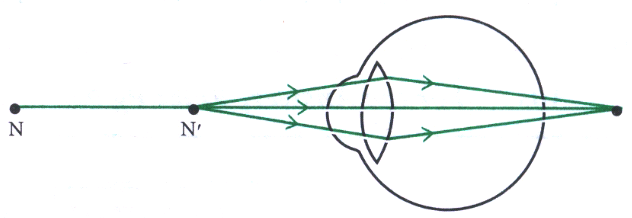
a) Which defect of vision is represented in this case? Give the reason for your answer.
b) What could be the two causes of this defect?
(c) With the help of a diagram show how this defect can be corrected by the use of a suitable lens.
14.
What constitutes the central and peripheral nervous systems? How are the components of central nervous system protected?
15.
State Ohm's law? How can it be verified experimentally? Does it hold good under all conditions? Comment
16.
Explain why carbon forms compounds mainly by covalent bond. Explain in brief two main reasons for carbon forming a large number of compounds. Why does carbon form strong bonds with most other elements?
17.
(i) Define universal indicator. For what purpose it is used?
(ii) Two solutions A and B have pH values of 3.0 and 9.5 respectively. Which of these will turn litmus solution from blue to red and which will turn phenolphthalein from colourless to pink?
(iii) Water is a neutral substance. What colour will you get when you add a few drops of the universal indicator to a test tube containing distilled water?
18.
Give difference between nervous system and endocrine system.
19.
What are the advantages and disadvantages of using a solar cooker? Are there places where solar cookers would have limited utility?
20.
(a) State one limitation of solar energy available from solar cells.
(b) What is the minimum wind velocity required to obtain useful energy with a windmill?
(c) Define the term 'nuclear fission'.
21.
Give reasons for the following:
(i)The glottis is guarded by epiglottis
(ii)The lung alveoli are covered with blood capillaries.
(iii)The wall of trachea is supported by cartilage rings.
22.
Distinguish between permanent magnet and electromagnet.
23.
Write three differences between metals and non-metals on the basis of chemical properties.
24.
What is meant by the 'calorific value' of a fuel? How is it determined? Arrange the following fuels in a decreasing order of their calorific values: Kerosene, Coal, LPG.
25.
Lithium, sodium and potassium form a Dobereiner's triad. The atomic masses of lithium and potassium are 7 and 39 respectively. Predict the atomic mass of sodium.
26.
Why should biodegradable wastes be discarded in two separate dustbins?
27.
An element is placed in 2nd Group and 3rd Period of the Periodic Table, burns in presence of oxygen to form a basic oxide.
(a) Identify the element.
(b) Write the electronic configuration.
(c) Write the balanced equation when it burns in the presence of air.
(d) Write a balanced equation when this oxide is dissolved in water.
(e) Draw the electron dot structure for the formation of this oxide.
28.
In the context of conservation of natural resources, explain the terms reduce, recycle and reuse. From among the materials that we use in daily life, identify two materials for each category.
1.
An example of photochemical reactions is the process of photosynthesis occurring in the leaves of green plants.
\(\underset { Carbon\\ dioxide }{ { 6CO }_{ 2 } } +\underset { Water}{ { 6H }_{ 2 } O} \overset { sunlight }{ \underset { Chlorophyll }{ \rightleftharpoons } } \underset {Glucose }{ C_6H_{12}O_6 } +\underset {Oxygen }{6{ O }_{ 2 }}\)
2.
3.
It is a spontaneous, involuntary and unconscious response to a stimulus.
4.
| Arteries | Veins |
| Arteries are blood vessels which carry pure, oxygenated blood |
Veins carry impure, deoxygenated |
| These are thick-walled and elastic | These are thin-walled and less elastic |
5.
Bromine solution in CCl4 has an orange colour. When it is added dropwise to ethene, the orange colour disappears due to the formation of the colourless ethylene dibromide. This reaction is not shown by ethane as it is addition reaction.
\(\mathrm{CH}_2=\mathrm{CH}_2+\mathrm{Br}_2 \longrightarrow \mathrm{CH}_2-\mathrm{CH}_2\)
Ethene Bromine | |
(orange Br Br
colour) Ethylene dibromide
(colourless)
The two can be distinguished also by subjecting them to the flame. Saturated hydrocarbon (ethane) generally gives a clear flame while unsaturated hydrocarbon (ethene) gives a yellow flame with lots of black smoke.
6.
The sex of the individual is genetically determined from parents. A new born who inherits an 'X' chromosome from father will be a girl and one who inherits a 'Y' chromosome will be a boy.
7.
Two advantages of practicing vegetative reproduction in orange plants are:
(i) The oranges produced are similar in size and shape.
(ii) Many oranges do not produce viable seeds and hence, vegetative method is good alternative.
8.
(a) Round yellow - RRYY,
Round green - Rryy,
Wrinkled yellow - rr YY and
Wrinkled green - rryy
(b) Occur in the ratio of 9 : 3 : 3 : 1 respectively.
9.
This is because only dominant trait express in F1 generation suppressing the effect of recessive trait.
10.
Bacteria and Fungi.
11.
The process in which harmful chemicals enter a food chain and get accumulated progressively at each trophic level is called biological magnification. Harmful and toxic chemicals enter our bodies when they are added to soil and water. Use of pesticides to protect the food crops from diseases and pests and chemical wastes of factories are dumped in open or disposed off into rivers.
These chemicals are washed down into the soil and ultimately to water table or get absorbed or taken up from the soil by the plants along with water and minerals and in this way harmful chemicals enter the food chain. The quantity of these harmful chemicals increase with increase in trophic level of the food chain because these substances are not degradable. Man is at the top of the food chain, so concentration is maximum in human beings.
Thus, accumulation of DDT has been maximum in man as DDT is used to destroy pests. DDT is accumulated in the following way in this food chain: This is the reason why our food grains such as wheat and rice, vegetables and fruits and even meat contain varying amounts of pesticides residues. So, the highest trophic level at the extreme right of food chain has the maximum concentration of harmful chemicals in a food chain.
12.
Forests and wildlife maintain an ecological balance of nature. It provides a great biological diversity. Wild life serves as a source for the domestication of animals and cultivation of crop plants. About 90% of the food plants originated from wild tropical ancestors. Many valuable products such as life-saving drugs, silk, lac, honey, feathers, musk, ivory etc., are obtained from wildlife. Forests and wildlife ensure a rich biodiversity on the earth. Loss of biodiversity leads to loss of ecological balance. Hence, we should conserve forests and wildlife.
13.
(a) Hypermetropia as the image is formed beyond the retina.
(b) (i) Increase in focal length of the lens (ii) Decrease in size of eyeball
(c)

14.
The central nervous is composed of the brain and the spinal cord. The peripheral nervous system is composed of cranial nerves, spinal nerves and the autonomous nervous system. Brain gets the maximum protection, as it is found inside the skull. Spinal cord gets protection by the vertebral column. Additionally, the brain and the spinal cord are surrounded by a system of three layers called meninges. The cerebrospinal fluid is filled between these membranes which provide a cushion against mechanical shocks.
15.
At constant temperature, the current flowing through a conductor is directly proportional to the potential difference across its ends.
Onh's law does not hold good under all conditions as it is not a fundamental law of nature like Newton's laws. It is obeyed by metallic conductors only when physical condition like temperature etc., are kept unchanged. It is not obeyed by a lamp filament.
16.
The atomic number of carbon is 6 which means that a neutral atom of carbon retains 6 electrons. So, the electronic configuration of carbon is KL. Since carbon has 4 electrons in its outermost shell so, it should either loss or gain 4 electrons to achieve the inert gas configuration and become stable.
(1) It could gain four electrons forming C4- anion. But it would be difficult for the nucleus with six protons to hold on to ten electrons due to inter electronic repulsion.
(2) It could lose 4 electrons froming C4+ cation. But it would require a large amount of energy to remove four electrons from its outermost shell. Thus, it forms compounds mainly by covalent bonds.
Two properties of carbon which lead to huge number of carbon compounds are:
(1) Catenation: Catenation is the unique property of carbon atoms to form bonds with other atoms of carbon giving rise to large molecules.
(2)Tetravalency: Since carbon has a valency of 4, it is capable of bonding with 4 other atoms of carbon or atoms of some other monovalent element.
The reason for the formation of strong bonds by the carbon atoms is their small atomic size. Due to the small size of carbon atoms their nuclei hold the shared pairs of electrons between atoms strongly, leading to the formation of strong covalent bonds. The carbon atoms also form strong covalent bonds with the atoms of other elements such as hydrogen, oxygen, nitrogen, sulphur, chlorine and other elements.
17.
(i) Universal indicator is a mixture of many different indications (or dyes) which give different colours at different pH values of the entire pH scale. The colour produced by the universal indicator is used to find the pH value of acid or base by matching the colour with the colours on pH colour chart.
(ii) Solution A is acidic and will turn litmus solution from blue to red.
Solution B is basic and will turn phenolphthalein from colourless to pink.
(iii) Green colour will be obtained.
18.
| Endocrine System | Nervous System |
| 1. This system does not have direct connection with the organs or tissues controlled by it. |
This system has direct connection and control over the tissues or organs. |
| 2. The information of coordination is transmitted slowly. | The information is transmitted very fast. |
| 3. The effect is long lasting. | The effect is short lived. |
19.
Advantages of Solar Cooker
a) They are environment friendly.
b) Use of a solar cooker does not involve recurring expenses on fuel.
Disadvantages of Solar Cooker.
a) Solar cooker is very slow.
b) Solar cooker can work only during summer months and is useless during winters and on cloudy days.
c) Solar cooker can be useful at those places which receive plenty of sunshine. This is useless in colder climates.
20.
(a) The solar cells are costly and hence the energy available from them expensive.
(b) 15 km/h is the minimum wind velocity required to obtain useful energy with a windmill.
(c) Nuclear fission is the process in which a radioactive atom splits up into smaller nuclei when struck with low energy neutrons.
21.
(i)The glottis is gaurded by epiglottis because it prevents the entry of food in wind pipe. If the food enters wind pipe, then it chokes it, leading to the death of the person.
(ii)The lung alveoli are covered with blood vessels because the oxygen that we inhale dissolves in the blood, present in these blood capillaries only, as it reaches the lungs.
(iii)The wall of trachea is supported by cartilage rings because these rings prevent the air passage from collapsing.
22.
| Electromagnet | Permanent Magnet |
| 1. It is temporary magnet and can be demagnetized | 1. It is a permanent magnet and cannot be demagnetized |
| 2. Magnetic strength can be changed. | 2. its strength is fixed. |
| 3. Its polarity can also be changed. | 3. Its polarity is fixed. |
| 4. It is prepared from soft iron. | 4. It is prepared from hard steel. |
23.
Three differences between metals and non-metals on the basis of chemical properties:
| S.No. | Basis | Metals | Non-metals |
| 1 | Reaction with oxygen |
Almost all metals react with oxygen to form metal oxide. |
Non-metals react with oxygen to form acidic oxides. C + O2 \(\longrightarrow \) CO2 |
| 2 | Reaction With water | Only reactive metals react with water to form oxides or hydroxides and liberate hydrogen gas. 2K(s) + 2H2 O(l)\(\longrightarrow \)2KOH(aq) + H2(g) |
Non-metals do not displace hydrogen from water too. |
| 3 | Reaction with diluted acid | All metals react with diluted acids to produce salt and hydrogen gas. Zn + 2HCI(dil)\(\longrightarrow \)ZnCL2 + H2 |
Non-metals also displace hydrogen from water too. |
24.
()
The amount of heat produced in burning the unit mass of a fuel completely is known as the calorific value of that fuel. It is determined with the help of Bomb Calorimeter.
Arrangement of the fuels in a decreasing order of their calorific values.
LPG > Kerosene > Coal
25.
()
Atomic mass of Na = 7+39 / 2 = 46 / 2 = 23
26.
()
Biodegradable and non-biodegradable wastes should be discarded in two separate dust-bins because biodegradable waste is decomposed by the micro-organisms to form simple harmless substances which can be used as manures for the plants (e.g. in the potted plants in our garden/terrace garden). Non-biodegradable waste cannot be broken down naturally.
27.
(a) Since the element lies in group 2, it must be an alkaline earth metalj Since it lies in the third period, it must be magnesium (Mg).
(b) Atomic number of Mg is 12, therefore, its electronic configuration is
KLM
282
(c) \(\underset { Magnesium }{ 2Mg(s) } +\underset { Oxygen }{ { O }_{ 2 }(g) } \underrightarrow { Heat } \underset { Magnesiumoxide }{ 2MgO(s) } \)
(d) \(\underset { Magnesiumoxide }{ MgO(s) } +\underset { Water }{ { H }_{ 2 }O(1) } \rightarrow \underset { Magnesiumhydroxide }{ { Mg(OH) }_{ 2 }(aq) } \)
(e) 
28.
Reduce means to use a material/commodity in lesser quantity, e.g electricity and water. Reduce means a material that is used once is collected and sent back to a manufacturer so that they can make some other useful material from it. e.g., plastic cups and buckets, glass tumbler, paper, metal objects.
Reuse means using a thing over and over again instead of throwing it away. It does not involve the process of recycling either in small or large scale: e.g., used envelopes, plastic carry bags, bottles of jam.

10th Standard CBSE Syllabus & Materials
10th Standard CBSE
cbse 10th Standard Social Science HIS - The Making of a Global World Important Questions And Answers Study Material - QB365 Set C
NEW10th Standard CBSE
cbse 10th Standard Social Science HIS - The Making of a Global World Important Questions And Answers Study Material - QB365 Set B
NEW10th Standard CBSE
cbse 10th Standard Social Science HIS - The Making of a Global World Important Questions And Answers Study Material - QB365 Set A
NEW10th Standard CBSE
cbse 10th Standard Social Science ECO - Consumer Rights Important Questions And Answers Study Material - QB365 Set C



NCERT Books

Syllabus

Exam Pattern

Sample Question Papers

Previous year Question Papers

Important Notes

MCQ Practice test

NCERT Exemplers

Case study Questions

Image Based Questions

Passage based Questions

HOT Questions

Value Based Questions

Model Questions Papers
NCERT ( Book Back ) Questions

Assertion and Reason
Important Questions And Answers

CBSE 10th Standard CBSE Subjects
CBSE Standards