
10th Standard CBSE Syllabus & Materials
10th Standard CBSE
cbse 10th Standard Social Science HIS - Print Culture and Modern World Important Questions And Answers Study Material - QB365 Set C
NEW10th Standard CBSE
cbse 10th Standard Social Science HIS - Print Culture and Modern World Important Questions And Answers Study Material - QB365 Set B
NEW10th Standard CBSE
cbse 10th Standard Social Science HIS - Print Culture and Modern World Important Questions And Answers Study Material - QB365 Set A
NEW10th Standard CBSE
cbse 10th Standard Social Science HIS - The Age of Industrialization Important Questions And Answers Study Material - QB365 Set C
NEW10th Standard CBSE
cbse 10th Standard Social Science HIS - The Age of Industrialization Important Questions And Answers Study Material - QB365 Set B
NEW10th Standard CBSE
cbse 10th Standard Social Science HIS - The Age of Industrialization Important Questions And Answers Study Material - QB365 Set A

Published on: 26/10/2025
Download CBSE Class 10th Standard CBSE Social Science question papers, sample papers, important questions, and previous year solved papers in PDF format. Get free study materials, NCERT solutions, and exam preparation resources for Class 10th Standard CBSE Social Science
Questions + Answers key
Take MCQ Social Science Test
1.
Explain three factors which are responsible for decentralisation of cotton industry in India.
2.
"The civil disobedience movement was different from the non-cooperation movement". Support the statement with examples.
3.
Explain any five importance of railways as a means of transport.
4.
Name the areas which have rich deposits of coal. What are the three major forms of coal? Write main features of each form.
5.
Differentiate between national and regional parties.
6.
How has improvement in technology stimulated the globalisation process?
7.
"Till mid-eighteenth century there were no nation-states in Europe." Support the statement with examples.
8.
What is the role of an ordinary citizen in a democracy?
9.
Mention the steps taken by the French to dismantle Chinese influence in Vietnam.
10.
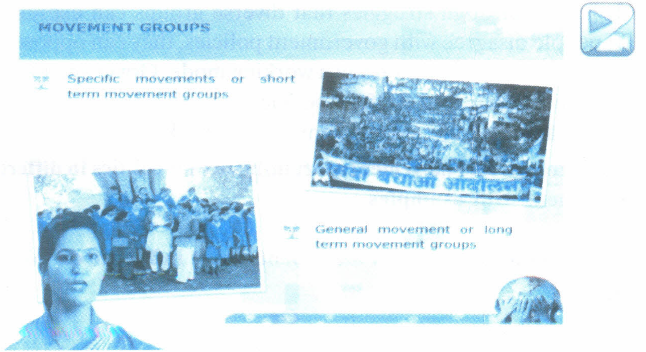
What is a single-issue movement? How does it differ from a long-term movement? Give examples.
1.
The favourable factors for the location of cotton textile industry in Maharashtra-Gujarat region in early years were as follows:
(a) Availability of raw cotton from the cotton growing belt of Deccan in Maharashtra and Gujarat.
(b) The port of Mumbai facilitating export of cotton goods and import of machineries and other inputs.
(c) Moist climate in the belt facilitated spinning.
(d) Market for the finished goods.
(e) Finance or capital from Parsi and Bhatia traders.
(f) Good transport network.
(g) Availability of cheap and skilled labour.
Decentralisation
(i) Huge market, development of transport network, banking facilities and availability of cheap electricity contributed to the decentralisation of cotton mills in the country.
(ii) Weaving is highly decentralised to provide scope for incorporating traditional skills and designs of weaving in cotton, zari, embroidery, etc., prevalent among local weavers in different parts of india.
Three major problems faced by cotton textile industries in India are:
(i) Erratic Power Supply.
(ii) Old and obsolete machinery.
(iii) Stiff competition with the synthetic fibre industry,
The textile industry occupies a unique position in the Indian economy:
(a) It contributes significantly to industrial production, 14 per cent of the total production of industries comes from textiles.
(b) It provides employment to about 35 million people directly.
(c) It contributes about 24.6 percent of the foreign exchange earnings of the country.
(d) Textiles contribute 4 percent towards GDP.
2.
The Civil Disobedience Movement was different from the Non-Cooperation Movement. The main differences between these two movements are
| Civil Disobedience Movement | Non-cooperation Movement |
| Civil Disobedience Movement was launched in 1930. | The Non-Cooperation Movement was launched in 1921 by Gandhiji. |
| The Civil Disobedience Movement was first supported by the Industrialists like GD Birla, Purshottamdas Thakur. | The Non-Cooperation Movement started with middle class participation. |
| The growing proximity of the Congress party and Hindu Mahasabha prevented the Muslims to participate in Civil Disobedience Movement. | Due to Khalifa issues Muslim community participated in Non-Cooperation on large scale |
| The Civil Disobedience Movement was withdrawn in 1931, when Gandhi signed 'Gandhi-Irwin' pact. | The Non-Cooperation Movement was withdrawn by Gandhiji due to violent incident at Chauri Chaura. |
| Large scale participation of women is one of the most significant features of the Civil Disobedience Movement. | In Non-Cooperation Movement, women did not participate in large scale. |
3.
The importance of Indian Railways as a means of transport are described below
(i) Railways are considered as the principal mode of transportation for freight and passengers in India.
(ii) Railways help to conduct various activities, via, business, sightseeing, pilgrimage, transportation of goods over long distances, etc.
(iii) Railways bind the economic life of our country by accelerating the development of the industry and agriculture.
(iv) The Indian Railways have a huge network, connecting almost every corner of our country.
(v) The Indian Railways is the largest public sector, undertaking in the country which is the biggest employer in India.
4.
The Peninsular plateau region, especially the Damodar Valley Region of Jharkhand and West Bengal, the Son, Mahanadi, Godavari and Wardha Valleys of Madhya Pradesh, Chhattisgarh, Odisha, Maharashtra and Andhra Pradesh have rich deposits of Gondwana coal. In the north-eastern states of Meghalaya, Assam, Arunachal Pradesh and Nagaland, tertiary coal is found. In Tamil Nadu, lignite deposits are found. The three major forms of coal are Anthracite, Bituminous and Lignite. Anthracite is the highest quality of coal with more than 80 per cent carbon content and very low moisture content. It is hard, compact and deep-black in colour. It is found in the Jharia coalfields of Jharkhand in a small quantity. Bituminous is the most widely used coal. High grade bituminous coal is used in metallurgical industries, especially for melting iron in blast furnaces. So it is also known as metallurgical coal. Bituminous coal contains 60 to 80 per cent carbon, low moisture, and has high heating capacity. It is formed when coal has been buried deep and subjected to increased temperatures. It is found in large quantities in the Jharia coalfield, of Jharkhand and Raniganj coalfield of West Bengal. Lignite contains about 60 per cent carbon and has high moisture content. It is a low grade brown coal which is soft and has low heating capacity. It is used in thermal power stations. Principal reserves are found in Neyveli in Tamil Nadu.
5.
The following are the differences between the national parties and regional parties.
| National Parties | Regional Parties |
|---|---|
| (a) National parties have influence all over the country. | (a) The influence of regional parties is limited to a particular region or state. |
| (b) National parties deal with national problems. | (b) Regional parties are concerned with the problems and demands of a particular region only. |
| (c) The activities of the national parties give priority to the national problems over the regional problems. |
(c) The activities of regional parties are restricted to the region or the state in which they function. |
| (d) In order to become a national party, a party has to secure at least six per cent of total votes in Lok Sabha or Assembly elections in four states and win at least four seats in the Lok Sabha. |
(d) In order to become a regional party, a party has to secure at least six per cent of total votes in the legislative election and win at least two seats. |
| (e) BJP, Congress and BSP are the examples of national parties. | (e) Janta Dal, Assam United Democratic Front and Manipur People's Party are the examples of regional parties. |
6.
The improvement in technology has stimulated the globalisation process as:
(a) There has been many improvements in transport technology in the recent years that have enabled faster delivery of goods across the world.
(b) Development of information technology in the areas of telecommunication, internet has revolutionised the world.
(c) Use of telegraph, mobiles, fax have enabled easier access to information anywhere at any point of time.
(d) All these developments have further decreased the cost of their operations favouring the consumers around the world.
7.
There were no nation-states in Europe till the mid-eighteenth century. Germany, Italy and Switzerland were ruled by different rulers with their well-defined territories. Eastern and central part of Europe too had autocratic monarchies. People from different ethnic groups occupied these areas and spoke different languages. Sudetenland and Bohemia were dominated by German-speaking people. It also included the provinces of Lombardy and Venetia which had Italian-speaking people. In Hungary, the half of the population spoke Magyar and the other half of the population spoke different dialects. In the part of Galicia, the aristocratic class spoke Polish.
There was absence of collective identity or common culture among these groups. Apart from this, a large group of peasant people like-Romans to the east in Transylvania, Bohemians and Slovaks to the north, Slovenes in Carniola and the Croats to the south lived within the boundary. The only tie binding these different groups together was a common allegiance to the emperor.
8.
(i) A citizen has to be an active and participatory citizen.
(ii) He has to be interested not only in his affairs, but of the affairs of the nation as well.
(iii) He should be well informed about the politics of his country.
(iv) He should have consideration and regard for other people and their needs, views and well-being.
(v) People must co-operate with the government to make democracy successful.
(vi) Besides their rights, they should be aware of their duties as citizens of the country.
(vii) He should get rid of intolerance, fanaticism and inhuman treatment of weaker sections of the society.
(viii) He should be law abiding himself and teach others to be law abiding citizens too.
(ix) Acts of Parliament cannot create a healthy, successful, democracy.
(x) India needs well informed, concerned citizens, who take keen interest in public affairs, perform all their civic duties and co-operate with the government.
9.
The following steps were taken by the French to dismantle the Chinese influence in Vietnam.
(a) French schools were established to spread western outlook.
(b) Medium of instruction was replaced either by French or by Vietnamese.
(c) Chinese language used by the elites in Vietnam was discouraged.
(d) The Vietnamese were forced to learn French culture.
(e) Tonkin Free School was set up to provide western-style education to spread French culture.
(f) In religion, the French introduction Christianity in Vietnam which challenged Confucianism, the Chinese religion followed by many Vietnamese.
10.
A single-issue movement is an issue-specific movement that seeks to achieve a single objective within a limited time frame. A single-issue movement differs from a long-term movement in the following ways
| Single-issue movement | Long-term movement |
| (a) It involves a specific issue. | (a) It involves more than one issue. |
| (b) It has a clear leadership. | (b) It has an independent leadership. |
| (c) It has some organisaiton controlling or guiding it. | (c) It has no single organisaiton controlling or guiding it. |
| (d) Its active life is usually short. | (d) Its active life is usually long |
| (e) Examples: Narmada Bachao Andolan. | (e) Examples: Environmental movements |

10th Standard CBSE Syllabus & Materials
10th Standard CBSE
cbse 10th Standard Social Science HIS - The Making of a Global World Important Questions And Answers Study Material - QB365 Set C
NEW10th Standard CBSE
cbse 10th Standard Social Science HIS - The Making of a Global World Important Questions And Answers Study Material - QB365 Set B
NEW10th Standard CBSE
cbse 10th Standard Social Science HIS - The Making of a Global World Important Questions And Answers Study Material - QB365 Set A
NEW10th Standard CBSE
cbse 10th Standard Social Science ECO - Consumer Rights Important Questions And Answers Study Material - QB365 Set C



NCERT Books

Syllabus

Exam Pattern

Sample Question Papers

Previous year Question Papers

Important Notes

MCQ Practice test

NCERT Exemplers

Case study Questions

Image Based Questions

Passage based Questions

HOT Questions

Value Based Questions

Model Questions Papers
NCERT ( Book Back ) Questions

Assertion and Reason
Important Questions And Answers

CBSE 10th Standard CBSE Subjects
CBSE Standards