
12th Standard Syllabus & Materials
12th Standard
TN 12th Standard Biology Zoology - Reproduction in Organisms Creative Questions Study Material - QB365 Set D
NEW12th Standard
TN 12th Standard Biology Zoology - Reproduction in Organisms Creative Questions Study Material - QB365 Set C
NEW12th Standard
TN 12th Standard Biology Zoology - Reproduction in Organisms Creative Questions Study Material - QB365 Set B
NEW12th Standard
TN 12th Standard Biology Zoology - Reproduction in Organisms Creative Questions Study Material - QB365 Set A
NEW12th Standard
TN 12th Standard Physics Electronics and Communication Creative Questions Study Material - QB365 Set D
NEW12th Standard
TN 12th Standard Physics Electronics and Communication Creative Questions Study Material - QB365 Set C

Published on: 24/04/2021
12th Standard Biology English Medium Reproduction Organisms Important Questions
Download Tamil Nadu 12th Standard Biology question papers, model tests, one-mark questions, important questions, and public exam papers in PDF format. Free study materials and answer keys for TN State Board students.
Questions + Answers key
Take MCQ Biology Test
1.
In each of the following questions there are two statements. One is assertion (A) and other is reasoning (R). Mark the correct answer as
Assertion (A) : In bee society, all the members are diploid except drones.
Reason (R) : Drones are produced by parthenogenesis
Codes:
A. If both A and R are true and R is correct explanation for A
B. If both A and R are true but R is not the correct explanation for A
C. If A is true but R is false
D. If both A and R are false.
If both A and R are true and R is correct explanation for A
If both A and R are true but R is not the correct explanation for A
If A is true but R is false
If both A and R are false
2.
Assertion and reasoning questions:
In each of the following questions there are two statements. One is assertion (A) and other is reasoning (R). Mark the correct answer as
Assertion: Viviparous animals give better protection to their off springs.
Reason: They lay their eggs in the safe places of the environment.
Codes:
A. If both A and R are true and R is correct explanation for A
B. If both A and R are true but R is not the correct explanation for A
C. If A is true but R is false
D. If both A and R are false.
If both A and R are true and R is correct explanation for A
If both A and R are true but R is not the correct explanation for A
If A is true but R is false
If both A and R are false
3.
Assertion(A): In human male, testes are extra abdominal and lie in scrotal sacs.
Reason(R): Scrotum acts as thermoregulator and keeps temperature lower by 2oC for normal sperm production.
Codes:
(a) A and R are true, R is the correct explanation of A
(b) A and R are true, R is not the correct explanation of A
(c) A is true, R is false
(d) Both A and R are false
A and R are true, R is the correct explanation of A
A and R are true, R is not the correct explanation of A
A is true, R is false
Both A and R are false
Part - A
4.
Exo-erythrocytic schizogony of Plasmodium takes place in _______
RBC
Leucocytes
Stomach
Liver
5.
Spread of cancerous cells to distant sites is termed as
Metastasis
Oncogenes
Proto-oncogenes
Malignant neoplasm
6.
7.
Which of the following is incorrect regarding ZW-ZZ type of sex determination?
It occurs in birds and some reptiles
Females are homogametic and males are heterogametic
Male produce one type of gamete
It occurs in gypsy moth
8.
The site of embryo implantation is the _____.
Uterus
Peritoneal cavity
Vagina
Fallopian tube
9.
Which of the following is the correct sequence of event with reference to the central dogma?
Transcription, Translation, Replication
Transcription, Replication, Translation
Duplication, Translation, Transcription
Replication, Transcription, Translation
10.
Which of the following statements is not true about DNA replication in eukaryotes?
Replication begins at a single origin of replication.
Replication is bidirectional from the origins.
Replication occurs at about 1 million base pairs per minute
There are numerous different bacterial chromosomes, with replication occuring in each at the same time.
11.
A contraceptive pill prevents ovulation by ______.
blocking fallopian tube
inhibiting release of FSH and LH
stimulating release of FSH and LH
causing immediate degeneration of released ovum.
12.
Match column I with column II and select the correct option from the codes given below.
| Column I | Column II |
| A. Copper releasing IUD | (i) LNG-20 |
| B. Hormone releasing | (ii) Lippes loop IUD |
| C. Non medicated IUD | (iii) Saheli |
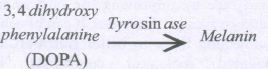
| D. Mini pills | (iv) Multiload-375 |
| A | B | C | D |
| (iv) | (ii) | (i) | (iii) |
| A | B | C | D |
| (iv) | (i) | (iii) | (ii) |
| A | B | C | D |
| (i) | (iv) | (ii) | (iii) |
| A | B | C | D |
| (iv) | (i) | (ii) | (iii) |
13.
14.
Which period was called “Age of fishes”?
Permian
Triassic
Devonian
Ordovician
15.
Cry toxins obtained from Bacillus thuringiensis are effective against for______
Mosquitoes
Flies
Nematodes
Bollworms
16.
Cyclosporin – A is an immunosuppressive drug produced from _______
Aspergillus niger
Manascus purpureus
Penicillium notatum
Trichoderma polysporum
17.
How many amino acids are arranged in the two chains of Insulin
Chain A has 12 and Chain B has 13
Chain A has 21 and Chain B has 30 amino acids
Chain A has 20 and Chain B has 30 amino acids
Chain A has 12 and chain B has 20 amino acids.
18.
Which one of the following statements is true regarding DNA polymerase used in PCR?
It is used to ligate introduced DNA in recipient cells
It serves as a selectable marker
It is isolated from a Virus
It remains active at a high temperature
19.
Right to Clean Water is a fundamental right, under the Indian Constitution
Article 12
Article 21
Article 31
Article 41
20.
Which among the following awards instituted by the Government of India for individuals or communities from rural areas that have shown extraordinary courage and dedication in protecting Wildlife?
Indira Gandhi Paryavaran Puraskar
Medini Puruskar Yojana
Amrita Devi Bishnoi Award
Pitambar Pant National Award
21.
The relationship between sucker fish and shark is__________
Competition
Commensalism
Predation
Parasitism.
22.
What type of human population is represented by the following age pyramid?
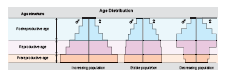
Vanishing population
Stable population
Declining population
Expanding population
23.
__________ is a disease where abnormal haemoglobin is produced in patients.
Phenylketonuria
Huntington's chorea
Thalassemia
Albinism
24.
One gene 'L' controlling blood groups is named after_________.
c. B. Bridges
Henking
Landsteiner
Stevens
25.
Conjugation is seen in _____
Vorticella
Amoeba
Reptiles
Actinosphaerium
26.
Starfish shown ______ type of regeneration.
epimorphosis - reparative
epimorphosis (restorative)
morphallaxis
paedogenesis
27.
___________is a genetic disease
Rickets
Cystic fibrosis
Tuberculosi
Candidiasis
28.
_____ is a temporary endocine gland formed during pregnancy from the follicle.
oestrogen
corpus luteum
progesterone
relaxin
29.
The stage where the embryo looks like a fluid filled hollow ball is called ______
trophoblast
morula
gastrula
blastocyst
30.
_________is not linked to IPR.
Patents
Copy rights
GI
trademarks
31.
All the following are recombinant vaccines. Except
Traditional vaccines
Submit recombinant vaccines
Attenuated recombinant vaccines
DNA vaccines
32.
__________is an example for DNA vaccine
MMR
Hepatitis B
BCG
oral polio
33.
Van't Hoffs rule describes the impact of ____________ on the environment.
Light
Temperature
Water
Soil
34.
Type of response in hibernation and aestivation.
Suspend
Regulate
Migrate
Conform
35.
Lactobacillus helps to produce________
Citric acid
Milk
Acetic acid
Butyric acid
36.
The cry toxin affects_______system of insect pests
Nervous system
Respiratory system
Digestive system
Reproductive system
37.
One of the following prevents sperm from heading off to penis as the discharge has no sperms in it.
Tubectomy
LNG - 20
Vasectomy
Cu T 380 Ag
38.
Emergence of modern birds occurred in _____________ period.
Devonian
Silurian
Jurassic
Cretaceous
39.
Prevention of children from sexual offences is covered under ______ act
PCPNDT
patent act
ART
POCSO
40.
All the following provided the energy for chemical reaction in the primitive earth Except:
Rain
Lightning
UV radiations
volcanic activity
41.
Darwin's finches in Galapagos islands and Australian Marsupials are the example of
Industrial mechanism
Reproductive isolation
Genetic recombination
Adaptive recombination
42.
The fruit fly Drosophila melanogaster was found to be very suitable for experimental verification of chromosomal theory of inheritance by Morgan and his colleagues because
It reproduces parthenogenetically
A single mating produces two young flies
Smaller female is easily recognizable from largemale
It completes the life cycle in about two weeks
43.
Escherichia coli fully labeled with N14 medium. The two strands of DNA molecules of the first generation bacteria have
Different density and do not resemble parent DNA
Different density but resemble parent DNA
Same density and resemble parent DNA
Same density but do not resemble parents DNA
44.
Transverse binary fission is noticed in _________________
Amoeba
Planaria
Ceratium
Vorticella
45.
In chorionic villus sampling test, the tissue sample is taken from _________
amniotic fluid
placental tissue
Intestinal villi
foetal liver
46.
Statement (1): Human pregnancy lasts for 35 weeks.
Statement (2): During gestation, embryo's heat develops during 12th week
Statement 1 is correct; statement 2 is incorrect
Statement 1 is incorrect; statement 2 is correct
Both the statements 1 and 2 are correct
Both the statements 1 and 2 are correct
47.
________________ test is done to confirm typhoid.
ELISA
Western blot
Widal test
Southern blot
48.
Which one of the following pairs is wrong.
Amoebiasis - Home fly
African sleeping sickness - Tsetse flies
Kala-azar - Sand fly
Malaria - female Anopheles mosquito
49.
Select the correct linear equation describing the species - area relationship.
loc C = log S + Z log A
Z 10gA= log S + log C
log S = log C + Z log A
log C = log S ± Z log A
50.
Tilapia fish (Oreochromis mossambicus) is exotic breed from_______
Mexico
South Africa
Canada
Central America
51.
Whose experiment finally provided convincing evidence that DNA is the genetic material?
Griffith experiment
Avery, Macleod and McCarty's experiment
Hershey-Chase experiment
Urey-Miller's experiment
52.
Select the correct statement from the following
Primary treatment of sewage involves biological oxidation
Excreta of cattle is commonly called Gobur
Delta endotoxin of Bacillus thuringiensis is encoded by pen-genes
Trichoderma is a free-timing bacteria very common in root ecosystem
53.
Which one of the following is wrongly matched?
Transcription - Copying information from DNA to RNA
Translation - Decoding information from mRNA to protein
Replication - Making of DNA copies
Splicing - Joining of exons with introns
54.
Average human consumption of oxygen per day is_________
280 L
550 L
620 L
730 L
55.
The intensity of noise is measured in_______
Dobson
Hertz
Decibel
Frequency
56.
According to noise pollution rules 2000, the permissible level of noise in commercial area is ________ during day and ________during night
55 db, 65 db
65 db, 55 db
70 db, 60 db
75 db, 65 db
57.
Pick out the eurythermal organism
Fish
Frog
Tiger
Lizards
Part - B
58.
Why is the offspring formed by asexual reproduction referred as a clone?
59.
What is haplodiploidy?
60.
What is Lyonisation?
61.
62.
Give reasons: ‘Genetic code is universal’.
63.
Mention any two ways in which single nucleotide polymorphism (SNPs) identified in human genome can bring revolutionary change in biological and medical science.
64.
65.
What is Lyon's hypothesis?
66.
Define isogamy.
67.
During which stagesidoes multiple fission occur is plasmodium.
68.
Name two RNA viruses which cause diseases in humans.
69.
Describe the location and shape of the uterus.
70.
StateIordon's rule.
71.
What is "clot buster"?
72.
Define Tubectomy and Vascetomy.
73.
Name the types of natural selection.
74.
Name any four national level health care programmes run by Indian Government
75.
Define the terms
(a) Insemination
(b) Fertilization.
76.
Comment on Trisomy-21.
77.
What causes shivering in malarial patient?
78.
Name the disease that are treated by using interferons.
79.
Define the terms (a) Totipotency (b) Unipotency
80.
Name any four biogeographic zones in India.
81.
Mention any two species that had become extinct very recently.
82.
The first antibiotic was extracted from fungus. Who had done it? And also mention the fungal species used.
83.
84.
Define the term eutrophication.
85.
Complete the following:
(a) Smoke +_____ = Smog
86.
What is ecosphere?
87.
Mention the inhibitory role of tetracycline and streptomycin in bacterial translation
88.
Write a brief note on Homo sapiens with respect to evolution.
Part - D
89.
What is male heterogamety?
90.
Taking the example of Peppered moth, explain the action of natural selection. What do you call the above phenomenon?
91.
Explain how ADA deficiency can be corrected
92.
Discuss the methods adopted for the improvement of human race.
93.
Write notes on binary fission in animals.
94.
Explain the events in life cycle of plasmodium in the secondary host/Man
95.
What is ART? Explain any two for ART.
96.
Write a note on extinction and its types
97.
Describe the structure of human ovary.
98.
Explain in detail about stem cell therapy. (or) What are the multipotent cells involved in replenishing adult tissue ? What is the rich source for it?
99.
How microbes are used in Gobar gas production?
100.
How radioactive waste are managed? Suggest few methods of disposal of radioactive waste.(or) write an essay on Radioactive waste management.
101.
Explain structural and behavioural adaptations seen in organism.
102.
How the DNA is packed in an eukaryotic cell?
Part - C
103.
104.
Mention the importance of the position of the testes in humans.
105.
Distinguish between structural gene, regulatory gene and operator gene
106.
Why do we find a decrease in biodiversity distribution, if we move from the tropics towards the poles?
107.
What is the chemical reaction that is affected in people suffering from Albinism?
108.
What is 'Wobbling' in tRNA?
109.
How do statins help to control cholesterol levels?
110.
Give examples of any three National Parks in Tamil Nadu.
111.
Give the definition for (a) Arrhenotoky (b) Thelytoky (c) Amphitoky
112.
How LNG-20 act as contraceptive?
113.
Menstrual hygiene is essential for women. Why?
114.
State any two uniqueness of ELISA test.
115.
Name the diseases for which vaccines were developed by Louis Pasteur
116.
Write a brief note on Chipko movement.
117.
People leaving in high altitudes show increased RBC count. Give reason.
118.
What are coprolites? Mention its role in phylogeny.(or) Write a short note on Coprolites.
1.
A. If both A and R are true and R is correct explanation for A
2.
D. If both A and R are false.
3.
(a) A and R are true, R is the correct explanation of A
Part - A
4.
(d)
Liver
5.
(a)
Metastasis
6.
(b)
7.
(b)
Females are homogametic and males are heterogametic
8.
(a)
Uterus
9.
(d)
Replication, Transcription, Translation
10.
(d)
There are numerous different bacterial chromosomes, with replication occuring in each at the same time.
11.
(b)
inhibiting release of FSH and LH
12.
(d)
| A | B | C | D |
| (iv) | (i) | (ii) | (iii) |
13.
(b)
14.
(c)
Devonian
15.
(d)
Bollworms
16.
(d)
Trichoderma polysporum
17.
(b)
Chain A has 21 and Chain B has 30 amino acids
18.
(d)
It remains active at a high temperature
19.
(b)
Article 21
20.
(c)
Amrita Devi Bishnoi Award
21.
(b)
Commensalism
22.
(b)
Stable population
23.
(c)
Thalassemia
24.
(c)
Landsteiner
25.
(a)
Vorticella
26.
(b)
epimorphosis (restorative)
27.
(d)
Candidiasis
28.
(b)
corpus luteum
29.
(d)
blastocyst
30.
(c)
GI
31.
(a)
Traditional vaccines
32.
(b)
Hepatitis B
33.
(b)
Temperature
34.
(a)
Suspend
35.
(a)
Citric acid
36.
(c)
Digestive system
37.
(c)
Vasectomy
38.
(d)
Cretaceous
39.
(d)
POCSO
40.
(a)
Rain
41.
(d)
Adaptive recombination
42.
(d)
It completes the life cycle in about two weeks
43.
(b)
Different density but resemble parent DNA
44.
(b)
Planaria
45.
(b)
placental tissue
46.
(d)
Both the statements 1 and 2 are correct
47.
(c)
Widal test
48.
(d)
Malaria - female Anopheles mosquito
49.
(c)
log S = log C + Z log A
50.
(b)
South Africa
51.
(c)
Hershey-Chase experiment
52.
(a)
Primary treatment of sewage involves biological oxidation
53.
(d)
Splicing - Joining of exons with introns
54.
(b)
550 L
55.
(c)
Decibel
56.
(b)
65 db, 55 db
57.
(c)
Tiger
Part - B
58.
Offsprings produced by asexual reproduction are called clones, because they are genetically as well as morphologically similar to the parent organism.
They are not only similar to one another, but are also exact copies of their parent (e,g): Amoeba, Spirogyra, Hydra, Yeast, etc.
59.
Haplodiploidy is a sex determination system in which males develop from unfertilized eggs are haploid, and female develops from fertilized egg and is diploid.
It is sometimes called arrhenotoky.
e.g., Honeybees, ants, and wasps.
60.
The inactivation of an X chromosome one of the two X chromosomes in every cell in some female mammal is randomly inactivated early in embryonic development and named after geneticist Mary Lyon.
The inactive X chromosome is silenced by it being packaged in such a way that it has a transcriptionally inactive structure called heterochromatin found in nucleoplasm of nucleus.
61.
62.
1. The genetic code is universal. It means that all known living systems use nucleic acids and the same three base codons (triplet codon) direct the synthesis of protein from amino acids. E.g, mRNA ,(UUU) codon codes for phenylalanine in all cells of all organisms.
2. Some exceptions are reported in prokaryotic, mitochondrial and chloroplast genomes. However similarities are more common than differences.
63.
There are 1.4 million locations where single base DNA differences (Called SNPs - Single Nucleotide Polymorphism - pronounce as snips) occurs in human's genome.
(i) By tracing human history
(ii) By finding chromosomal locations for disease associated sequences
64.
65.
Mary Lyon suggested that Barr bodies represented an inactive chromosome, which in females becomes tightly coiled into a heterochromatin, a condensed and visible form of chromatin. The number of Barr bodies observed in cell was one less than the number of X-Chromosome. XO females have no Barr body, whereas XXY males have one Barr body.
66.
The fusion of morphological and physiological identical gatnetes (isogametes) is called isogamy. E.g. Monocystis
67.
In plasmodium multiple fission occurs in the schizont and oocyte stages.
68.
Rubella Virus - causes Measles
Polio virus - causes Poliomyelitis
69.
The uterus or womb is a hollow, thick-walled, muscular, highly vascular and inverted pear shaped structure lying in the pelvic cavity between the urinary bladder and rectum.
70.
In some aquatic environments, an inverse relationship between water temperature and fish meristic characters is observed - lower the temperature, more the vertebrae.
71.
Streptokinase produced by the bacterium Streptococcus and genetically engineered Streptococci are used as "clot buster" for removing clots from the blood vessels of patients who have undergone myocardial infarction.
72.
(i) Tubectomy is the surgical sterilisation method in women.
(ii) Vasectomy is the surgical sterilisation method in male.
73.
Stabilizing selection
Directional selection
Disruptive selection
74.
1) Janani Suraksha Yojana
2) Shishu Suraksha Karyakaram
3) RMNCH+A Programme
4) Pradhan Mantri Surakshit Matritva Abhiyan
75.
(a) Insemination: Transfer of sperms by the male into the female genital tract.
(b) Fertilization: Fusion of male and female gametes to form a zygote, called fertilization
76.
Trisomic condition of chromosome - 21 results in Down's syndrome. It is characterized by severe mental retardation, defective development of the central nervous system, increased separation between the eyes, flattened nose, ears are malformed, mouth is constantly open and the tongue protrudes.
77.
After infection of RBC with sporozoite, when the RBC ruptures a toxic substance haemozoin is released which causes shivering chills and high fever followed by sweating
78.
Interferons are used for the treatment of various diseases like cancer, AIDS, multiple sclerosis, hepatitis C and herpes zoster
79.
Totipotency is the ability of a single cell to divide and produce all of the differentiated cells in an organism.
Unipotency refers to the ability of the stem cells to differentiate into only one cell type
80.
(a) Himalayas
(b) Indian deserts
(c) Trans-Himalayan region
(d) Western ghats.
81.
(a) George, the tree snail (Achatinella apexfulva)
(b) Sudan - Northern white rhinoceros (Ceratotheriurri simum)
82.
Alexander Flemming discovered the first antibiotic from the fungus Penicillium no Tatum and Pencillium Chrysogenum
83.
84.
When run-off from land containing nutrients reaches water bodies like lakes, it results in dense growth of plant life. This phenomenon is called Eutrophication.
85.
Fog
86.
The largest and most nearly self-sufficient biological system is often designated as the Ecosphere, which includes all the living organisms of the Earth, interacting with the physical environment to regulate their distribution, abundance, production and evolution
87.
Tetracycline inhibits binding between aminoacyl tRNA and mRNA.
Streptomycin inhibits initiation of translation and causes misreading.
88.
Homo sapiens or modem human arose in Africa some 25,000 years ago and moved to other continents and developed into distinct races. They had a brain capacity of 1300 - 1600 cc. They started cultivating crops and domesticating animals.
Part - D
89.
Heterogametic Males:
In this method of sex determination the males are heterogametic producing dissimilar gametes while females are homogametic producing similar gametes.
It is of kinds XX-XO type and XX-XY type.
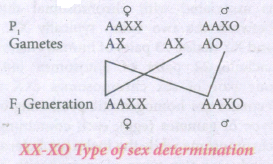
(i) XX-XO Type
(a) This method of sex determination is seen in bugs and some insects such as cockroaches and grasshoppers.
(b) The female with two X chromosomes are homogametic (XX) while the males with only one X chromosome are heterogametic (XO).
(c) The presence of an unpaired X chromosomes determines the male sex. The males with unpaired 'X' chromosome produce two types of sperms, one half with X chromosome and other half without X chromosome.
(d) The sex of the offspring depends upon the sperm that fertilizes the egg.
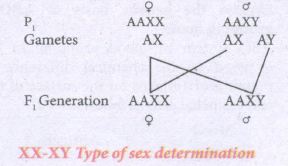
(ii) XX-XV type (Lygaeu Type):
This method of sex determination is seen in human beings and in Drosophila.
(a) The females are homogametic with XX chromosome, while the males are heterogametic with X and Y chromosome.
(b) Homogametic females produce only one kind of egg, each with one X chromosome, while the heterogametic males produce two kinds of sperms some with X chromosome and some with Y chromosome.
(c) The sex of the embryo depends on the fertilizing sperm. An egg fertilized by an 'X' bearing sperm produces a female, if fertilized by a 'Y' bearing sperm, a male is produced.
90.
1. Natural selection can be explained clearly through Industrial melanism.
2. Industrial melanism is classical case of natural selection exhibited by the peppered moth.
Biston Betularia
1. These were available in two colours, white and black. Before industrialization peppered moth both white and black coloured were common in England (Manchester).
2. Pre-industrialization witnessed white coloured background of the wall of buildings hence the white coloured moths escaped from their predators.
3. Post Industrialization the tree trunks become dark due to smoke and soot let out from the lndustries.
4. The black moths camouflaged on the dark bark of the trees and the white moths were easily identified by their predators (birds).
5. Hence the dark coloured moth population was selected and their number increased when compared to the white moths nature offered positive selection pressure to the black coloured moths.
6. The above proof shows that in a population organisms that can adapt will service and produce more progenies resulting in increase in population through natural selection.
91.
1. A patient is suffering from ADA deficiency can be caused by using "gene therapy''.
2. Gene therapy is a correction of a genetic defect that has been diagnosed in a child embryo.
3. ADA enzyme is crucial fol the immune system to function.
4. Deletion of the gene for adenosine deaminase results into ADA deficiency.
5. In some children, ADA deficiency can be cured by bone. Marrow transplantation While in others it can be treated by enzyme replacement therapy, in which functional ADA is given to the patient by injection. But the problem with both of these approaches is that they are not completely curative.
6. It may recurrent in nature as in the process of gene therapy, Lymphocytes used are found not to be immortal in nature and the patient requires a periodic infusion of such genetically engineered lymphocytes.
7. For permanent cure, gene isolated from the bone-marrow-cells producing ADA is introduced into cells at early embryonic stages.
92.
The methods adopted for the improvement of human beings are
(i) Eugenics
(ii) Euthenics
(iii) Euphenics
Eugenics:
Application of the laws of genetics for the improvement of human race is called eugenics. The term eugenics means "well born" and was coined by Francis Galton in 1885. For the betterment of future generations it is necessary to increase the population of outstanding people and to decrease the population of abnormal and defective people by applying the principles of eugenics.
Two methods of Eugenics
(i) Constructive method or Positive eugenics
(ii) Restrictive method or Negative eugenics
(i) Positive eugenics: Positive eugenics attempts to increase consistently better or desirable germplasm and to preserve the best germplasm of the society. The desirable traits can be increased by adopting the following measures:
a) Early marriage of those having desirable traits
b) Subsiding the fit and establishing sperm and egg banks of precious germplasm
c) Educating the basic principles of genetics and eugenics
d) Improvement of environmental conditions
e) Promotion of genetic research
(ii) Negative eugenics: Negative Eugenics attempts to eliminate the defective germplasm of the society by adopting the following measures:
(a) Sexual separation of the defectives
(b) Sterilization of the defectives
(c) Control of immigration and
(d) Regulation of marriages
Euphenics:
man is called Euphenics or Medical engineering. In 1960, Joshua Lederberg coined the term Euphenics. It means normal appearing. It deals with the control of several inherited human diseases especially the inborn errors of metabolism. Eg. Phenylketonuria (PKU)
Euthenics:
The science of improvement of existing human race by improving the environmental conditions is called euthenics. It can be achieved by subjecting them to better nutrition, better unpolluted ecological conditions, better education and sufficient medical facilities
93.
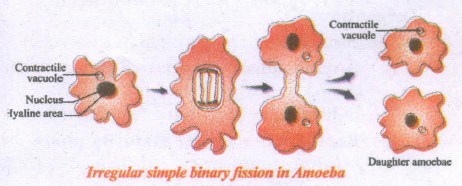
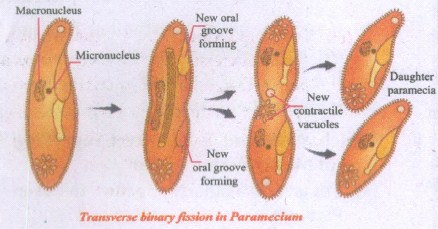
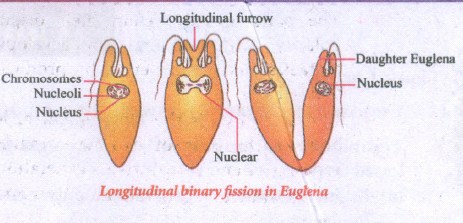
In binary fission, the parent organism divides into two halves and each half forms a daughter individual. The nucleus divides first amitotically or mitotically (karyokinesis), followed by the division of the cytoplasm (cytokinesis). The resultant offsprings are genetically identical to the parent. Depending on the plane of fission, binary fission is of the following types
(i) Simple irregular binary fission
(ii) Transverse binary fission
(iii) Longitudinal binary fission
(iv) Oblique binary fission
(i) Simple irregular binary fission is seen in Amoeba like irregular shaped organisms, where the plane of division is hard to observe. The contractile vacuoles cease to function and disappear. The nucleoli disintegrate and the nucleus divides mitotically. The cell then constricts in the middle, so the cytoplasm divides and forms two daughter cells.
(ii) In Transverse binary fission, the plane of the division runs along the transverse axis of the individual. E.g. Paramecium and Planaria. In Paramecium the macronucleus divides by amitosis and the micronucleus divides by mitosis.
(iii) In Longitudinal binary fission the nucleus and the cytoplasm divides in the longitudinal axis of the organism. In flagellates, the flagellum is retained usually by one daughter cell. The basal granule is divided into two and the new basal granule forms a flagellum in the other daughter individual. E.g. Vorticella and Euglena.
(iv) In Oblique binary fission the plane of division is oblique. It is seen in dinoflagellates. E.g. Ceratium.
94.
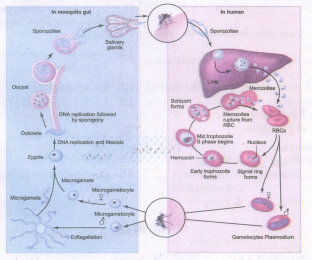
(i) Plasmodium vivax is a digenic parasite, involving two hosts, man as the secondary host and female Anopheles mosquito as the primary host. The life cycle of Plasmodium involves three phases namely schizogony, gamogony and sporogony (f.g)
(ii) The parasite first enters the human blood stream through the bite of an infected female Anopheles mosquito. As it feeds, the mosquito injects the saliva containing the sporozites.
(iii) The sporozoites within the blood stream enter the hepatic cells of the liver and undergoes multiple asexual fission (schizogony). This produces merozoites which are released from liver cells.
(iv) The merozoites penetrate the RBC's. Inside the RBC of Blood, the merozoite of Plasmodium to develop as unicellular trophozoites. The trophozoite grows in size and a central vacuole develops pushing them to one side of cytoplasm and becomes the signet ring stage.
(v)The trophozoite nucleus then divides asexually to produce the The schizont divides and produces on nucleated merozoites.
(vi) Eventually the erythrocyte lyses, releasing the merozoites and haemozoin toxin into the blood stream to infect other erythrocytes. Lysis of red blood cells results in cycles of fever and other symptoms. This erythrocytic stage is cyclic and repeats itself approximately every 48 to72 or longer depending on the species of Plasmodium involved. The sudden release of merozoites triggers an attack on the RBCs.
(vii) Occasionally, merozoites differentiate into macrogametocytes and microgametocytes When these are ingested by a mosquito, they develop into male and female gametes respectively
In the mosquito's gut, the infected erythrocytes lyse and male and female gametes fertilize to form a diploid zygote called ookinete. The ookinete migrates to the mosquito's gut wall and develops into an oocyte.
The oocyte undergoes meiosis by a process called sporogony to form sporozoites. These sporozoites migrate to the salivary glands of the mosquito. The cycle is now completed and when the mosquito bites another human host, the sporozoites are injected and the cycle begins a new.
The pathological changes caused by malaria, affect not only the erythrocytes but also the spleen and other visceral organs. Incubation period of malaria is about 12 days. The early symptoms of malaria are headache, nausea and muscular pain. The classic symptoms first develop with the synchronized release of merozoites, hemozoin toxin and erythrocyte debris into the bloodstream resulting in malarial paroxysms - shivering chills, high fever followed by sweating. Fever and chills are caused partly by malarial toxins that induce macrophages to release tumor necrosis factor (TNF-a) and interleukin.
95.
A collection of procedures, which includes the handling of gametes and/or embryos outside the body to achieve a pregnancy as known as Assisted Reproductive Technology. It increases the chance of pregnancy in infertile couples. ART includes intra-uterin insemination (IUI), in vitro fertilization, (IVF) Embryo transfer, (ET), Zygote intra-fallopian transfer (ZIPT), Gamete intrafallopian transfer (GIFT), Intra-cytoplasmic, sperm Injection (ICSI), .Preimplantation genetic diagnosis, oocyte and sperm donation and surrogacy.
(i) Intra-cytoplasmic sperm injection (ICSI): In this method only one sperm is injected into the focal point of the egg to fertilize. The sperm is carefully injected into the cytoplasm of the egg. Fertilization , occurs in 75 - 85% of eggs injected with the sperms. The zrgote is allowed to divide to form an 8 celled blastomere and then transferred to the uterus to develop a productive pregnancy.
(ii) Surrogacy: Surrogacy is a method of assisted reproduction or agreement whereby a woman agrees to carry a Pregnancy for another person, who will become the newborn child's parent after birth. Through in vitro fertilization (IVF), embryesz are created in a lab and are transferred into the surrogate mother's uterus.
96.
Species is considered extinct when none of its members are alive anywhere in the world. If individuals of a species remain alive only in captivity or other human controlled conditions, the species is said to be extinct in the wild. In both of these situations, the species would be considered globally extinct. A species in considered to be locally extinct when it is no longer found in an area it once inhabited but is still found elsewhere in the wild.
Types of extinctions:
(i) Natural extinction is a slow process of replacement of existing species with better adapted species due to changes in environmental conditions, evolutionary changes, predators and diseases. A small population can get extinct sooner than the large population due to inbreeding depression (less adaptivity and variation).
(ii) Mass extinction: The earth has experienced quite a few mass extinctions due to environmental catastrophes. A mass extinction occurred about 225 million years ago during the Permian, where 90% of shallow water marine invertebrates disappeared.
(iii) Anthropogenic extinctions: These are abetted by human activities like hunting, habitat destruction, over exploitation, urbanization and industrialization. Some examples of extinctions are Dodo of Mauritius and Steller's sea cow of Russia. Amphibians seem to be at higher risk of extinction because of habitat destruction.
97.
(i) Ovaries are the primary female sex organ producing eggs (ovum).
(ii) They are located one on each side of lower abdomen (pelvis).
(iii) The ovary is attached in pelvic wall uterus by an ovarian ligament called mesovarium.
(iv) It is an elliptical structure of 2-4 cm long
(v) Each ovary is covered by thin cuboidal germinal epithelium encloses ovarian stroma.
(vi) Below germinal epithelium is a dense connective tissue called tunica albuginea.
(vii) The stroma is differentiated into an outer cortex and an inner medulla.
(viii) The cortex is dense and granular due to follicular cells at varying development stages.
(ix) The medulla is a loose connective tissue with blood vessels, lymph vessels and nerve fibres.
98.
Stem cells are undifferentiated cells found in most of the multi cellular animals. These cells maintain their undifferentiated state even after undergoing numerous mitotic divisions. Stem cell research has the potential to revolutionize the future of medicine with the ability to regenerate damaged and diseased organs. Stem cells are capable of self renewal and exhibit 'cellular potency'. Stem cells can differentiate into all types of cells that are derived from any of the three germ layers ectoderm, endoderm and mesoderm.
In mammals there are two main types of stem cells - embryonic stem cells (ES cells) and adult stem cells. ES cells are pluripotent and can produce the three primary germ layers ectoderm, mesoderm and endoderm. Embryonic stem cells are multipotent stem cells that can differentiate into a number of types of cells. ES cells are isolated from the epiblast tissue of the inner cell mass of a blastocyst. When stimulated ES can develop into more than 200 cells types of the adult body. ES cells are immortal ie. they can proliferate in a sterile culture medium and maintain their undifferentiated state. Adult stem cells are found in various tissues of children as well as adults. An adult stem cell or somatic stem cell can divide and create another cell similar to it. Most of the adult stem cells are multipotent and can act as a repair system of the body, replenishing adult tissues. The red bone marrow is a rich source of adult stem cells.
The most important and potential application of human stem cells is the generation of cells and tissues that could be used for cell based therapies. Human stem cells could be used to test new drugs.
99.
Biogas is a mixture of different gases produced by the breakdown of organic matter in the absence of oxygen. Biogas can be produced from raw materials such as agricultural wastes, manure, municipal wastes, plant material, sewage, food waste, etc., Biogas is produced under the anaerobic condition when the organic materials are converted through microbiological reactions into gas and organic fertilizer. Biogas primarily consists of methane (63 percent), along with CO2 and hydrogen. Methane-producing bacteria are called methanogens and one such common bacterium is Methanobacterium. Biogas is devoid of smell and bums with a blue flame without smoke. The Methanogens are also present in anaerobic sludge and rumen of cattle. In the rumen, these bacteria help in the breakdown of cellulose. The excreta of cattle called dung is commonly called "Gobar". Gobar gas is generated by the anaerobic decomposition of cattle dung. It consists of methane, CO2 with some hydrogen, nitrogen and other gases in trace amounts.
In a biogas plant, anaerobic digestion is carried out in an airtight cylindrical tank known as digester. It is made up of concrete bricks and cement or steel. Bio-wastes are collected and a slurry of dung is fed into this digester. It has a side opening into which organic materials for digestion are incorporated for microbial activity. Anaerobic digestion is accomplished in three stages: solubilisation, acidogenesis, and methanogens. The outlet is connected to a pipe to supply biogas. The slurry is drained through another outlet and is used as fertilizer. Biogas is used for cooking and lighting. The technology of biogas production was developed in India mainly due to the efforts of the Indian Agricultural Research Institute (IARl) and Khadi and Village Industries Commission (KVIC).
100.
Radioactive waste management involves the treatment, storage, and disposal of liquid, airborne, and solid effluents from the nuclear industry. Methods of disposal of radioactive wastes are:
1. Limit generation - Limiting the generation of waste is the first and most important consideration in managing radioactive wastes.
2. Dilute and disperse - For wastes having low radioactivity, dilution and dispersion are adopted.
3. Delay and decay - Delay and decay is frequently an important strategy because much of the radioactivity in nuclear reactors and accelerators is very short lived.
4. Concentrate and confine process - Concentrating and containing is the objective of treatment activities for longer-lived radioactivity. The waste is contained in corrosion resistant containers and transported to disposal sites. Leaching of heavy metals and radionuclides from these sites is a problem of growing concern.
101.
The two most characteristic forms of behavioral adaptations are migration and courtship. Migration allows the animals to find better resources or evade threat. Courtship is a set of behavioral patterns to find a mate to reproduce. Most nocturnal animals remain underground or inactive during the daytime. This is a modification of their feeding and activity pattern or habit or behavior.
102.
In eukaryotes, organization is more complex. Chromatin is formed by a series of repeating units called nucleosomes. Kornberg proposed a model for the nucleosome, in which 2 molecules of the four histone proteins H2A, H2B, H3 and H4 are organized to form a unit of eight molecules called histone octamere. The negatively charged DNA is wrapped around the positively charged histone octamere to form a structure called nucleosome. A typical nucleosome contains 200 bp of DNA helix. The histone octameres are in close contact and DNA is coiled on the outside of nucleosome. Neighbouring nucleosomes are connected by linker DNA (HI) that is exposed to enzymes. The DNA makes two complete turns around the histone octameres and the two turns are sealed off by an HI molecule. Chromatin lacking HI has a beads-on-a-string appearance in which DNA enters and leaves the nucleosomes at random places. HI of one nucleosome can interact with HI of the neighbouring nucleosomes resulting in the further folding of the fibre. The chromatin fiber in interphase nuclei and mitotic chromosomes have a diameter that vary between 200-300 nm and represents inactive chromatin. 30 nm fibre arises from the folding of nucleosome, chains into a solenoid structure having six nucleosomes per turn. This structure is stabilized by interaction between different HI molecules. DNA is a solenoid and packed about 40 folds. The hierarchical nature of chromosome structure is illustrated. Additional set of proteins are required for packing of chromatin at higher level and are referred to as non-histone chromosomal proteins (NHC). In a typical nucleus, some regions of chromatin are loosely packed (lightly stained) and are referred to as euchromatin. The chromatin that is tightly packed (stained darkly) is called heterochromatin. Euchromatin is transcriptionally active and heterochromatin is transcriptionally inactive.
Part - C
103.
104.
1. Testes are the primary male sex organs.
2. They are a pair of ovoid bodies lying in the scrotum.
3. The scrotum is a sac of skin that hangs outside the abdominal cavity.
4. Since viable sperms cannot be produced at normal body temperature, the scrotum is placed outside the abdominal cavity to provide a temperature 2-3°C lower than the normal internal body temperature.
5. Thus, the scrotum acts as a thermoregulator for spermatogenesis.
105.
| Structural gene | Regulatory gene | operator gene |
| They are concerned with the transcription of mRNA for the synthesis of particular polypeptide |
It controls the functioning of operator gene |
It determines the functioning of operator gene |
| They function only when RNA polymerases join |
It produces a repressor or apo- repressor for blocking operator gene |
It works only when it is not blocked by repressor |
| They function by forming mRNA for specific polypeptide |
It functions through the formation of mRNA of repressor or apo-repressor |
It functions through the presence (or) absence of repressor |
106.
The term biodiversity was introduced by Walter Rosen (1986). Biodiversity is the assemblage of different life forms. Each species is adapted to live in its specific environments.
The changes in climatic conditions are reflected in the distribution and pattern of biodiversity on our planet. The number of species per unit area declines as we move from tropics towards the poles. The Tundra and Taiga of northern Canada, Alaska, northern Europe and Russia possess less than 12 species of trees. The temperate forests of the United states have 20-35 species of trees, while the tropical forests of Panama have over 110 species of trees in a relatively small area.
107.
Affected individuals lack the tyrosinase enzyme which converts DOPA to melanin pigment responsible for skin colour. It is caused due to autosomal recessive genes
108.
(I) The third base of the codon is called wobble base and this portion is called wobble position. The actual base pairing between codon of mRNA and anticodon of tRNA occurs at first two positions only. The pairing at the third base need not be complementary. This is called Wobbling.
(II) It allows more than one tRNA to code for an amino acid.
109.
Statins : produced by the yeast Monascus purpureus have been used to lower blood cholesterol levels. It acts by competitively inhibiting the enzyme responsible for the synthesis of cholesterol.
110.
| S.No | National parks in Tamil Nadu |
Districts(s) |
|---|---|---|
| i. | Indira Gandhi (Annamalai) NP | Coimbatore |
| ii. | Mudumalai NP | Nilgiris |
| iii. | MukurthiNP | Nilgiris |
111.
(a) Arrhenotoky: In this type, only males are produced by parthenogenesis. eg: honey bees
(b) Thelytoky: In this type of parthenogenesis only females are produced by parthenogenesis. e.g: Solenobia
(c) Amphitoky: In this type parthenogenetic egg may develop into individuals of any sex. e.g: Aphis.
112.
LNG-20 is an Intra Uterine System of contraceptive method. It increases the viscosity of cervical mucus and thereby preventing the sperms from entering the cervix.
113.
Menstrual hygiene is vital for good health, well-being, dignity, empowerment, and productivity of women. The impact of poor menstrual hygiene on girls is increased stress levels, fear and embarrassment during menstruation. This can keep girls inactive during such periods leading to absenteeism from school.
114.
ELISA is highly sensitive and can detect antigen even in nanograms.
ELISA test does not require radio isotopes or radiation counting apparatus
115.
Cholera, Anthrax, and Rabies
116.
The Bishnois, who are known conservators of their forest, were inspiration to many people's participatory movements for Environmental protection in India. The Chipko movement resisted the destruction of forests of India in the 1970s. Sunderlal Bahuguna was the leader of this movement. People in the movement hugged the trees, and prevented felling of trees by contractors.
117.
Higher the altitude, lower the atmospheric oxygen. Hence to compensate the oxygen demand they adapt themselves showing enhanced RBC count in the blood.
118.
Coprolites are the hardened faecal matters occurs as small pieces. Analysing the coprolites helps to understand the nature of diet of pre-historic animals.

12th Standard Syllabus & Materials
12th Standard
TN 12th Standard Physics Electronics and Communication Creative Questions Study Material - QB365 Set B
NEW12th Standard
TN 12th Standard Physics Electronics and Communication Creative Questions Study Material - QB365 Set A
NEW12th Standard
TN 12th Standard Physics Wave Optics Creative Questions Study Material - QB365 Set D
NEW12th Standard
TN 12th Standard Physics Wave Optics Creative Questions Study Material - QB365 Set C



Tamilnadu Stateboard 12th Standard Subjects

Maths

Chemistry

Physics
Biology

Computer Science

Business Maths and Statistics

Economics

Commerce

Accountancy

History

Computer Applications
Biology
Computer Technology
Computer Applications
Computer Science
Business Maths and Statistics
Commerce
Economics
Maths
Chemistry
Physics
Computer Technology
History
Accountancy

Tamil

English

French
Tamilnadu Stateboard Standards


